Portuguese
  Spanish


The State-Owned Petrobras Is Investing in the Simplification of Platforms P-84 and P-85 and Advances with P-83 in Búzios, Focusing on Efficiency, Increased Production, and Emission Reduction.
Focusing on innovation, cost reduction, and sustainability, Petrobras begins a new phase in its offshore platform projects. The state-owned company is betting on the simplification of the topside modules of platforms P-84 and P-85, which will be destined for the Atapu and Sépia fields in the Brazilian pre-salt.
The initiative aims to make the structures lighter and more efficient, while the construction of platform P-83 progresses in Asia to reinforce production from the gigantic Búzios field.
Weight Reduction and Operational Gains in Platforms P-84 and P-85
Petrobras has set an ambitious goal for the P-84 and P-85 projects: each unit must weigh up to 20,000 tons less than the current models, with a maximum limit set at 30,000 tons.
-
Petrobras Begins Drilling Controversial Oil Well in Brazil’s Equatorial Margin Near the Amazon River Mouth

-
Petrobras Sets Record with 2.66 Million Barrels Per Day in Brazil’s Pre-Salt Oil Production
-
Petrobras to Double Natural Gas Supply in Northeastern Brazil with New Investment
-
Petrobras Approves $1.2 Billion Refinery in Brazil to Produce Aviation Fuel and Diesel from Plants
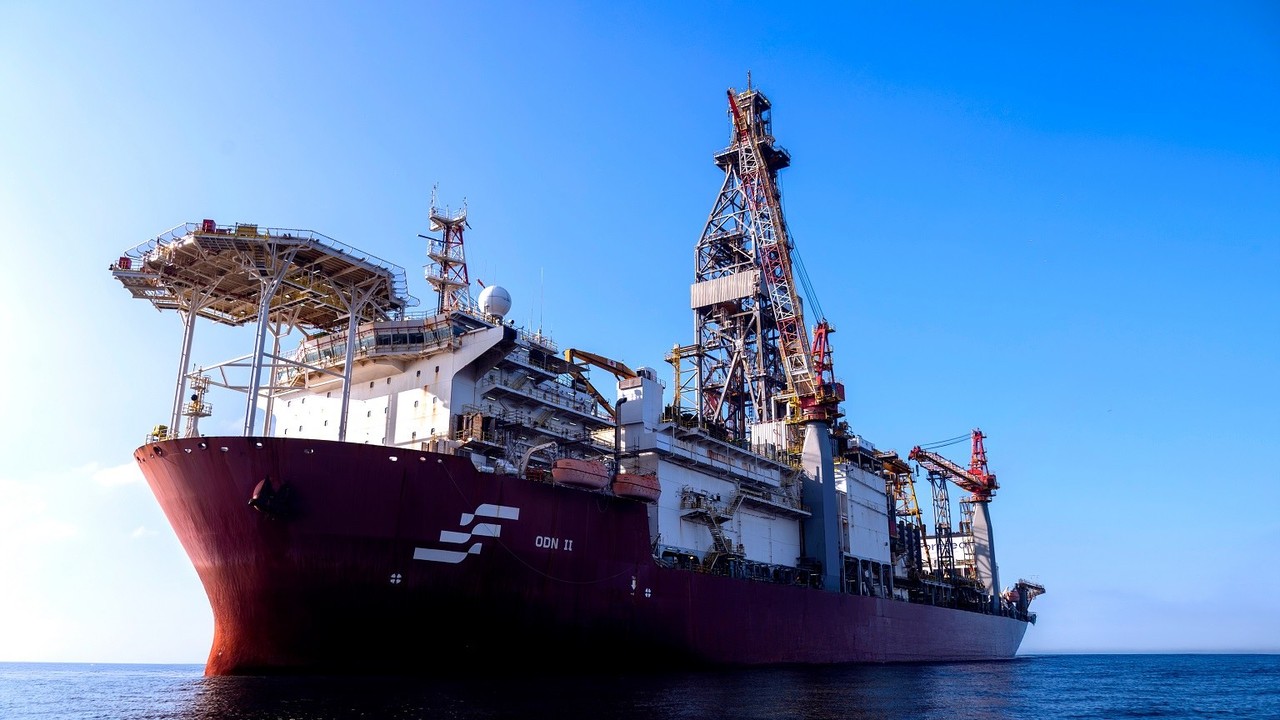


This strategic decision aims not only to reduce construction costs but also to increase the operational efficiency of the future platforms.
The company has selected Seatrium to be responsible for executing this innovative project. Petrobras expects that the simplification of the design will provide significant gains in operation and maintenance of the assets over time.
Both platforms will be FPSO units (floating production, storage, and offloading units) and are designed to operate at depths greater than 2,000 meters.
Each will have a production capacity of 225,000 barrels of oil per day and a processing capacity of up to 10 million cubic meters of natural gas.
The construction will take place at shipyards located in Brazil, China, and Singapore, adhering to the commitment to local content: 20% for P-84 and 25% for P-85.
Technological Advances for Emission Reduction
The P-84 and P-85 platforms will be equipped with state-of-the-art technologies aimed at reducing the carbon footprint. Among the main anticipated advances are:
- All-Electric Configuration, which improves energy efficiency;
- Closed Flare System, preventing gas from being burned in the atmosphere;
- Residual Heat Recovery through Waste Heat Recovery Unit technology;
- Deep Seawater Intake, which reduces thermal impacts on oceans;
- Zero Routine Venting, with recovery of gases from tanks and the processing plant;
- Use of Low Fugitive Emissions Valves;
- CO₂ Capture, Utilization, and Geological Storage System (CCUS).
With these initiatives, Petrobras expects to reduce greenhouse gas emission intensity by 30% per barrel of oil equivalent produced, positioning the platforms among the most efficient in the country.
P-83 Will Reinforce Production in the Búzios Field
Meanwhile, platform P-83 is advancing in its construction at the shipyard Yantai CIMC Raffles in Asia.
The final destination will be the Búzios field, located about 260 kilometers off the coast of Rio de Janeiro, in the pre-salt of the Santos Basin — considered the largest deep-water oil field in the world.
P-83, which will be the 11th unit installed in the field, will have the capacity to produce up to 225,000 barrels of oil per day and process 12 million cubic meters of gas daily.
Additionally, it will have a storage capacity of over 1.6 million barrels.
The forecast is for the platform to start operations in 2027, significantly contributing to enhance Búzios’ production capacity.
Currently at 600,000 barrels per day, the field is expected to reach an impressive mark of 2 million barrels per day after P-83 begins operations.
Sustainable Innovations in P-83
Like Petrobras’ new projects, P-83 incorporates a series of innovative technologies to make its operation more sustainable and safe. Among the main highlights:
- Closed Flare Technology, for gas reuse and elimination of routine flaring;
- Methane Gas Detection System, which allows for identification and prevention of leaks;
- Deployment of Digital Twins, enabling simulations and remote testing, increasing operational reliability;
- Integrated CCUS Technology, reinforcing Petrobras’ commitment to carbon emission reduction.
The state-owned company is a global reference in applying geological CO₂ capture and storage solutions, combining high productivity and environmental preservation.
Petrobras’ Strategy Aims for a More Efficient and Sustainable Future
By simplifying projects, adopting new technologies, and investing in innovation, Petrobras is taking solid steps towards more efficient, safe, and environmentally friendly oil production.
The P-83, P-84, and P-85 platforms represent this new phase of development in the offshore sector, reinforcing the company’s prominence in the global energy landscape.
With these initiatives, Petrobras strengthens its commitment to lead a responsible transformation in the oil and gas market, combining economic results with the preservation of natural resources.
Source: Petronotícias and Agência Petrobras