






 Portuguese
  Spanish


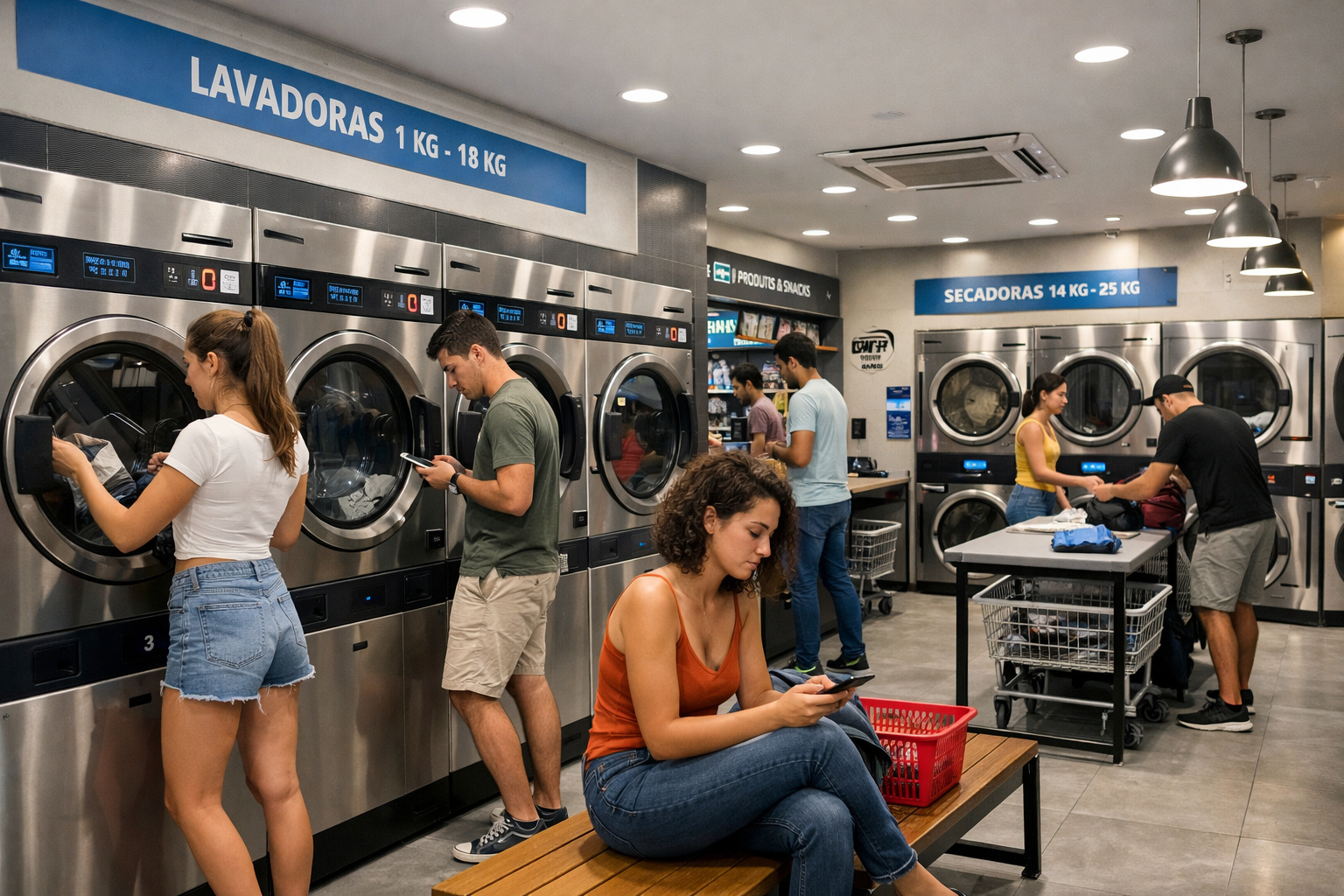


From An Ignored Service For Decades To A Billion-Dollar Market: How Lack Of Time, Smaller Apartments, New Habits, And Technology Explain The Explosion Of Laundries In The Country
Have you noticed how self-service laundries are popping up in almost every neighborhood of Brazil’s major cities? At first glance, these spaces with industrial machines and self-service operations seem just a practical solution for those who don’t have a washing machine at home. However, upon closer observation, it becomes clear that this movement represents something much larger: a transformation in lifestyle, living arrangements, and even the logic of urban consumption in Brazil.
Moreover, the numbers behind this phenomenon help explain why the sector has stopped being a niche and started to attract large brands, investors, and franchise networks. The market has been growing consistently since 2019, generating billions of reais a year and beginning to solidify as a new standard in Brazilian cities. The most curious part is that this model is far from being a novelty in the world.
An Old Model Abroad That Only Just Gained Traction In Brazil
This information was disclosed by data from Sebrae, SINDILAV, and analyses by retail sector specialists: while in the United States, Europe, and Asia, self-service laundries have been part of the urban landscape for decades, in Brazil, this habit took much longer to establish. In New York City alone, for example, there are more than 2,000 laundries of this type, frequently depicted in movies and TV shows as a common part of daily life.
-
Mother and Daughter Convert Small Garage into Full Apartment to Save Money and Stay United

-
Woman Leaves Restaurant Job to Become a Builder in Brazil, Launches Her Own Construction Brand “Construcida”

-
Mother and Daughter Turn Abandoned Warehouse Find into Million-Dollar Business in the U.S., Uncovering 25,000 Caps, 10,000 Sneakers, and Rare Apparel from Nike, Adidas, and Puma
-
After Nearly 30 Years at Beto Carrero, Elephant Baby Begins New Life at Sanctuary in Brazil’s Mato Grosso


The model emerged in the 1930s, when the growth of smaller apartments and the reduction of available time for families made it impossible to maintain large service areas at home. Today, in countries like Japan and South Korea, laundries go beyond basic service: they operate 24 hours a day, offer Wi-Fi, coffee, and have become communal gathering spots.
In Brazil, however, cultural and structural factors have delayed this change. Large service areas, a favorable climate for natural drying, and relatively affordable domestic labor have kept the habit of washing clothes at home for decades. This has only begun to change recently.
Accelerated Growth, Billion-Dollar Numbers, And A New Logic Of Consumption

According to Sebrae, Brazil already has more than 27,000 laundries, with about 3,000 in the self-service model, where the customer chooses the machine, pays, washes, dries, and leaves without human assistance. According to the survey, the sector grew 44% between 2019 and 2024, and the expectation is an average growth of 5% per year in services offered and revenue over the next five years, according to projections from SINDILAV, the Intermunicipal Union of Laundries of the State of São Paulo.
The pandemic played a decisive role in this shift. It reinforced the concern with hygiene and propelled the search for automated services with minimal human contact. Even after returning to normalcy, the trend has not lost strength. As retail consultant José Duarte explains, “people have less time and greater needs for services. Previously, laundries were used only for dress clothes or comforters. Today, consumers take their jeans and t-shirts from daily life, especially those who live alone.”
The data shows that the potential is still huge. Only 4% of the economically active population uses laundries regularly, indicating ample room for expansion. The expectation of the sector is that, by 2030, the number of users doubles in the country.
This change accompanies profound transformations in the labor market and in women’s lives. According to SINDILAV research, 70% of the laundry clientele is female, with an average age of 43 years and 59% holding a college degree. They also represent more than half of the economically active population, which helps explain the search for time-saving solutions.

Saving Time, Money, And Space Drives The Definitive Turn
With busier routines, washing clothes at home has come to be seen as an invisible cost of time and energy. A survey cited by the sector shows that 40% of people claim to have less free time due to household chores, a factor that directly drives the search for outsourced services.
Additionally, washing outside the home has become cheaper. On average, it is possible to wash and dry up to 10 kg of clothes for about R$ 15, including soap and fabric softener. For those living alone and washing clothes once a week, the monthly expense amounts to about R$ 60, varying by location. In comparison, a home washing and drying machine costs between R$ 2,500 and R$ 3,000, which can represent more than R$ 200 per month if financed over a year, not including products and energy consumption.
Another relevant point is time. While a home washing machine can take from 3 to 4 hours to complete a cycle and doesn’t always deliver fully dry clothes, the industrial machines in laundries complete the entire process in up to 1.5 hours. This efficiency gain weighs heavily in the consumer’s decision.
Reports reinforce this perception. Public servant Júlia Linhares from Ceará shared that she started using laundries while she was without a washing machine at home: “At first, I would wait, but then I began using laundries in supermarkets. This way, I optimized other tasks of the day.” This type of convenience helps explain why the service has become appealing.
A Simple, Scalable Business That Is Increasingly Attractive To Investors
It wasn’t just consumers who noticed the opportunity. The self-service laundry model also caught the attention of entrepreneurs and investors. The operation is simple, highly automated, and with reduced costs. There is no need for permanent staff: the customer performs the entire process alone while the owner only handles product replenishment and maintenance.
For this reason, these laundries can operate from 7 AM to 10 PM, including Sundays, and in some cases operate 24 hours a day. Payments are made through apps or digital kiosks, which automatically release the machines. This model reduces costs, increases profit margins, and explains the growing interest from franchises.
Major brands such as Omo Lavanderia and Maria Express have accelerated their expansion. Meanwhile, traditional 5àsec, present in Brazil since 1994, opened 60 new stores just in 2022, growing more than 20% that year. Today, the laundry sector is considered one of the most profitable within the cleaning and maintenance segment.
Only in the state of São Paulo, the market generates over R$ 6 billion a year, according to research by Sebrae-SP. Industry networks estimate that a franchise can reach break-even in as little as 18 months, with margins exceeding 20%, numbers considered excellent for a business with simple operations and low risk.
Less Space In Properties, Sustainability, And Challenges Of Accelerated Growth
The advancement of laundries is also directly linked to the transformation of urban properties. According to IBGE data, 68.1% of Brazilian households had a washing machine in 2022, which explains the initial resistance to the model. However, rapid urbanization and reduced usable areas have changed this scenario.
In São Paulo, for instance, the average area of two-bedroom apartments fell from 58 m² in 2004 to just 37 m² in 2024, a reduction of over 36% in two decades, especially in developments under the Minha Casa, Minha Vida program. Less space means less service area, making external laundry a practical necessity.
Additionally, the sector has gained prominence in the sustainability debate. Laundries use more efficient equipment, saving water and energy, and when well-operated, adopt biodegradable products. In condominiums, water savings can reach 65% compared to domestic use, which represents up to 3,240 liters of water saved per month for a four-person family.
Despite the growth, the sector still faces challenges. According to SINDILAV, about 80% of laundries are small businesses, many without formal management structures or environmental controls. The high cost of compliance leads some entrepreneurs to use machines outside the regulations, accelerating a process of “natural selection” in the market. As consultant José Duarte summarizes, “there is pent-up demand, but consumers will prioritize quality, practicality, and fair pricing.”
The perception of hygiene is also a sensitive point. Some consumers still distrust the cleanliness of shared machines, especially in high-traffic areas. Nevertheless, the consensus is that the sector is maturing, and there is still much room for innovation, such as subscription models, laundries in condominiums, and scheduling systems through apps.
Perhaps, in the future, washing machines will become as dispensable as landlines or DVDs. What do you think, does this model have staying power?


