






 Portuguese
  Spanish



High School Student Creates Innovative Magnetic Motor Without Need for Expensive Magnets and Metals, Gaining Recognition with International Engineering Award.
The electric motors, fundamental in numerous everyday applications, often rely on magnets to function. These permanent magnets, capable of generating their own magnetic field, are not just found in refrigerators, but also in cell phones, hard drives, and many other devices. They are crucial components in renewable energy systems, such as wind turbines and electric car motors. However, a significant breakthrough has been achieved by a teenager, who developed a new magnetic motor, promising to revolutionize the industry with his innovation.
Find Out How the Idea of Developing a New Magnetic Motor Came About

The majority of permanent magnets are made from hard-to-extract, expensive, and difficult-to-recycle metals. More than 90% of them come from China and, as a result, the most crucial elements for clean energy are ironically the hardest to obtain.
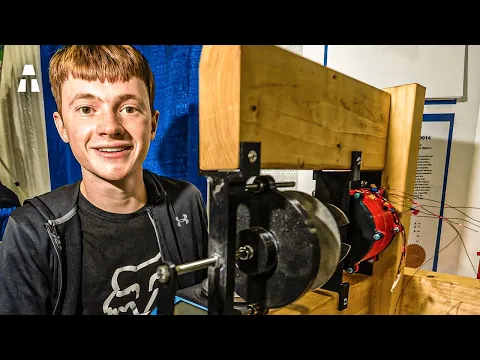
With a design for a new magnetic motor without permanent magnets, a high school student from Florida has just shown how to overcome such challenges. This could revolutionize the industry and make electric motors cleaner and more accessible to more people.
-
Queen Guitarist Brian May Collaborates with ESA Scientists to Study Asteroids Bennu and Ryugu Using 3D Simulations

-
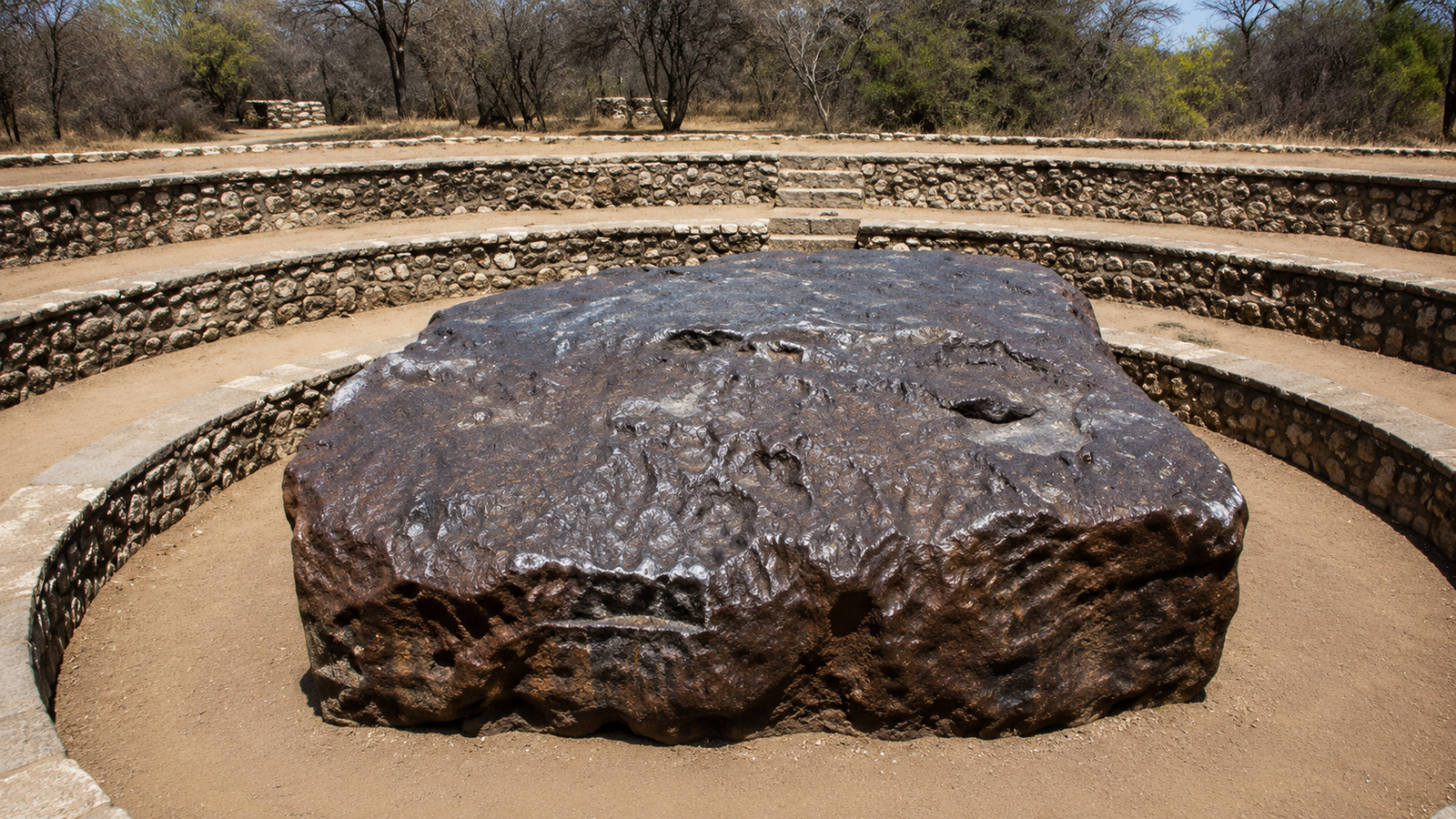
Largest Known Single-Piece Meteorite, Weighing 60 Tons, Puzzles Scientists with Its Intact Fall and Lack of Visible Crater

-
Oceanographer Turns Abandoned Fishing Nets from Brazilian Waters into Bags, Creating Jobs and Earning Over $7,000 Monthly

-
Australia deploys poisoned sausages and uses traps, shooting, and fences in a battle against invasive cats that kill over 1.5 billion native animals annually, threatening more than 200 species.




In his own words, Robert states that he has a natural interest in electric motors and while researching, he discovered the negative environmental impacts of the rare earth elements used in the permanent magnet motors that power them. This sparked his interest in developing an alternative type of motor.
It is worth highlighting that ‘rare earth elements’ are not truly rare, but they are hardly found in sufficient quantities to justify mining. These highly conductive metals are used in many technologies, from fighter jets to fiber optic cables, and are widely used in catalytic converters, cars, or rechargeable batteries.
Challenges Overcome by Robert for the Development of the New Magnetic Motor
Focusing on circumventing the dependence on rare metals, Robert discovered that reluctance synchronous motors do not use permanent magnets. The problem is that these motors do not offer as much torque efficiency, so they typically do not work in electric cars. Wanting to use this research as a school project, the teenager began a year-long quest to solve this problem.
The conventional electric motor works by converting electricity into mechanical energy, and when an electric current passes through a coil, in a magnetic field, a force is generated that will produce torque. When torque is applied to a motor, it spins, and this rotation is transmitted through mechanical transmitters to whatever is moving, such as a fan blade, the wheels of a car, or your vacuum cleaner.
Robert then focused on Syn RMs, motors that create an exploitable difference in reluctance. Reluctance is equivalent to magnetic resistance. Metals with high reluctance move more when they try to resist a magnetic field. Thus, maximizing the difference between the low reluctance of the steel motor and the high reluctance of the cut grooves within it increases the salience of the motor, and greater salience means greater torque.
Student Wins International Award for His Creation
Robert spent a year optimizing his concept for a new magnetic motor and developed his prototypes with no air gap, incorporating another magnetic field in its place.
This adjustment gave a significant boost to the functional resistance and salience rate of the motor, producing 39% more torque and operating 31% more efficiently at 300 RPM, but the efficiency increased little when the motor was running at 750 RPM, and the printed plastic parts even melted on his desk.
Fortunately, this loss was not in vain, and he received the top prize at the international science and engineering fair, returning home with $75,000. In October, he was still working on his 16th magnetic motor, with plans for version 17 underway.


