Portuguese
  Spanish


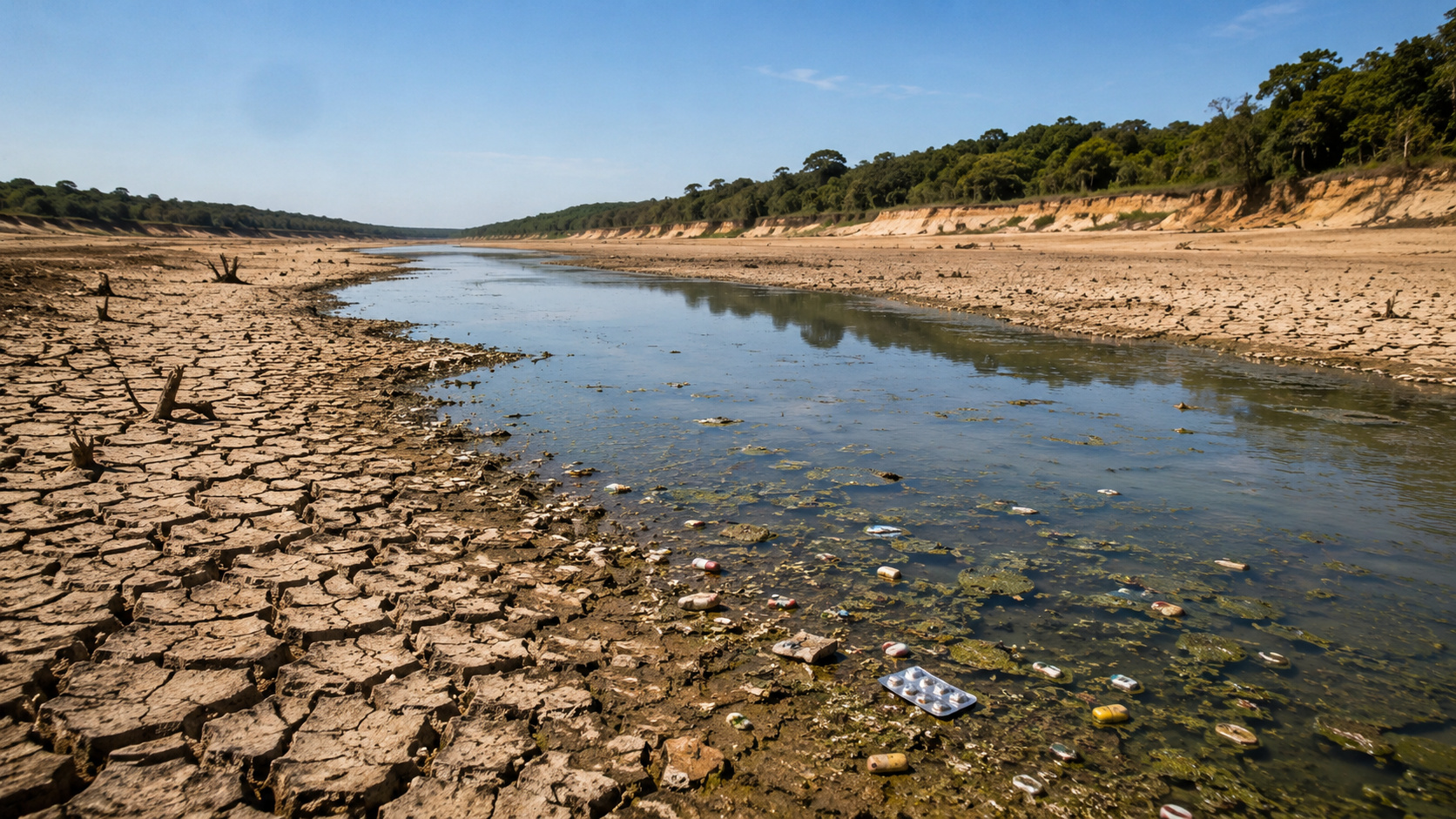

USP study found 12 antibiotics in the Piracicaba River and detected chloramphenicol in fish consumed by local residents.
Scientists found residues of different antibiotics accumulated in the Piracicaba River, in the interior of São Paulo, and even detected a banned drug inside fish sold for consumption. The study was conducted by researchers from the Nuclear Energy Center in Agriculture of the University of São Paulo (CENA-USP) and gained international attention after being published by ScienceDaily in March 2026. The results show that contamination increases during dry periods, when the water volume decreases and pollutants become more concentrated.
Researchers found 12 different antibiotics accumulated in one of the main watersheds of the interior of São Paulo
The research analyzed samples of water, sediments, and fish collected in the region of the Santa Maria da Serra dam, near the Barra Bonita reservoir, an area that receives contaminants from different parts of the Piracicaba River basin.
According to the researchers, 12 widely used antibiotics were monitored, belonging to groups such as tetracyclines, fluoroquinolones, sulfonamides, and phenols. The study identified residues of these compounds both in the water and in the sediments and aquatic organisms.
-
Scientists Convert Food Waste into Aviation Fuel, Successfully Test 50% Blend with Conventional Kerosene to Cut Emissions and Promote Sustainable Flights

-
OnePlus N6 Smartphone to Launch in India with 8,000mAh Battery and 45W SuperVOOC Charging, Lasting Up to Three Days
-
Scientists Plan to Release Air Bubbles Underwater to Protect Antarctica’s “Doomsday Glacier” from Melting

-
Chinese R6000 Drone Combines Airplane and Helicopter Features, Carries Up to 12 People for Multiple Missions





The scientists point out that the region is influenced by treated urban sewage, domestic effluents, aquaculture, pig farming, and agricultural runoff, forming a continuous mixture of contamination sources.
During the dry season, pollution concentrates and antibiotics reappear at much higher levels
One of the most important findings of the study was the seasonal behavior of the contaminants. According to researcher Patrícia Alexandre Evangelista, during the rainy season most antibiotics remained below detection limits.
However, in the dry season, when the river’s volume decreases, different compounds began to appear more evidently.
The researchers observed concentrations ranging from nanograms per liter in the water to micrograms per kilogram in the sediments. Some compounds, such as enrofloxacin and certain sulfonamides, appeared at levels higher than those recorded in similar studies conducted in other countries.
Sediments function as invisible reservoirs that store medications for long periods
The problem is not just in the water flowing through the river. According to the researchers, sediments rich in organic matter, phosphorus, calcium, and magnesium function as true chemical deposits capable of storing antibiotics for long periods.
This means that contaminants can remain accumulated even when they are no longer detected in surface water. Under certain environmental conditions, these compounds can recirculate in the aquatic ecosystem.
In practice, the riverbed acts as a kind of chemical archive that preserves drug residues for an extended time.
Chloramphenicol appeared inside fish sold for human consumption
Among all the results obtained, one that most caught the researchers’ attention involved the fish.
The study detected chloramphenicol in lambaris collected by fishermen in the Barra Bonita region. The species is widely marketed and consumed locally.

Chloramphenicol has a characteristic that makes the discovery even more concerning: its use in animals intended for food production is prohibited in Brazil due to the toxicological risks associated with the substance.
According to the researchers, the drug appeared only in samples collected during the dry period, with concentrations measured in the range of dozens of micrograms per kilogram.
Researchers warn of a possible indirect route of human exposure through food
The discovery does not automatically mean that consumers are suffering direct intoxication. However, scientists state that the result reveals a potential exposure route that deserves attention.
By finding the antibiotic inside fish intended for consumption, the research shows that compounds released into the environment can traverse different stages of the ecosystem until they reach organisms that are part of human food.
The study highlights precisely this connection between water pollution, bioaccumulation, and the food chain, pointing to the need for continuous monitoring of emerging contaminants present in Brazilian rivers.
Prohibited antibiotic remained inside fish for more than 90 days during experiments
The researchers also conducted laboratory tests to understand how certain medications behave inside aquatic organisms.
In the experiments, enrofloxacin showed relatively rapid elimination by the lambaris, with an approximate half-life of 21 days. Chloramphenicol, however, showed very different behavior.
According to the study, the compound had a half-life of over 90 days inside the fish and showed a high potential for retention in tissues, indicating a greater tendency for bioaccumulation.
This prolonged persistence was one of the factors that most concerned the researchers involved in the work.
Contamination also caused genetic damage in aquatic organisms
In addition to tracking the medications, the team evaluated possible biological impacts. The tests showed that chloramphenicol significantly increased genetic damage in fish, identified through the frequency of micronuclei and nuclear alterations in blood cells.
The researchers observed that the presence of the aquatic plant Salvinia auriculata helped reduce some of these effects under certain experimental conditions, although the authors themselves warn that the use of plants for decontamination does not represent a simple or definitive solution.
Scientists warn that antibiotics in rivers can also favor the emergence of superbugs
The problem goes beyond the fish. According to the authors, constant antibiotic residues in the environment can increase selective pressure on microorganisms, favoring the evolution of bacteria resistant to the medications used in human and veterinary medicine.
The researcher Valdemar Luiz Tornisielo, co-author of the study, stated that the presence of these compounds in water, sediments, and fish highlights the impact of human activities on aquatic ecosystems and reinforces the risk associated with environmental antimicrobial resistance.
This phenomenon is considered by the World Health Organization as one of the main global public health challenges of the coming decades.