Portuguese
  Spanish


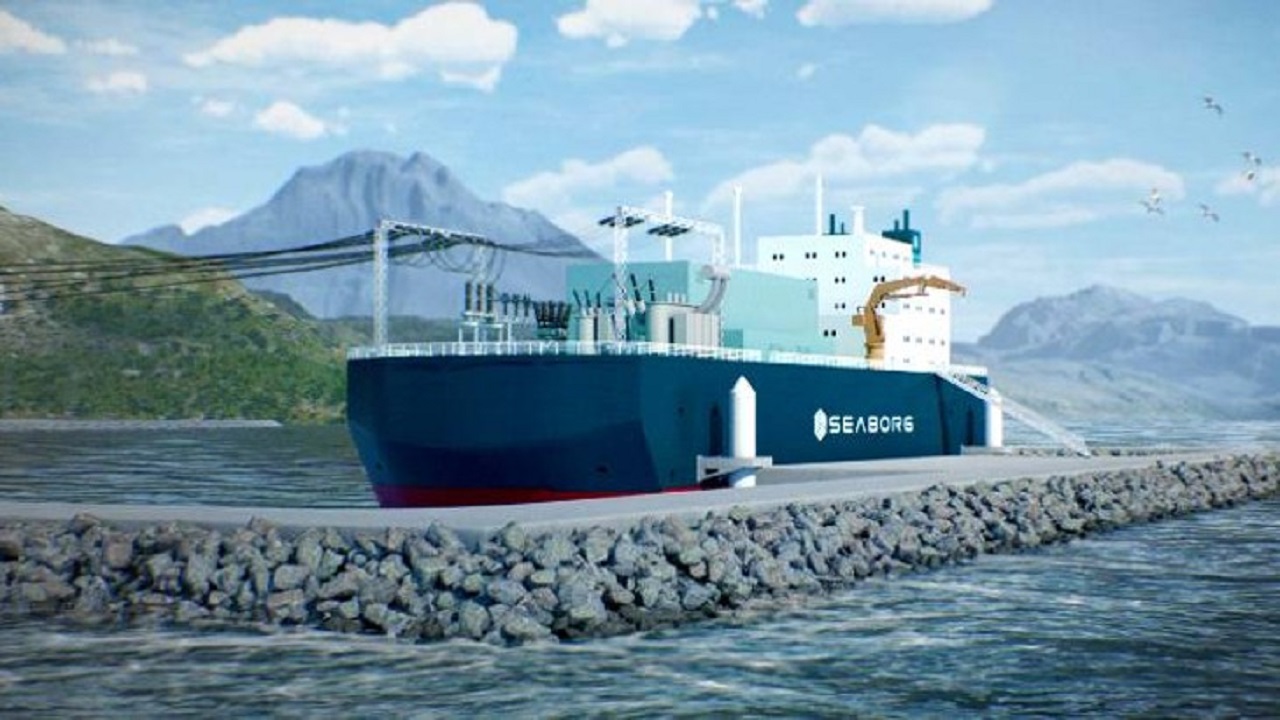

Samsung Heavy Industries Has Closed A New Partnership With Seaborg To Develop A Floating Nuclear Power Plant Capable Of Generating 800 MW Of Power. The Estimate Is That Construction Of The Project Will Begin Still This Year
Samsung is demonstrating that its concerns are not just related to electronics, but also to other important projects. As an example of this, the Samsung Heavy Industries division announced this Friday (8) that it plans to develop the first floating nuclear power plant off the coast of Korea. The expectation is that the Danish company Seaborg will also be involved in the project. Until now, Samsung has only signed a memorandum of understanding with Seaborg, a company responsible for developing compact molten salt reactors (CSMRs), for the construction of a floating nuclear power plant using the company’s technology.
Samsung Nuclear Power Plant Promises To Have A Capacity Of 800 MW
Compact reactors can generate energy quite efficiently, without emitting polluting gases into the atmosphere. These reactors are much more compact than conventional nuclear power plant reactors and can be used in all types of projects that require a relatively smaller amount of energy compared to the scale of nuclear power plants.
At the same time that it is compact, this type of reactor is also very stable. Samsung Heavy Industries plans to build, alongside Seaborg, a floating power plant with the capacity to generate up to 800 MW of power still this year. It is known that the energy from such plants is considered by Samsung to be the ideal energy source for the production of ammonia and green hydrogen.
-
Nvidia Secures Billion-Dollar Deal to Supply Up to 170,000 AI Accelerators to a 360 MW Data Center in Indonesia, Aiming to Transform Batam into an Advanced Computing Hub

-
NuScale proposes revised plan for six VOYGR SMR reactors in Poland after ending U.S. project

-
Holtec and EDF Submit Joint Proposal to Install Four SMR-300 Reactors in England with Combined Capacity of 1.3 GW
-
Brazil’s Angra 3 Nuclear Plant Reaches 66% Completion; Government Faces 2026 Deadline to Decide on $24 Billion Project’s Future


According to Seaborg, the expectation is that the sale of energy from offshore nuclear power plants will be boosted through a technological collaboration with Samsung Heavy Industries, a global shipbuilding company naval construction.
Samsung states that in the near future, the company plans to invest in the construction of innovative products based on carbon-free technologies, ranging from renewable energy to nuclear energy. It is worth noting that earlier this year, Moon Jae-in, the president of Korea, announced that nuclear power plants will continue to be the main sources of electricity in the country for the next three decades.
How Does A Floating Power Plant Reactor Work?
Developing a floating nuclear power plant is complex, as it requires much more work and more safety mechanisms than a common onshore plant.
Currently, there are several equipment in the Arctic with nuclear reactors, such as submarines and icebreakers. However, the mission is to make the reactor the main point of the ship. In addition, it is essential to protect the reactor of the floating power plant from extreme temperatures or tsunamis that may hit the vessel, as an accident involving such a plant would bring unimaginable consequences to the environment.
Another major challenge to be faced is the issue of radioactive waste, which is found in the form of radioactive liquid. The reactor of the floating plant can release a radioactive material into the atmosphere.
In 2018, Russia launched a floating nuclear power plant, the Akademik Lomonosov, which features a pressurized water reactor, generating high-pressure heated water, transferring thermal energy to the low-pressure system.