Portuguese
  Spanish


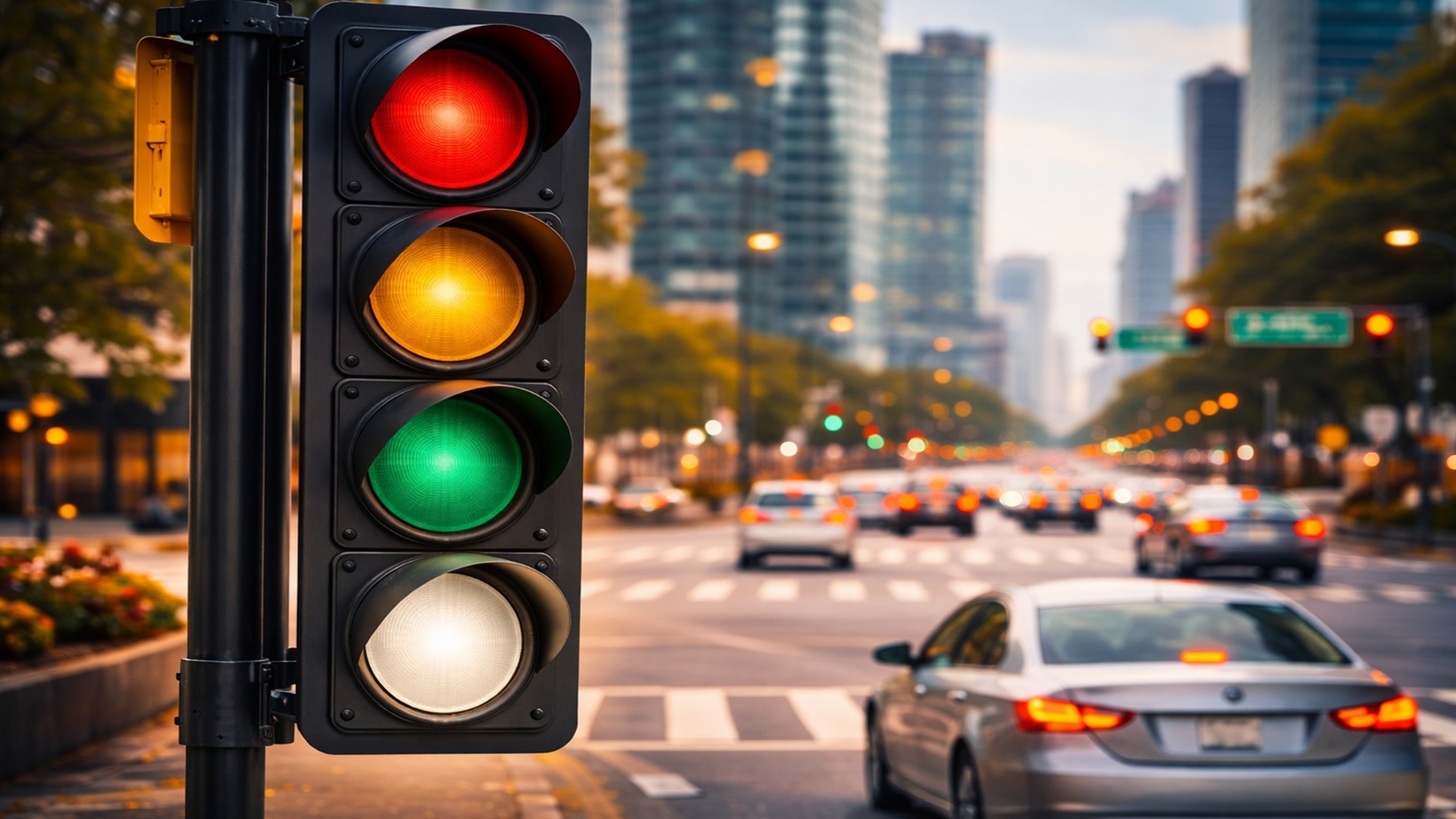


Tests Conducted by North Carolina State University Evaluate the Inclusion of White Stoplights as a Fourth Color at Intersections, with an Estimated Reduction of Up to 10% in Travel Time and a Minimum Requirement of 30 to 40% Autonomous Vehicles to Enable Large-Scale Adoption.
White stoplights are being tested worldwide as part of a proposal led by North Carolina State University, which aims to adopt a fourth color to improve flow with autonomous vehicles and reduce travel time by up to 10%.
The initiative is presented as one of the boldest attempts to alter driving habits that have been established for decades. The proposal emerges in the context of the expansion of autonomous vehicles, considered one of the most revolutionary innovations in the automotive industry.
According to the released material, few modern inventions have significantly changed driving habits. Adapting roads to autonomous cars is treated as a complex challenge, especially for more experienced drivers.
-
Low-Cost Concrete Panel House Goes Viral: Investor Reveals Prefabricated Kit Structure for Around $1,500, Assembled in 30 Days, with Plans for Rental and Resale Income

-
Brazilian Lottery Winner Ordered by Court to Share $22 Million Jackpot with Ex-Partner, Sparking Major Legal Battle

-
Why Yellow is the Safety Color for Heavy Machinery: Origins and Benefits Since 1931

-
U.S. Channel Highlights 20 Brazilian Innovations Leading Latin America: From Açaí to Modular Homes and Biogas




Why White Stoplights Are Being Added
The traditional three-color system of red, yellow, and green has been widely used for a century, with the exception of Japan. Now, a new initiative proposes the inclusion of white stoplights as a fourth signal.
North Carolina State University is testing a four-color model that adds white below green. The objective is to manage the transition to a fully autonomous roadway network.
The white signal will communicate with autonomous cars to indicate that it is safe to proceed on busy roads and at intersections. The proposal is that it will function as a follow signal in traffic.
Vehicles driven by humans will continue to follow the normal flow when the signal is white. The study suggests that this integration could reduce travel time by up to 10% and decrease fuel consumption.
Where Tests Are Being Conducted
So far, the measure has only been adopted by NC State. If the model is successful, cities with a high number of autonomous cars, such as Austin, may express interest in implementing it.
The tests are occurring in North Carolina, in controlled areas considered critical points for autonomy. Among these locations are ports, where pedestrian activity is limited.
Despite the progress, the text highlights that it may take time before the system is present on all the streets in the world. Adoption depends on a structural change in the composition of the fleet.
Minimum Percentage of Autonomous Vehicles
For white stoplights to function effectively, North Carolina State University estimates that at least 30 to 40% of the cars would need to be autonomous.
According to the study, this scenario is not expected to occur for another generation. Nevertheless, the proposal is presented as a solid guarantee for the future of mobility.
The requirement for this minimum percentage indicates that widespread implementation will depend on technological advancements and a significant presence of vehicles with autonomous capabilities on the roads.
Previous Reforms in the Traffic Light System
The material recalls that the traffic light system was not always tricolor. Although traffic lights had existed in cities for decades before 1920, the model underwent reforms over time.
It was the Detroit police officer, William Potts, who activated the amber light to reduce the confusion caused by the direct change from green to red. This change took almost 15 years to spread across the United States.
The historical precedent is cited as a possible reference for the timeline of adopting white stoplights. The diffusion of the new model may follow a similar pace, considering the need for gradual adaptation.
The experience in North Carolina is described as a testing phase that could influence future decisions. If the results are confirmed, white stoplights could be integrated into the global traffic system in the coming decades, in a process of progressive transition.