Portuguese
  Spanish


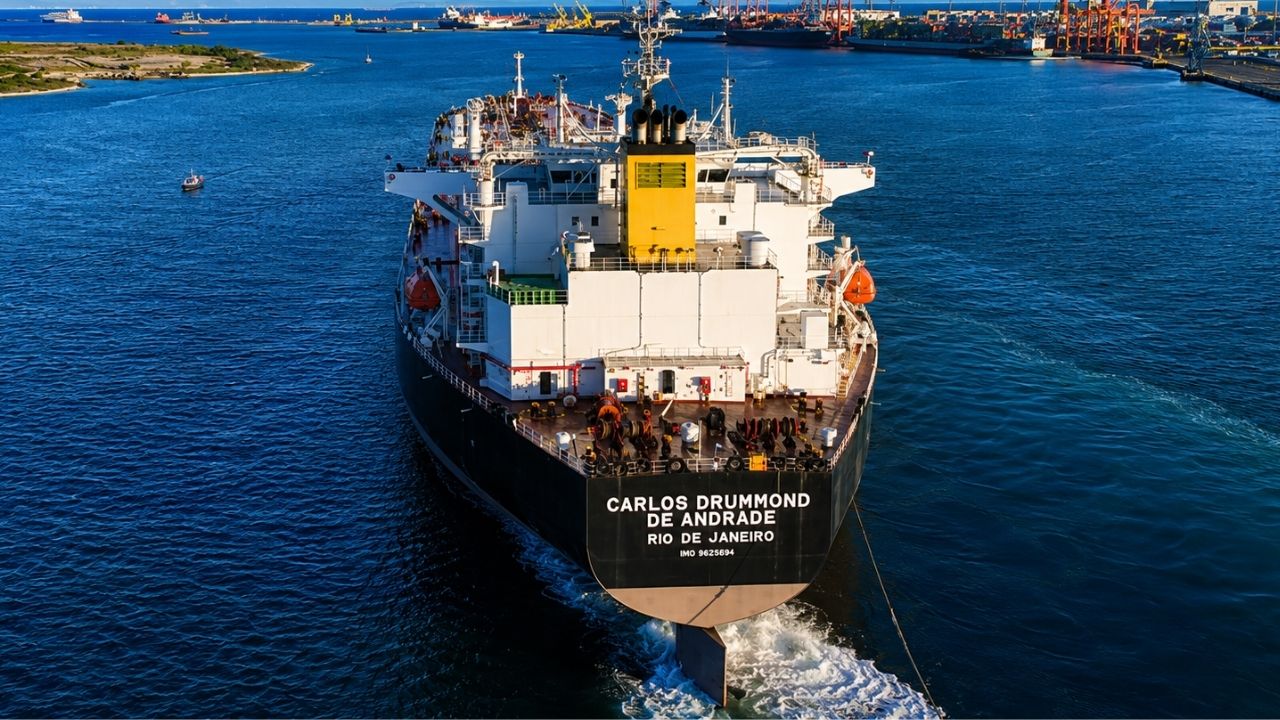
Between January and April 2026, ships from the United States, China, Spain, and Turkey unloaded soda ash at the Port of Recife, totaling more than 74 thousand tons of sodium carbonate for glass, detergents, chemical industry, and water treatment, reinforcing the industrial logistics of Pernambuco in the Brazilian Northeast.
The ships that arrived at the Port of Recife in 2026 carried soda ash, also known as sodium carbonate, a raw material used in the manufacture of glass, detergents, chemicals, and water treatment. Between January and April, more than 74 thousand tons were handled.
The cargo came from countries such as the United States, China, Spain, and Turkey, in nine operations recorded during the period. The volume shows how a discreet product, unloaded away from the spotlight, supports sectors such as glass, detergents, chemicals, and water treatment.
Soda ash arrives in Recife in nine international operations

The Port of Recife recorded the import of soda ash in nine operations in the first months of 2026. The movement involved cargoes from different international origins, with highlights from the United States and China, as well as Spain and Turkey.
-
Brazil’s Port of Santos to Receive New $1.1 Billion Container Terminal, Tecon Santos 10, Set to Begin Operations in 2029

-
Ports without drivers and cabins already move containers like automated factories: robotic cranes, autonomous electric vehicles, and software transform giant terminals into 24-hour logistics machines.
-
About 300 American ports still breathe diesel from trucks, cranes, and locomotives, but they are now trying to electrify heavy machinery to clean the air for 31 million nearby residents.

-
A 220-meter giant powered in part by solar energy and lithium batteries has just unloaded nearly 5,000 Chinese cars at the Port of Itajaí. It is the first of ten Grimaldi super ships and the first in the world prepared to run on ammonia as fuel.




The data is noteworthy because it shows a less visible industrial route of maritime trade. While fuels, grains, and containers usually occupy more space in the news, soda ash remains a strategic cargo for factories and essential services.
The accumulated movement exceeded 74 thousand tons between January and April. This volume reinforces the role of the Pernambuco port as a logistical entry point for products used in the production chains of the Northeast.
More than just a simple chemical cargo, soda ash functions as a basic raw material. It enters the manufacturing process of glass, soap, detergents, chemicals, and applications related to water treatment.
Sodium carbonate is essential for glass, detergents, and chemistry

Soda ash is the commercial name for sodium carbonate, a chemical compound used in various industrial processes. According to technical information about the commodity, sodium carbonate is an essential raw material for the manufacture of glass, chemical products, detergents, and other industrial products.
In the glass chain, soda ash plays a central role. The material helps reduce the temperature needed to melt the mixture used in production, making the process more viable from an industrial perspective.
This is the type of input that almost never appears to the end consumer, but is present in everyday products. Packaging glass, cleaning products, chemical compounds, and treatment systems depend directly or indirectly on this material.
The regional estimate indicates that about 55% of the imported volume is absorbed by glass manufacturing. Another 25% goes to soaps and detergents, while approximately 15% serves the chemical industry.
Port of Recife strengthens logistical role in the Northeast
The arrival of these ships reinforces the role of the Port of Recife as a logistical link for industrial supply. The port structure functions as an entry point for cargo that then proceeds to regional companies and production chains.
The operation is strategic because it shortens the connection between foreign trade and local industry. Instead of relying solely on more distant routes, importing through Recife helps supply companies located in Pernambuco and the surrounding region.
The performance also shows how the port participates in the state’s economic development. The movement of industrial inputs generates demand for port operations, storage, transportation, distribution, and associated services.
In this context, soda ash is not just an imported commodity. It represents industrial flow, logistical planning, and a direct link between international suppliers and Brazil’s productive sectors.
United States and China appear among main origins
United States and China appear as prominent origins in the soda ash cargoes brought to the Port of Recife. The presence of these two countries reinforces the global dimension of the supply of the input.
The United States has a tradition in the production of sodium carbonate, even with economic relevance linked to the mineral industry and chains like flat glass, construction, and the automotive sector. Meanwhile, China appears as a major industrial supplier in various global chains.
When ships leave these markets heading to Recife, the cargo reveals more than just a one-time purchase. It shows how the Brazilian industry depends on maritime routes, international availability, and logistical organization to maintain its operation.
Besides them, Spain and Turkey also appear in the informed segment, expanding the diversity of import origins. This variety can help reduce dependence on a single supplier or route.
Input supplies regional companies and production chains
Among the partners mentioned in the importation of soda ash are names like Natrio, ALX Brasil, Owens Illinois, ASA, CBVP, and Manuchar. These companies participate in the dynamics of importation, distribution, or industrial consumption of the product.
The presence of these agents reinforces that the cargo unloaded at the port has a productive destination. It is not an isolated commodity, but an input that enters into linked industrial processes.
In the case of glass, soda ash can serve manufacturers of packaging, flat glass, or other products that depend on chemical raw materials on a large scale. In the case of detergents, it is associated with cleaning products and everyday consumption.
In water treatment, sodium carbonate can be used for alkalinity adjustment and chemical processes related to water quality. This diversity explains why port movement has relevance beyond the dock.
Discreet cargo shows the backstage of Brazilian industry
Soda ash does not have the visual appeal of a cargo of automobiles, giant equipment, or colorful containers. Even so, its industrial importance is great. Without basic inputs like this, several factories simply do not operate at the expected pace.
The case of the Port of Recife shows how a fundamental part of the economy moves in silent cargoes. They don’t appear in retail with a known name, but they support products that arrive daily at homes, construction sites, industries, and public systems.
The ships that brought soda ash to Recife in 2026 connect foreign ports to the Brazilian productive routine. Each operation represents maritime planning, logistics hiring, unloading, quality control, and distribution.
This chain also highlights the dependence on efficient port infrastructure. When the port operates well, it reduces bottlenecks and helps keep supplies circulating with more predictability.
More than 74 thousand tons reveal constant demand

The volume above 74 thousand tons in just four months indicates significant demand. For a technical product, used in different sectors, this number helps to gauge the importance of soda ash in the regional industry.
The movement also reinforces the importance of monitoring specialized cargoes, not just more well-known commodities. Often, the health of a production chain appears precisely in these flows of intermediate inputs.
The import of soda ash shows that the Port of Recife acts as an entry point for essential cargoes to the functioning of factories and services. The product arrives by sea, but its effects spread through production lines.
This type of operation is especially important for the Northeast, where port logistics can influence cost, timing, and industrial competitiveness.
Soda ash ships put Recife on industrial route
The ships that arrived in Recife with soda ash show a less discussed facet of foreign trade: the import of inputs that keep the industrial base functioning.
United States, China, Spain, and Turkey appear in this supply route, while Pernambuco assumes the role of regional entry for sodium carbonate. The result is a chain that connects mines, factories, ports, and final consumers, even if the product is rarely noticed by the public.
In a period of four months, more than 74 thousand tons passed through the port in nine operations, reinforcing Recife’s weight in industrial cargo logistics. Soda ash may be discreet, but its absence would be felt in essential sectors.
And you, did you imagine that ships loaded with soda ash were so important for glass, detergents, the chemical industry, and water treatment in Brazil? Share your opinion.