






 Portuguese
  Spanish


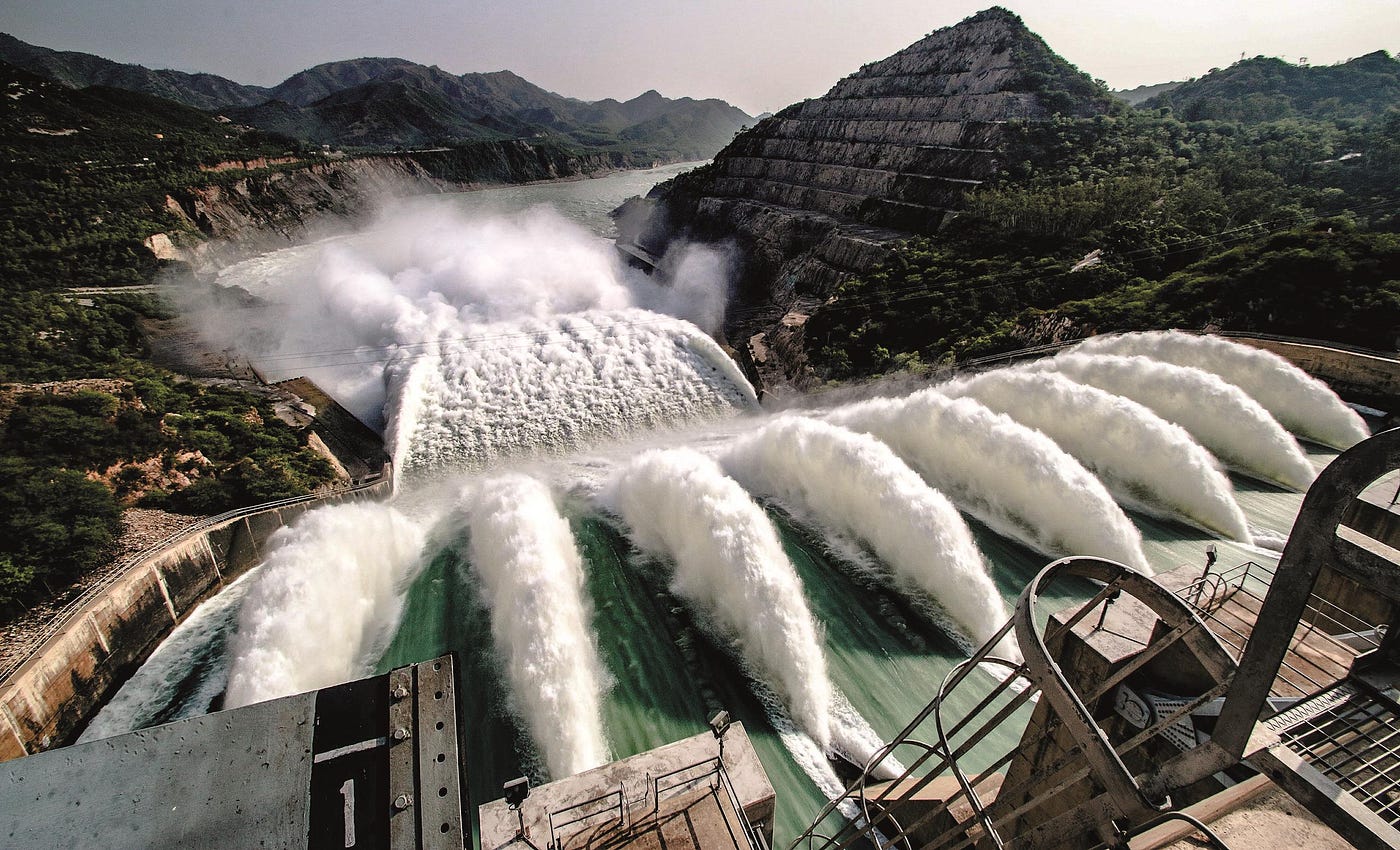


With More Than 100 Million M³ of Compacted Material, the Tarbela Dam is the Largest Earth-Fill Dam on the Planet and a Milestone in Global Hydraulic Engineering.
Located on the Indus River in Pakistan, the Tarbela Dam is one of the most monumental hydraulic works ever built by human engineering. With a height of 143 meters, length of 2,743 meters, and a body formed by more than 100 million m³ of compacted material made of earth, gravel, and rock, it is internationally recognized as the largest earth-fill dam in the world.
The data belongs to the Water and Power Development Authority (WAPDA) and technical literature used by international organizations, revealing the absurd scale of material movement necessary to erect a structure of such magnitude, capable of profoundly altering the economic geography of the entire region.
A Work Whose Strength Comes from the Colossal Mass of Compacted Earth and Rock
Unlike large concrete dams such as Itaipu or Hoover Dam, the Tarbela is a compact earth-fill dam.
-
Brazilian Fishing Couple Spends 4 Years Building Solar-Powered Floating Home on the Paraguay River, Now a Navy-Approved Vessel with Leisure Area and Tour Demand

-
While the World Opens New Airports and High-Speed Trains, Brazil Rushes to Complete Projects Stalled for 40 Years
-
Brazil Invests in Massive Waterway to Transport Soybeans by Barge, Reducing Costly Truck Reliance
-
Bridge Rebuilt in Just One Year Reconnects Two Brazilian States


This means that its stability and strength depend on gigantic layers of soil and rock, deposited and compacted in successive levels until forming a mass of extraordinary proportions.
The structure required:
- Hundreds of millions of m³ of excavated and repositioned material,
- Continuous compaction with large equipment,
- In-depth geological studies on permeability and infiltration,
- Multiple layers with different grain sizes to form the impermeable core.
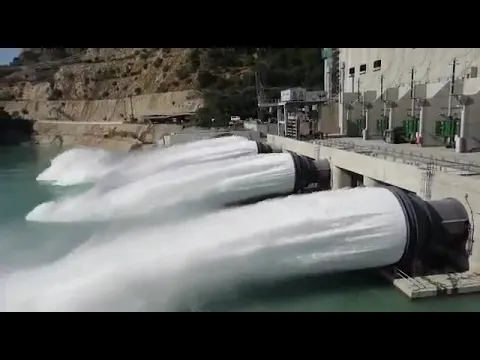

The total fill volume exceeds 100 million m³, according to international technical sources — an amount capable of building several artificial mountains or filling entire valleys over dozens of kilometers.
143 Meters in Height and Almost 3 Km in Length: a Giant That Dominates the Indus River Valley
At 143 meters high, the Tarbela is equivalent to a building of approximately 45 stories.
Its 2,743 meters in length make it one of the largest dams on the planet in terms of length, rivaling megaprojects in the Middle East and Central Asia.
From the top, you can see a true inland sea: the Tarbela Reservoir, with a capacity for more than 14 billion m³ of water, a volume that completely transforms the hydrological regime of the region and feeds irrigation systems, flood control, and energy generation.
The Construction Required Massive Excavation and Logistical Solutions Rarely Seen at the Time
To construct the dam, engineers needed to excavate vast areas to create the impermeable core and prepare suitable foundation layers. The earth-moving operation was of rare proportions:
- millions of cubic meters of rock were detonated, excavated, and transported by giant tractors and trucks,
- internal drainage systems were built to prevent instability,
- continuous movement of equipment operating 24 hours a day.
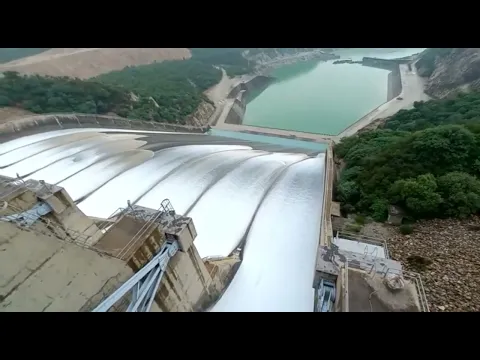
The entire logistics were challenging, especially considering that the project began in the 1960s when heavy equipment was less efficient than today.
A Key Component for Agriculture and Energy in Pakistan
The Tarbela is not just a colossal work; it is a vital cog in the development of Pakistan. Its impact includes:
- feeding one of the largest irrigation systems in the world,
- producing hydroelectric energy essential for the national grid,
- flood control of the Indus River,
- regularizing the water flow in one of the driest regions of Asia.
Over the decades, the dam has undergone expansions and modernizations, including the addition of hydropower plants that raise its capacity to more than 4,800 MW.
An Absolute Milestone in Earth-Fill Dam Engineering
Today, the Tarbela Dam remains one of the largest infrastructure works on the planet, an obligatory reference in hydraulic and geotechnical engineering.
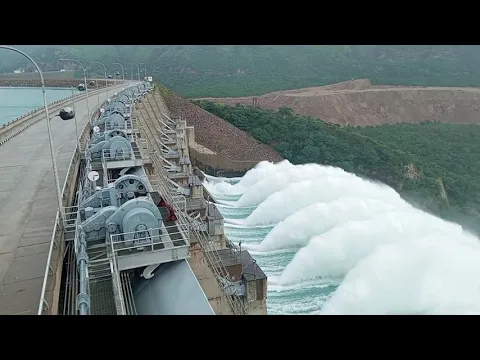
Its construction required a quantity of material that few modern works can match and demonstrated humanity’s ability to transform entire landscapes for energy, security, and agriculture.
With 143 meters in height, 2,743 meters in length, and more than 100 million m³ of compacted material, it symbolizes the most monumental aspects of dam engineering, a true mountain built by man, designed to last for generations.








Demorei para Descobrir que isso fica no Paquistão , deviam colocar isso logo no começo da reportagem, muito amador
Recursos hídricos no mundo estão cada vez mais escassos, o que coloca pressão na mudança da matriz energética mundial que vai precisar de alternativas limpas, porém, volumosas para arcar com a demanda crescente por energia elétrica.
Planet Terra Glória à vida