Portuguese
  Spanish


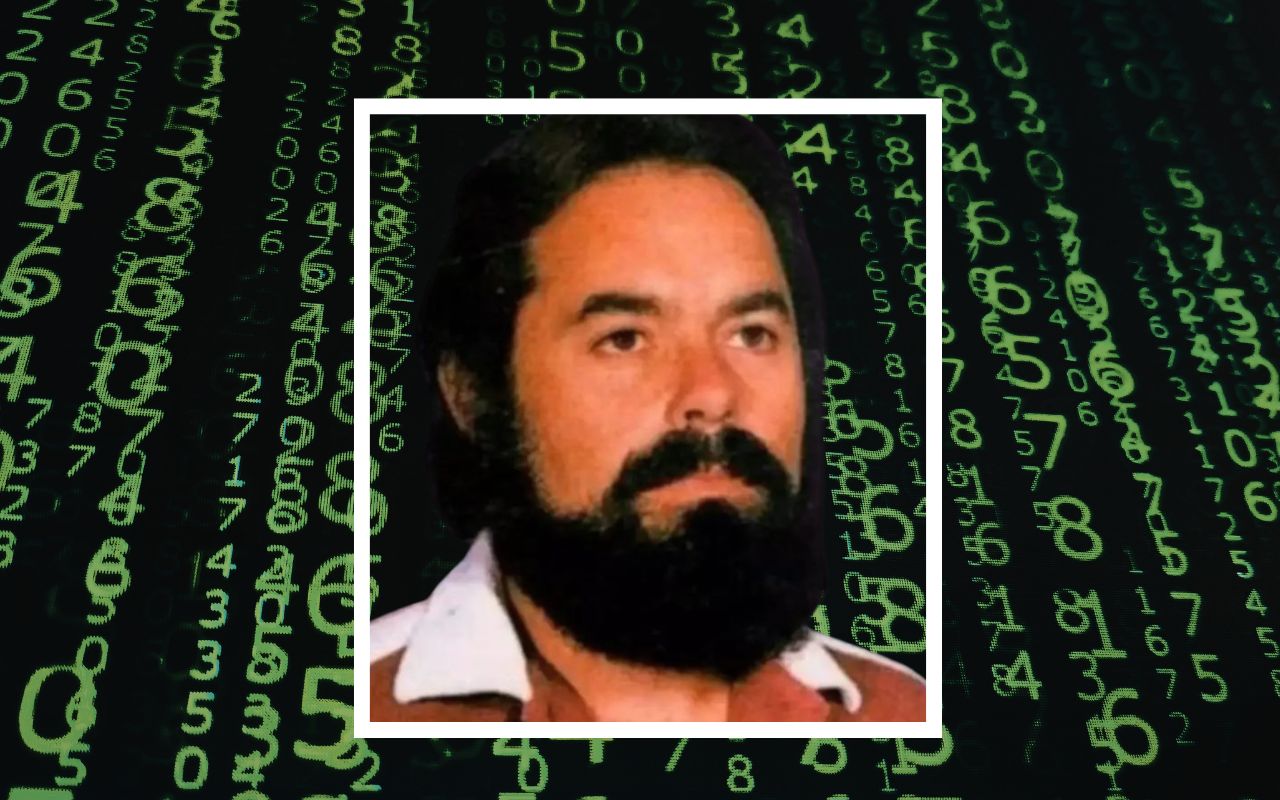

Learn about Jacobo Grinberg, the scientist who linked the brain to the Matrix. Discover his syntergic theory and the details of his disappearance in 1994.
In December 1994, Mexican neuroscientist Jacobo Grinberg-Zylberbaum disappeared in Mexico City without a trace. The researcher from the National Autonomous University of Mexico (UNAM) vanished shortly before presenting advances in his controversial “syntergic theory,” which proposed that reality is a construction of the human mind.
The case, which was never solved by authorities, continues to fuel debates today about whether Jacobo Grinberg had indeed found evidence that we live in a matrix or if he was a victim of common, albeit mysterious, circumstances.
Syntergic Theory: When the brain meets the Matrix
Grinberg’s work sought to understand how human consciousness interacts with the universe. For him, what we perceive as the physical world is nothing more than information processing carried out by the brain.
-
WHO Warns of Unnecessary Interventions in Natural Births Worldwide, Advocates for More Human-Centered Care, Reigniting Debate on Medicalization

-
World War II American Bombs Discovered in German City Prompt Evacuation of 20,500 Residents

-
World’s Largest Ice Cave Extends 42 km Beneath Austrian Alps, Revealing a Vast Frozen Realm Preserved by Natural Air Currents

-
Volcanic Soils from Destructive Eruptions Turn into Million-Dollar Crops: Ashes Nourish Grapes in Lanzarote, Bananas in the Canary Islands, Blood Oranges on Mount Etna, and Cacti in Mexico, Showcasing How Lava-Formed Lands Sustain Rare Harvests in Seemingly Barren Regions



Unlike traditional science, Grinberg believed that:
- Reality is not fixed, but a mental projection.
- The human brain functions as a decoder of a universal informational field.
- Through mental training, it would be possible to access and even modify this structure of reality.
This worldview, developed years before the Wachowski sisters’ film was released, led many enthusiasts to call him the man who discovered the matrix in real life.
Furthermore, the researcher combined academic rigor with the study of mystical phenomena, such as the work of the healer Pachita.
Jacobo Grinberg: The enigma of his disappearance in 1994
Jacobo Grinberg’s disappearance is surrounded by unanswered questions. In December 1994, he did not appear for his own birthday celebration, which initiated the search.
No signs of violence, forced entry, or any evidence of struggle were found in the places he frequented.
Several hypotheses attempt to explain what happened:
- Voluntary disappearance: Motivated by career pressures or personal issues.
- External intervention: Theories suggest that government intelligence agencies were interested in his research on the human mind.
- Transcendence: A romantic view that he had crossed the boundaries of the reality he studied so much.
Jacobo Grinberg’s legacy between science and conspiracy
Currently, Grinberg’s story is experiencing a renaissance in digital culture. In communities discussing simulation theory, the name Jacobo Grinberg, the scientist who challenged the matrix, is cited as someone who “discovered too much.”
However, it is essential to separate the mythology created on the internet from the biographical facts. Although there is no concrete evidence that he proved the existence of a simulation, his trajectory raises fundamental questions about perception.
The mystery of his whereabouts serves as a metaphor for his own ideas: an incessant search for what is hidden behind the filter of our everyday perception. Throughout his life, Grinberg produced dozens of books and articles that attempted to map the invisible.


Source: Aventuras na História