






 Portuguese
  Spanish


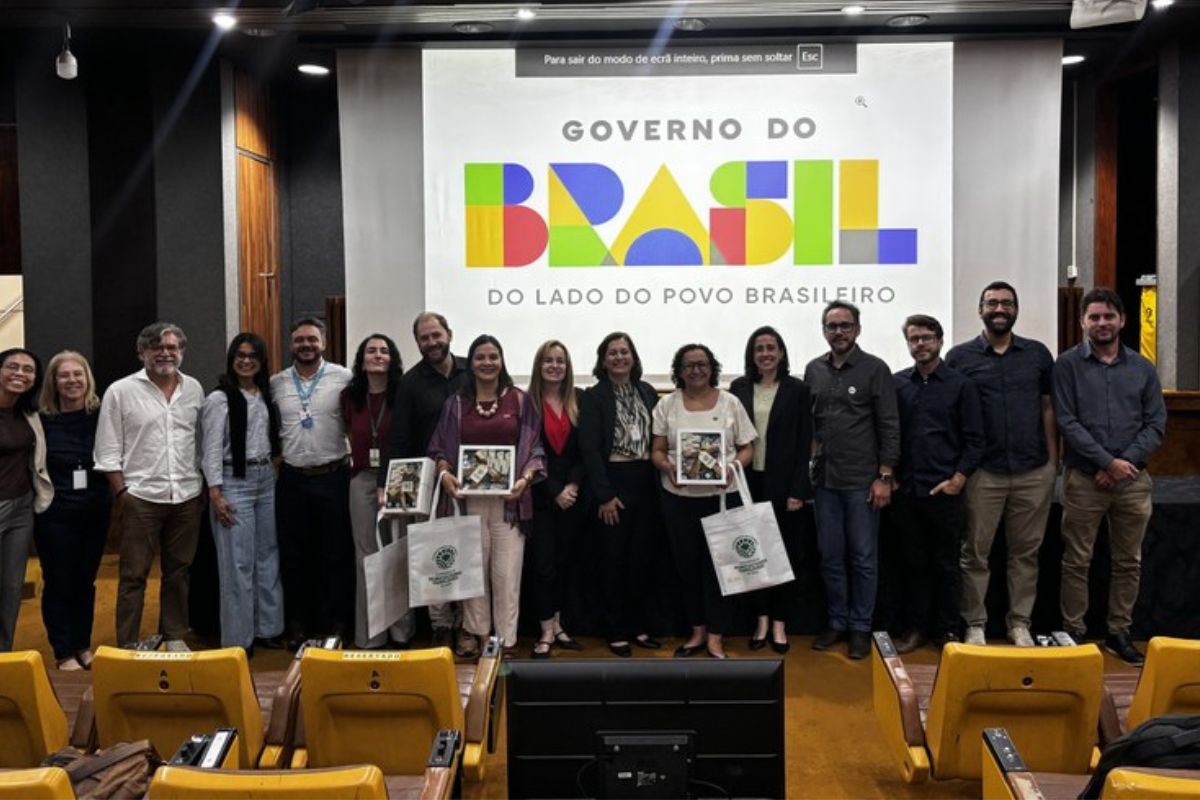
Representatives of the Bioinput Network of the MDA Gathered at the Palácio do Planalto to Define New Strategies That Strengthen Agroecological Transition in Brazil and Expand Sustainable Production
The agroecological transition in Brazil has gained prominence in public policies aimed at family farming and rural sustainability, according to a news article published.
On the last October 20th, the Palácio do Planalto hosted an important meeting of the Bioinput Network, organized by the Ministry of Agrarian Development and Family Agriculture (MDA).
The meeting gathered representatives from universities, social movements, public agencies, and cooperatives, with the purpose of aligning new actions that reduce the use of pesticides and expand small producers’ access to biological inputs.
-
Low-Demand Brazilian Beef Offal Gains Popularity Abroad: Indonesia Purchases $19.5 Million, Boosting Revenue and Reducing Waste

-
Soy Expansion in Former Brazilian Savanna Sparks Water and Land Conflicts in Major Agricultural Frontier
-
Mexican Pest Threatens U.S. Cattle Herds at Historic Lows, Potentially Boosting Brazilian Beef Exports as Burger Prices Soar

-
Avocado Boom for European and U.S. Markets Fuels Water Crisis in Drought-Stricken Chilean Region




The opening of the event was conducted by Ana Terra Reis, secretary of Supply, Cooperativism, and Food Sovereignty (SEAB), who highlighted the importance of collaboration between public and private institutions.
According to her, the strengthening of the network depends on the integration between scientific research, technical support, and the appreciation of local knowledge.
The secretary emphasized the letter of intent signed during the Coopera Mais event, an instrument that formalizes the commitment of universities, cooperatives, and public agencies to develop joint projects for sustainable innovation.
Bioinputs and Technological Innovation Strengthen Family Farming
During the meeting, discussions revolved around the expansion of bioinputs as an environmentally safe alternative.
The coordinator of Structuring Family Production at DECOOP/SEAB, Mariana Marinheiro, emphasized the importance of the regulation of Law No. 15.070/2024, known as the Bioinputs Law, which consolidates an essential legal framework for the sector.
This legislation ensures legal security and encourages investments in the local production of biological inputs.
Additionally, the Decentralized Execution Terms (TED) have allowed for support of practical actions in all regions of the country, making the agroecological transition in Brazil an effective and accessible process for farmers.
The faculty member from Federal University of Goiás (UFG), Eliana Fernandes, presented results from training conducted in five mesoregions of Goiás.
110 family producers were trained, out of a total of 250 participants, in projects focused on healthy eating, aromatic gardens, and socio-family entrepreneurship.
This data reinforces how the bioinputs policy is transforming local realities and encouraging rural leadership.
Sustainable Agriculture and Public Policies in National Synergy
The executive secretary substitute of the MDA, Marina Lima, presented the Institutional Ordinance No. 40, of September 8, 2025, which establishes the bioinputs strategy for family farming.
The instrument is aligned with the National Bioinput Program and the National Reduction of Pesticides Program (Pronara), both created by the Federal Government.
According to Marina, investing in agroecological studies and expanding decentralized production are fundamental steps to consolidate the agroecological transition in Brazil as a strategic axis of sustainable rural development.
Following this, Professor Marcela Bagagli from the Federal Institute of São Paulo emphasized the importance of quality control and good practices in the artisanal manufacturing of bioinputs.
She reinforced that even small properties can achieve high productive efficiency when adopting adequate technical protocols, strengthening food and environmental security.
Agroecological Transition in Brazil: Food Sovereignty and Rural Autonomy Strengthen the Future of the Countryside
The meeting concluded with a debate on the next steps of the Bioinput Network.
The participants highlighted that the agroecological transition in Brazil is not limited to the substitution of chemical inputs but to the construction of a new production model, centered on family farmers’ autonomy, food sovereignty, and economic and ecological sustainability.
The integration between science, public policies, and local practices was pointed out as an essential path to consolidating the agroecological transition in Brazil.





Be the first to react!