






 Portuguese
  Spanish


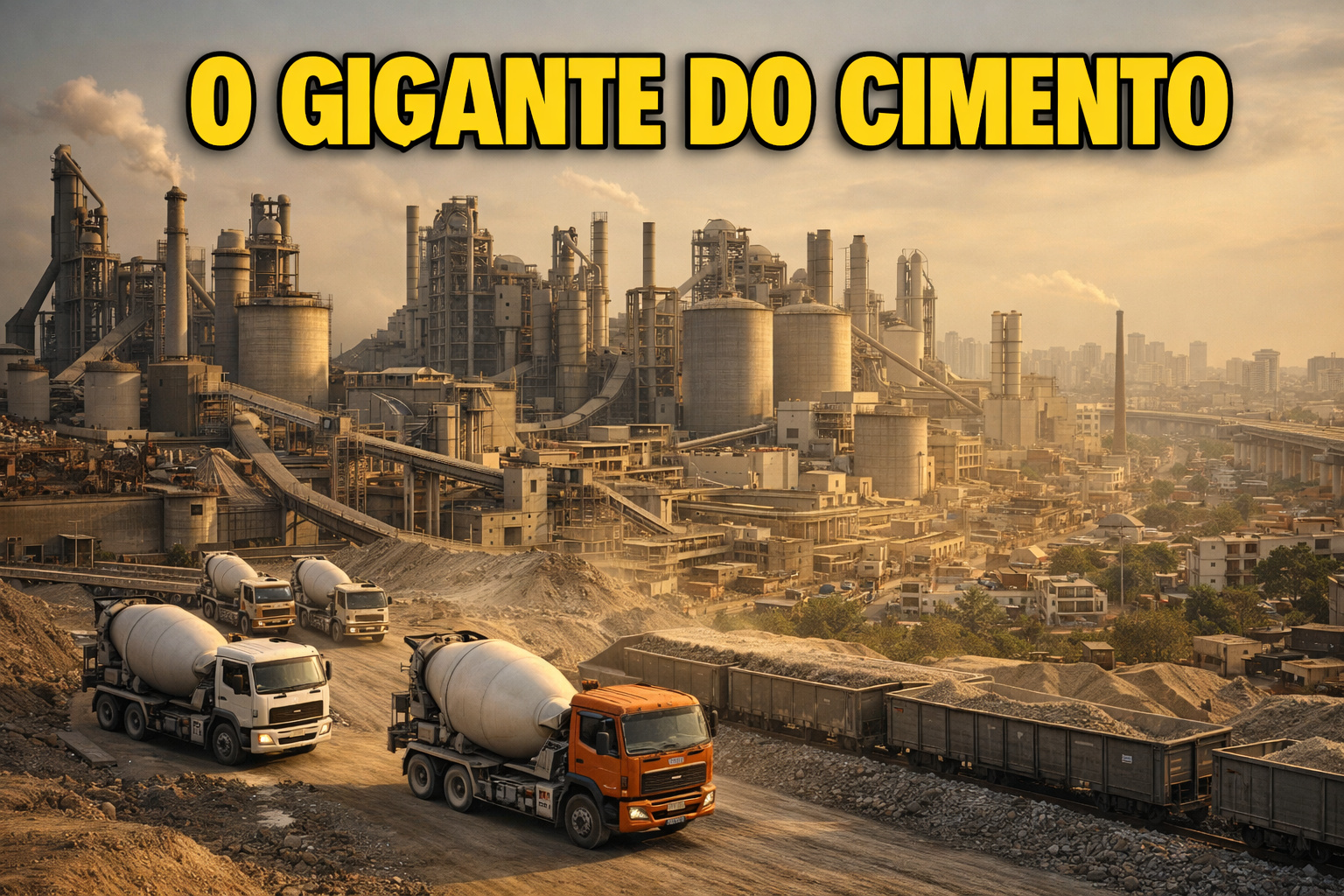
With a Capacity Close to 200 Million Tons Per Year, UltraTech Cement Leads Cement Production in India and Supports Urban Expansion.
UltraTech Cement Limited, part of the Indian conglomerate Aditya Birla Group, is today the largest cement manufacturer in India and one of the largest in the world outside of China. According to corporate data released by the company itself in 2024 and 2025, its consolidated installed capacity exceeds 188 million tons per year (MTPA), with expansion plans to surpass the 200 MTPA mark. The company operates dozens of integrated units, grinding plants, and distribution terminals spread across Indian territory and also has an international presence.
The growth of UltraTech is directly linked to the acceleration of Indian infrastructure in recent decades. Highways, subways, airports, urban housing, and industrial complexes depend on a continuous supply of cement, the base material for modern construction.
Industrial Scale of UltraTech and Distribution of Plants in India
The industrial structure of UltraTech is not concentrated in a single megaplant, but in a distributed system of integrated factories and strategically positioned grinding units. The integrated plants perform the entire production cycle, from the transformation of limestone to the production of clinker and subsequent grinding to obtain cement.
-
10-Year-Old Max Makes History with Paris Fashion Show, Launches Own Brand, Hires Staff, and Sets World Record as Youngest Runway Designer

-
Bolivian Female Construction Workers Form Association to Combat Discrimination and 38% Pay Gap in the Industry

-
Near Amsterdam, residents buy land and discover they must also build streets, manage drainage, handle waste, and grow food on half their plot.
-
Without a mansion, without high investment, and without a traditional classroom, a teacher living in a 22 m² house taught students to build a 9 m² studio apartment with the equivalent of R$10,000.



The consolidated capacity of nearly 200 million tons per year places the company among the largest global producers. This volume means that, on average, UltraTech can produce hundreds of thousands of tons per day across its set of facilities.
India, the second-largest cement producer in the world, has a demand driven by population growth, urbanization, and government infrastructure programs. UltraTech serves a large part of this domestic market, supplying industrial states and major urban centers.
Thermal Engineering and Operation of Rotary Kilns
The heart of cement production is the rotary kiln. In these inclined cylindrical structures, limestone and other materials are subjected to temperatures that can exceed 1,400 °C to form clinker, an essential component of cement.
Industrial rotary kilns can reach dozens of meters in length and operate continuously for long periods. The process requires strict control of temperature, rotation, and material flow to ensure clinker quality.
The production involves stages of limestone crushing, homogenization, calcination, and final grinding. Each ton of cement demands a large energy consumption, both thermal and electrical.
The thermal engineering applied in UltraTech’s plants seeks to optimize energy efficiency and reduce heat losses. Waste heat recovery systems and burner modernization are part of the adopted industrial strategies.
Urban Impact and Expansion of Indian Infrastructure
The accelerated growth of Indian cities has significantly increased the demand for cement. Road, railway, and airport infrastructure projects have scaled up consumption.
The expansion of the subway in cities like Delhi, Mumbai, and Bangalore requires a constant supply of structural cement. Government housing programs also drive demand.
UltraTech plays a central role in this context, serving as material support for urban growth. The annual volume produced sustains large-scale works and heavy engineering projects.
The urban impact is not limited to building construction. Dams, bridges, ports, and industrial parks also depend on the continuous supply of this input.
Energy Consumption and Environmental Challenges
The cement industry is energy-intensive and emission-heavy. The production of clinker releases carbon dioxide both from the burning of fuels and from the chemical decomposition of limestone.
With a capacity close to 200 million tons per year, UltraTech is situated in a sector under increasing pressure for decarbonization. The company announced investments in energy efficiency, use of alternative fuels, and carbon capture technologies.
India, as a developing country with high infrastructure demand, faces the challenge of balancing industrial growth and environmental commitments.
Carbon intensity reduction initiatives and the adoption of renewable sources have been gradually incorporated into operations.
Strategic Position of UltraTech in the Global Market
In addition to the domestic market, UltraTech has a presence in neighboring countries and participates in the international trade of cement and clinker. Its scale gives it relevant competitive power.
The annual volume places the company in a prominent position in global production rankings. Although Chinese companies lead in absolute volume, UltraTech is frequently mentioned as one of the largest outside of China.
The planned growth to surpass 200 million tons reinforces the company’s industrial ambition.
One of the Largest Industrial Structures in the Construction Sector
With nearly 200 million tons of cement per year and a network of integrated plants distributed throughout Indian territory, UltraTech Cement has established itself as one of the largest industrial structures on the planet in the construction sector.
The thermal engineering of rotary kilns, distribution logistics, and the ability to meet growing demand make the company a key player in India’s urban expansion. In a country that builds cities, roads, and infrastructure at a rapid pace, the cement produced by UltraTech physically supports this growth.
The future challenge involves maintaining massive industrial scale while reducing environmental impact and improving energy efficiency. UltraTech’s trajectory illustrates how heavy industry remains at the center of contemporary urban development.




-

-

-

-

-

-

11 people reacted to this.