Portuguese
  Spanish


Amidst the tug-of-war between Washington and Beijing for strategic minerals, a mining company in Goiás changed ownership and revealed the size of the treasure that Brazil still hardly explores
Rare earths have become the new obsession of the powers, and Brazil has just entered the center of this dispute. The American company USA Rare Earth announced in April 2026 the purchase of the mining company Serra Verde, owner of the only mine of its kind in operation in the country, in a $2.8 billion deal that exposed the geopolitical game around these minerals.
Rare earths are a group of essential elements for the high-tech industry, and the case is symbolic: until the sale, all production from the mine in Goiás was exported to China. Now it passes into the hands of the United States, which are trying to reduce dependence on China in this strategic sector.
What are rare earths and why the world disputes them
Despite the name, rare earths are not actually rare in the Earth’s crust. What is rare is finding them concentrated enough to be worth extracting, and even rarer is mastering the process of separating and refining them, which is expensive and complex.
-
Indian Project Aims to Recover Zinc and Silver from Mining Waste, Targeting Over ₹3.8 Billion Revenue in 28 Months

-
Giant 142 kg Emerald from Brazil’s Bahia Region Auctioned with Starting Bid of Nearly $16 Million

-
Study Reveals 97% of Pregnant Munduruku Women in the Brazilian Amazon Have Mercury Levels Above Safe Limits, 90% of Newborns Contaminated by Gold Mining
-
China could reduce iron ore imports from 80% to 50% of consumption by 2030, while its share in global steel production falls from 52% to 46%, in a shift that could reshape the global market, says CMRG.


These elements are irreplaceable in a huge list of modern products. According to Agência Brasil, they are used in the manufacture of permanent magnets used in electric vehicles, wind turbines, robots, drones, and high-efficiency air conditioning, in addition to applications in semiconductors, defense, nuclear energy, and the aerospace sector. Without these elements, much of the energy transition and military industry simply stalls.
The only ionic clay mine outside Asia
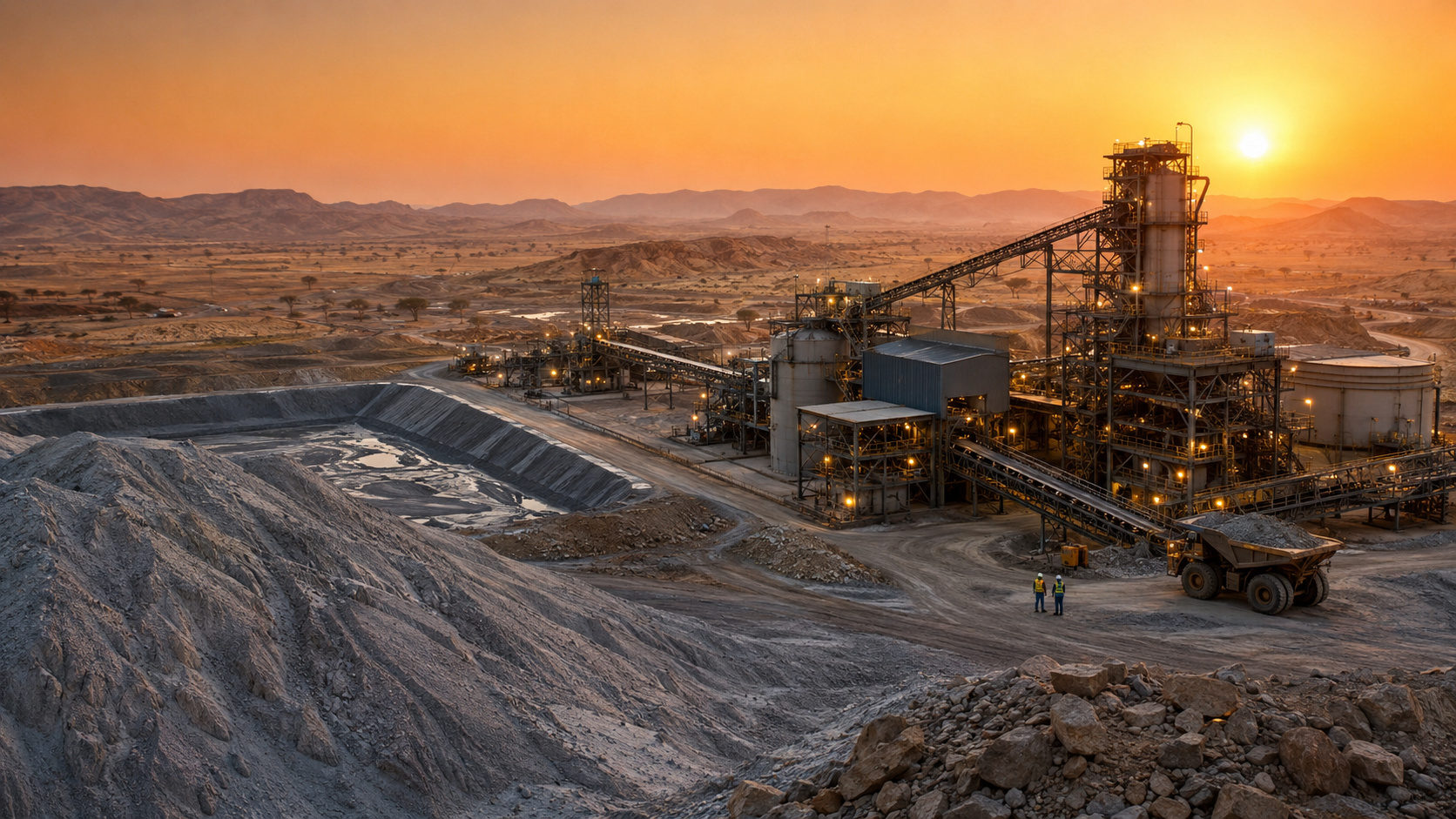
The asset at the center of the deal is the Pela Ema mine in Minaçu, in northern Goiás. It is the only ionic clay mine in operation in Brazil, a type of deposit considered the main source of heavy elements, the most valuable and difficult to obtain.
According to Agência Brasil, Serra Verde is the only producer outside Asia of four of the most critical heavy elements: dysprosium, terbium, neodymium, and yttrium. The mine began production in 2024 and aims to double production by 2030. This pioneering effort outside the Asian continent is exactly what makes the asset so coveted at a time of tension between major powers.
Before the sale, 100% went to China
The detail that best explains the importance of the business lies in the previous destination of the production. According to Brasil 247, before the acquisition Serra Verde exported its entire production to China.
In other words, the Brazilian ore left the country without refining and went to supply precisely the industry that dominates the world in the sector. The purchase by the Americans reverses this flow. What used to feed the Chinese chain now has supply priority for the United States, according to Brasil 247, in a turnaround that carries weight far beyond financial value.
The $2.8 billion check and who’s behind it
The size of the deal measures the bet. USA Rare Earth paid $2.8 billion for the mining company, in a transaction announced on April 20, 2026, according to Agência Brasil.
The operation has the fingerprints of the American government. According to Brasil 247, the agreement was financed by the United States International Development Finance Corporation, the DFC, with a clause of supply priority for the American market. It is not a purely private business: it is Washington using public capital to ensure access to an input it considers strategic for its national security.
Brazil has the 2nd largest reserve, but lacks refining
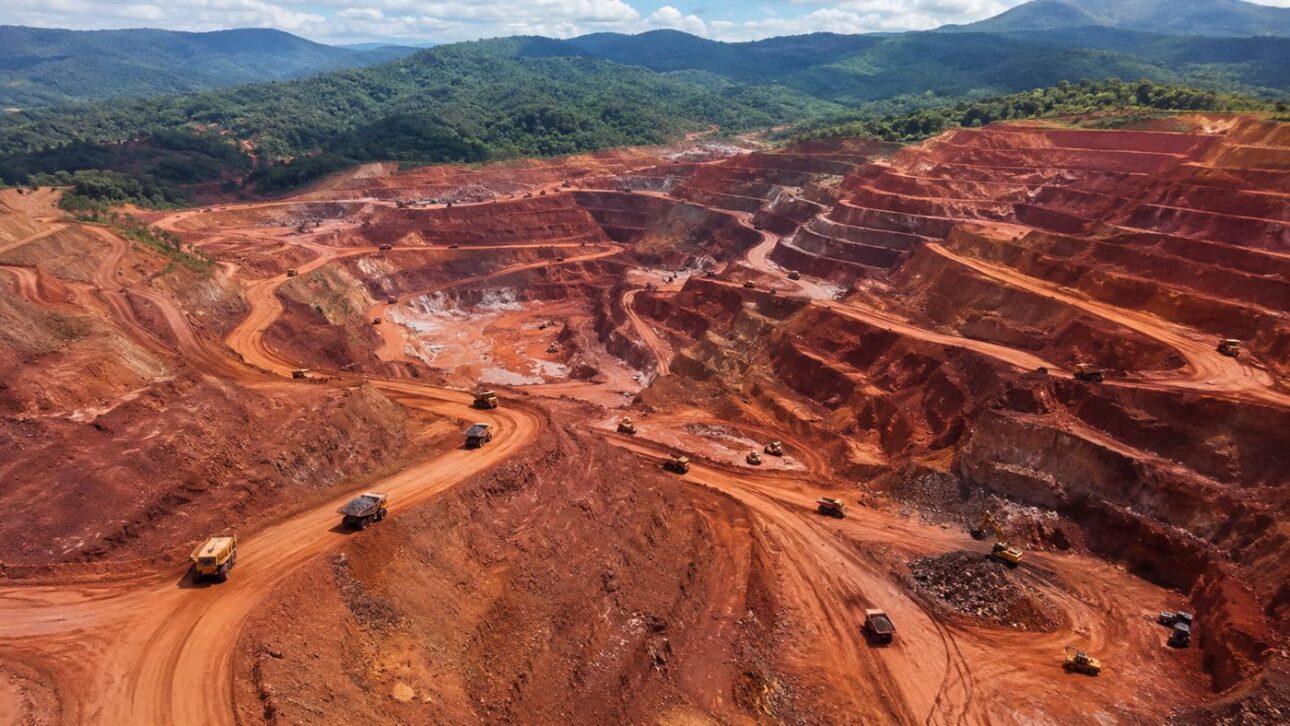
Here lies the Brazilian paradox. According to Brasil 247, Brazil has the second largest rare earth reserve in the world, with Serra Verde producing about 6,500 tons of oxides per year. The mineral potential is enormous, but the country takes little advantage of it.
The reason is technical and economic. The most valuable part of the chain is not extracting the ore from the ground, but refining it and turning it into a final product, a stage that Brazil does not master on a large scale. Therefore, the ore leaves raw, adds value abroad, and returns expensive. Having the reserve without having the refining is like sitting on a gold mine without having the smelting.
What they are for: the magnets that move the electric car
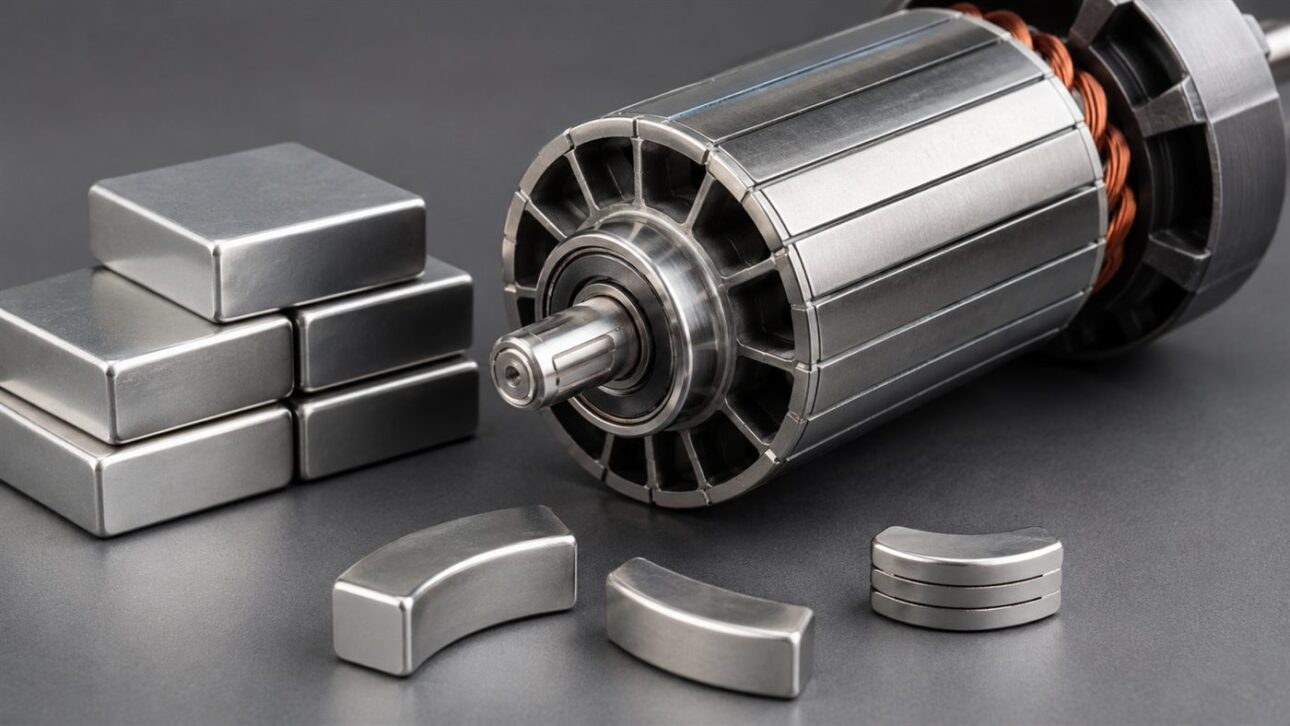
To understand why so much money chases these elements, just look at where they end up. Heavy elements like dysprosium and terbium are essential for manufacturing permanent magnets that withstand high temperatures, precisely those that make electric car motors and wind turbine generators spin.
Without these magnets, there is no fleet electrification or wind expansion on the scale the world plans. The same goes for drones, industrial robots, and defense systems. Each electric vehicle and each wind turbine carries a bit of rare earths inside, which turns these minerals into a bottleneck for the green economy and cutting-edge industry.
China controls more than 70% of refining
The reason for so much tension has a name and surname: concentration. According to Brazil 247, China controls more than 70% of the global refining capacity of rare earths, the most complex and strategic stage of the chain. Agência Brasil reinforces that more than 90% of the world’s extraction also takes place on Chinese territory.
This dominance gives Beijing a powerful lever. In trade disputes, restricting the export of these materials becomes a geopolitical weapon. Dependence on China in this sector is what keeps Americans and Europeans awake at night, and explains why the United States paid billions for a mine on the other side of the world.
The dilemma of Brazil between selling the ore and building industry
The sale of Serra Verde rekindles an old debate in the country. Brazil can settle for being a supplier of raw ore to those who refine, or it can try to move up the chain and dominate the noble part of the process, generating jobs and technology at home.
The first option brings quick money but keeps the country at the base of the value pyramid. The second requires heavy investment, industrial policy, and time. Deciding between exporting the ore or industrializing these minerals is, deep down, deciding what place Brazil wants to occupy in the economy of the future, in a sector that will only become more contested.
A treasure that Brazil still looks at from afar
The billion-dollar purchase made it clear that the Brazilian subsoil holds one of the most coveted assets on the planet, and that powers are willing to pay dearly for it. The Serra Verde episode is less about a mine and more about the global board of strategic minerals, which Brazil entered almost without noticing.
The question that remains is whether the country will continue selling its raw ore or if it will build the industry needed to transform this reserve into real power. Did you know that the electric car and the wind turbine depend on a mineral that Brazil has in abundance, but hardly utilizes?