






 Portuguese
  Spanish


A new study on the Methana volcano reignites the alert: up to 10,000 years of silence may not mean a volcano is dead. Scientists want to review the classification and expand monitoring before a surprise eruption catches entire regions off guard.
Volcanoes classified as extinct may not be so dead after all. A new study suggests that some of them are just going through a long phase of underground growth before erupting again, which changes the way scientists look at areas that today seem inactive.
The alert gains weight because the case is not theoretical: the Methana volcano, near Athens, went through a quiet interval of about 110,000 years, between approximately 280,000 and 168,000 years ago, before returning to activity. The study reinforces the idea that time alone may not be enough to declare that a volcano is finished.
For researchers, this raises an important question: how many volcanoes considered extinct still have magma accumulating underground, without giving clear signs that they are ready to awaken?
-
Your Old Gmail Address Might Be Obsolete Soon: Google Introduces Feature Changing Account Usage.

-
Lost Fossil Found in Brazil Unveils 240-Million-Year-Old Reptile Predating Dinosaurs, Redefines Evolutionary Map and Highlights Southern Brazil’s Role in Understanding Crocodile and Dinosaur Ancestors

-
China to Drill 15 Kilometers into the Earth, Set to Break Russia’s Record for Deepest Man-Made Hole
-
Researchers Use Algae to Enhance 3D-Printed Walls, Boosting Strength by 25% and Speeding Construction by 33%


Methana remained quiet for 110,000 years before erupting again
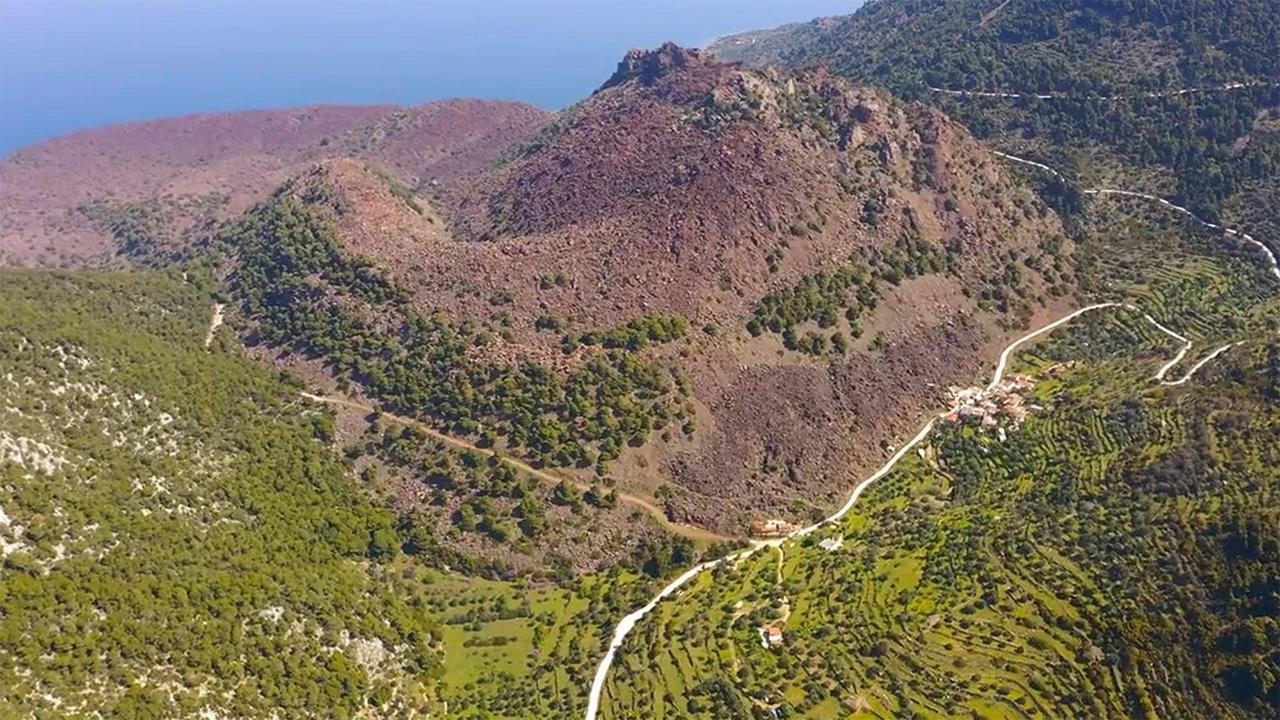
The Methana volcano, considered extinct and located near Athens, remained without visible eruptions for almost 110,000 years, in an ancient interval located between about 280,000 and 168,000 years ago. After this period, it resumed producing lava, leading scientists to question the traditional classification of volcanoes as extinct.
This point is central to avoid confusion: Methana did not remain inactive for 110,000 years up to the present day. What the research identified was a long period of silence in the geological past, ending when the volcano returned to activity approximately 168,000 years ago.
According to livescience.com, the team analyzed Methana’s history with dating and chemical study of zircon crystals present in rocks ejected by different eruptions.
The result indicated 31 eruptions over about 700,000 years of volcanic activity, interspersed with long periods of quiet. During the longest of these intervals, magma would have accumulated in depth until the volcano became intensely active again.
For the study’s co-author, Răzvan-Gabriel Popa, from ETH Zurich, the main message is straightforward: volcanoes that today seem extinct “may not really be extinct”.
The problem of time-based classification has become a target of criticism
Today, the official classification usually treats a volcano as extinct if it hasn’t erupted for about 10,000 years, or since the beginning of the Holocene, 11,700 years ago. However, the new work reinforces that this timeframe may be too short to explain the real behavior of various volcanic systems.
The scientists interviewed by livescience.com argue that the assessment needs to consider signs of magmatic activity, changes in the subsoil, ground deformations, and other geophysical indicators, not just the time elapsed since the last eruption.
This is because a region that seems dormant may actually be accumulating pressure without the surface giving away all the clues. For the researchers, the current classification is, in part, too arbitrary for the risk involved.
Other volcanoes reinforce the alert about unexpected eruptions
Methana is not the only example that has shaken the old idea of an extinct volcano. In Iran, Taftan has come under more scrutiny after studies indicated a rise at the top, possibly caused by gas accumulation below the surface. The last known eruption there may have occurred hundreds of thousands of years ago.
In Romania, Ciomadul was also classified as extinct for a long time, but a 2019 study found magma still present beneath the area. According to Popa, the system seems to be in a growth phase, although it has not yet erupted.
There is also the case of Hayli Gubbi in Ethiopia, which erupted in 2025 after a long period without recorded eruptions. As the area is remote, scientists still cannot determine with complete certainty when the last previous explosion occurred.
Broader monitoring can be the difference between alert and surprise
Researchers argue that monitoring needs to go beyond the most famous volcanoes and include areas currently considered lower risk. In more populous regions, such as Eifel, in western Germany, and La Garrotxa, in northeastern Spain, this vigilance can be especially important.
There are tools that help detect subtle changes, such as satellites capable of identifying small ground deformations and geophysical methods that reveal what is happening underground. In some cases, thousands of small tremors have already preceded major eruptions, as occurred at Pinatubo, in the Philippines, in 1991.
For scientists, the lesson is clear: 10,000 years of silence do not guarantee that a volcano is dead. And, when magma remains active below the crust, the next eruption may be much closer than the old classification suggests.
If the classification of volcanoes needs to change, the debate is already open. Tell us what you think and share this report with those interested in science, natural risk, and the silent signals that come from the depths of the Earth.


