Portuguese
  Spanish


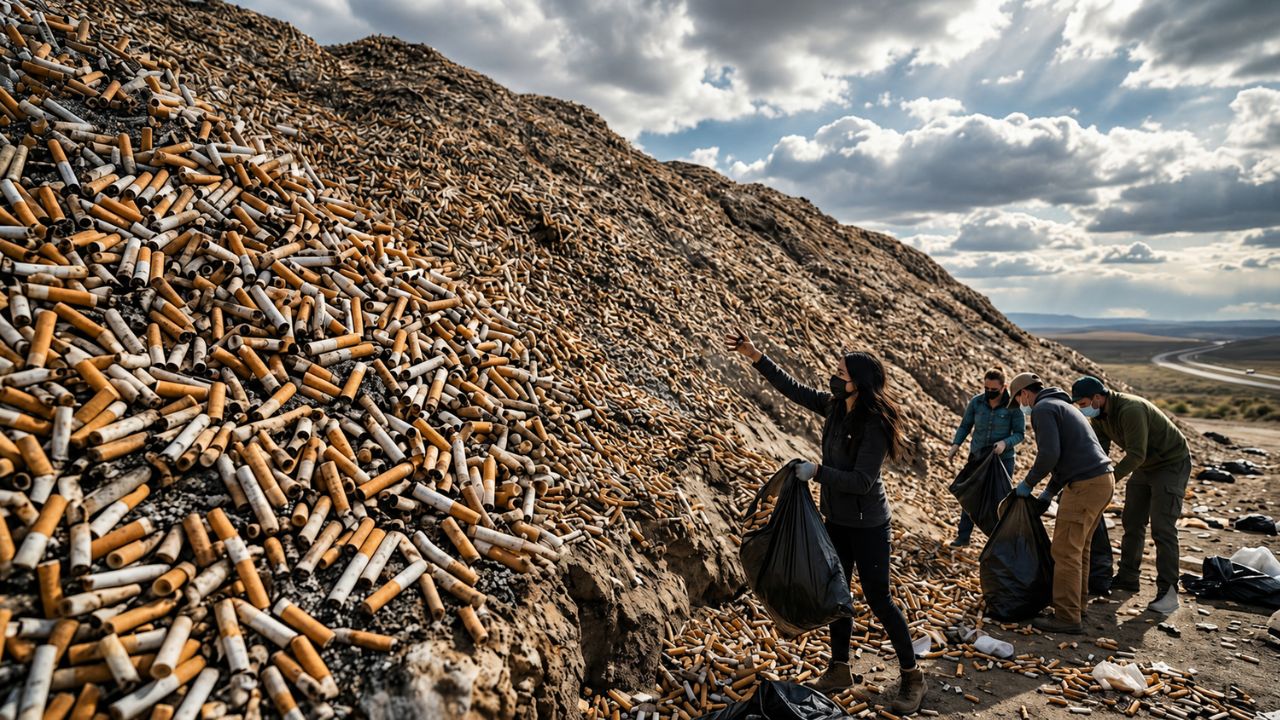

Recycled cigarette butt has already been reused in hundreds of millions of units and generates materials for paper, crafts, and civil construction.
An initiative developed in Votorantim, in the interior of São Paulo, has been showing that one of the most discarded wastes in the world can gain a new utility. The company Poiato Recicla has already reused over 800 million units of cigarette butts collected in different regions of the country. The material, which would normally take years to decompose and could contaminate the environment, undergoes an industrial process that transforms it into a cellulose mass used in various projects.
According to g1, the operation gathers more than 9,000 collection points spread across Brazil and emerged from an investment of over R$ 1 million made by businessman Marcos Poiato. The goal was to create a solution for an environmental problem often ignored by the population: the improper disposal of cigarette remnants.
How is the cigarette butt transformed into raw material?
Upon arriving at the recycling unit, the waste goes through a series of steps aimed at removing impurities and eliminating toxic components.
-
Humanoid Robots Transition from Demonstrations to Real Work in Factories

-
Anti-poaching patrol in Thailand accidentally discovers hidden cave with 2,000-year-old petroglyphs, geometric engravings, and mysterious three-finger patterns on sandstone walls.

-
Russia Deploys Largest Nuclear Icebreaker in Arctic Capable of Breaking Through Three-Meter-Thick Ice
-
TCL Launches Energy-Efficient Refrigerator in Brazil, Promising 70% Less Consumption Than Competitors



The procedure begins with the cooking of the butts in large containers. During this phase, substances present in the tobacco are separated from the main material. Instead of being discarded, the water used is sent to cooperatives specialized in liquid waste treatment.
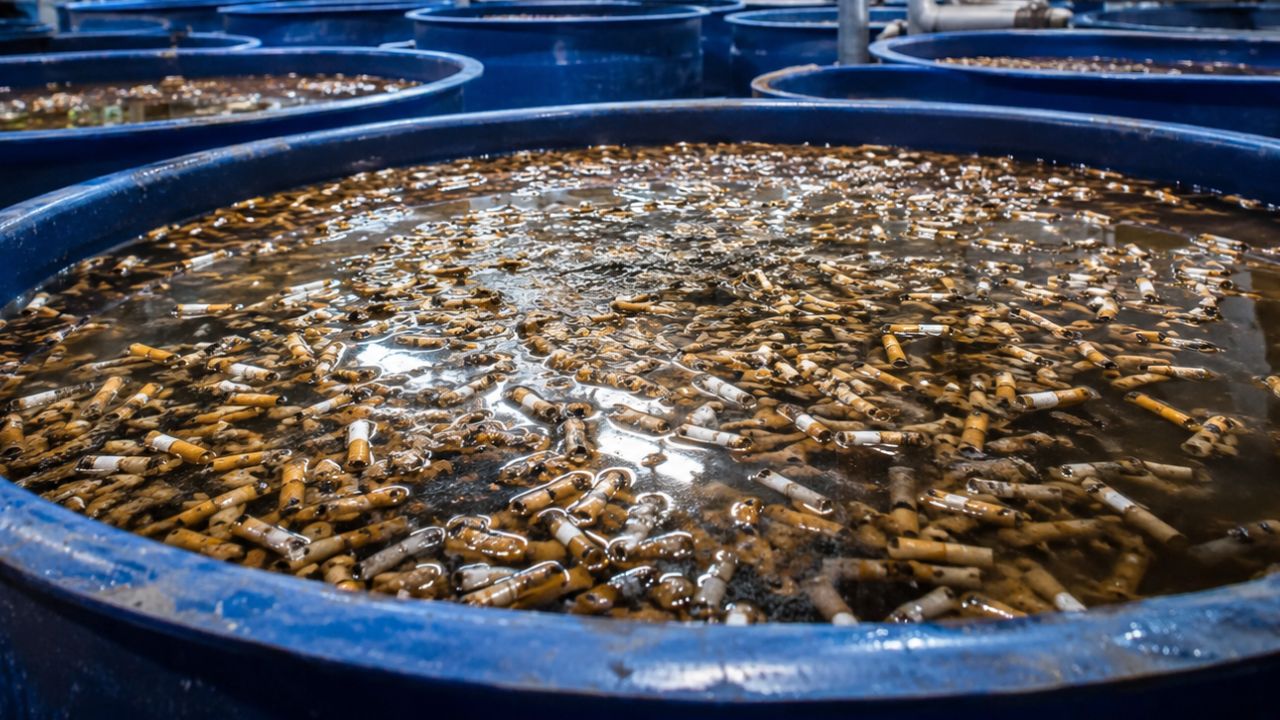
Next, a cleaning process occurs, repeated several times. According to Marcos Poiato, the intention is to ensure that any remaining trace is removed.
“There are three washes. Here, the purpose is that if there is still any residue contained in it, it will be eliminated,” explained the businessman.
After cleaning, the material is dried, treated, and pressed. About 24 hours later, the final product emerges: cellulose discs that serve as a base for new applications.
The environmental impact of improper disposal
The relevance of the initiative is directly linked to the polluting potential of this type of waste. When discarded on streets, sidewalks, beaches, or green areas, a cigarette butt can remain in the environment for up to 15 years. During this period, it releases substances that reach the soil and can also reach watercourses.
It was precisely this reality that motivated Marcos Poiato to study alternatives for reusing the material. According to him, many people do not associate the act of throwing a cigarette butt on the ground with the environmental consequences generated later.
“I noticed that people smoked and threw the butt on the ground without understanding that the responsibility for the waste was also theirs,” he stated.
What can be produced with recycled cigarette butts?
Once processing is completed, the obtained mass can be used in different segments.
Among the applications already developed are:
- Recycled paper;
- Stationery products;
- Packaging;
- Handcrafted pieces;
- Sculptures;
- Projects related to civil construction.
According to the company, only 10 cigarette butts are enough to produce a sheet of recycled paper. Part of this material is also sent to art workshops, charitable institutions, and artisans.
According to Marcos Poiato, just mix the mass with water to obtain a pulp similar to that used in the conventional manufacture of recycled paper.
One of the most promising lines of research involves the use of cellulose produced from cigarette butts in construction works.


The work is carried out in partnership with researchers who seek to enhance the material’s resistance for new applications. Initial studies indicate relevant results.
According to the founder of the initiative, tests point to a reduction of up to 43% in the use of traditional materials, as well as savings between 35% and 40% in the costs of certain constructions.
“Preliminary results show a reduction of up to 43% in the use of these materials and savings between 35% and 40% in construction costs,” he highlighted.
Projects Have Already Left the Experimental Phase
The use of recycled mass was not restricted to laboratories. The company reports that two skate tracks have already been built with the participation of the reused material.
Additionally, a residence designed by architect George Rotatori is being used to evaluate the durability of the technology in real conditions.
The construction includes walls, floors, and roofing produced with the mass derived from recycled cigarette butts. According to the company, the work began about a year ago and is expected to be completed by 2026.
Located in the Parque Jataí neighborhood in Votorantim, the plant receives containers daily containing waste collected in various Brazilian cities. The current capacity allows recycling approximately 90 kilograms of cigarette butts per day.
While the material arrives from different regions of the country, the cellulose produced is sent to partners involved in research, artistic projects, and initiatives related to civil construction.

The operation involves a team of 12 environmental professionals, who work during business hours.
For Marcos Poiato, the professionalization of the process is one of the factors responsible for the growth of the initiative and the ability to serve organizations interested in sustainable solutions.
Population Participation is Considered Essential
The system directly depends on the collaboration of smokers and the correct disposal of waste. Those who wish to contribute can use the collectors distributed in thousands of points across Brazil. The locations can be consulted on the official channels of the initiative.
By expanding the collection and reuse of this material, the project aims to transform a waste often associated with pollution into a raw material capable of generating new products and reducing environmental impacts in different sectors of the economy.
With information from g1.