Portuguese
  Spanish


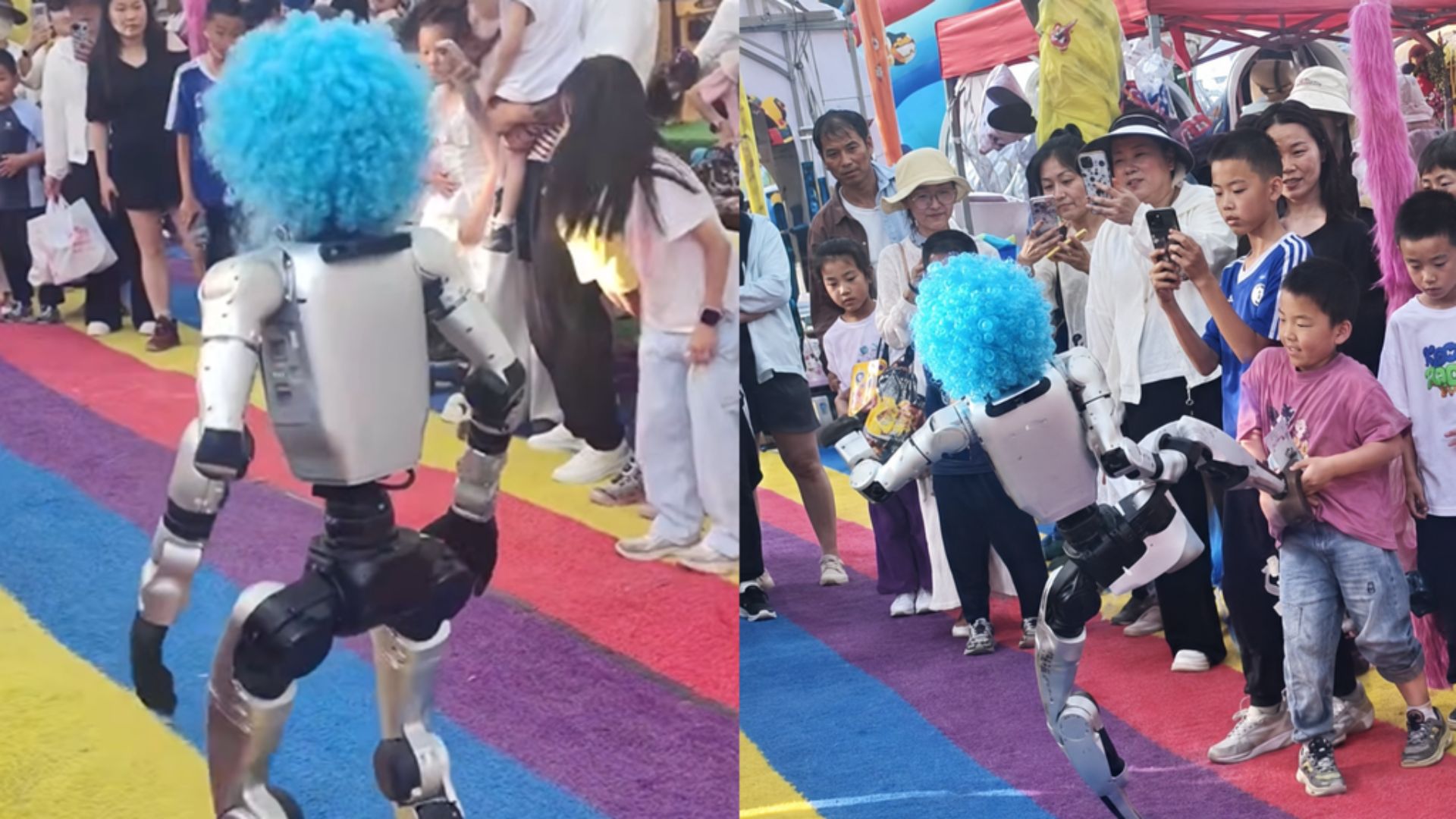


Humanoid robot wearing a blue wig hit a child during a public presentation, raising questions about minimum distance, physical barriers, and responsibility in events that showcase machines capable of performing broad movements in front of spectators, including children near the stage.
During a public presentation held last Monday (01), a humanoid robot wearing a blue wig hit a child with a kick to the abdomen, in an episode recorded by spectators and shared on social media.
After the impact, the boy fell to the ground in front of the audience watching the performance, while nearby people reacted to the machine’s movement and the child’s mother sought assistance after the incident.
The presentation included dance steps and movements inspired by martial arts, with the robot performing kicks, spins, and movements near the area occupied by spectators watching the exhibition.
-
Humanoid Robots Transition from Demonstrations to Real Work in Factories

-
Anti-poaching patrol in Thailand accidentally discovers hidden cave with 2,000-year-old petroglyphs, geometric engravings, and mysterious three-finger patterns on sandstone walls.

-
Russia Deploys Largest Nuclear Icebreaker in Arctic Capable of Breaking Through Three-Meter-Thick Ice
-
TCL Launches Energy-Efficient Refrigerator in Brazil, Promising 70% Less Consumption Than Competitors




In one of the sequences, the machine approached the edge of the space used as a stage and ended up hitting the child, who was too close to the humanoid’s movement area.
From the images released, there was no visible physical barrier between the audience and the robot, such as fences, isolation ropes, or clear markings to prevent children from getting too close.
The lack of proper delimitation increased the risk during the performance, as the equipment continued to perform broad, fast movements using its legs in an area accessible to spectators.
On social media, the scene began to be debated for combining entertainment, technology, and physical risk in the same episode, especially since the audience was watching the presentation just a few meters from the machine.
Some comments demanded more control from the organizers, while other reactions attributed responsibility to the adults who were with the child and allowed the approach during the demonstration.
Humanoid robot with blue wig hit child during show
At the time of the accident, the robot was participating in an artistic performance with a striking appearance, wearing a blue wig while performing a choreography that mixed dance and movements similar to martial arts strikes.
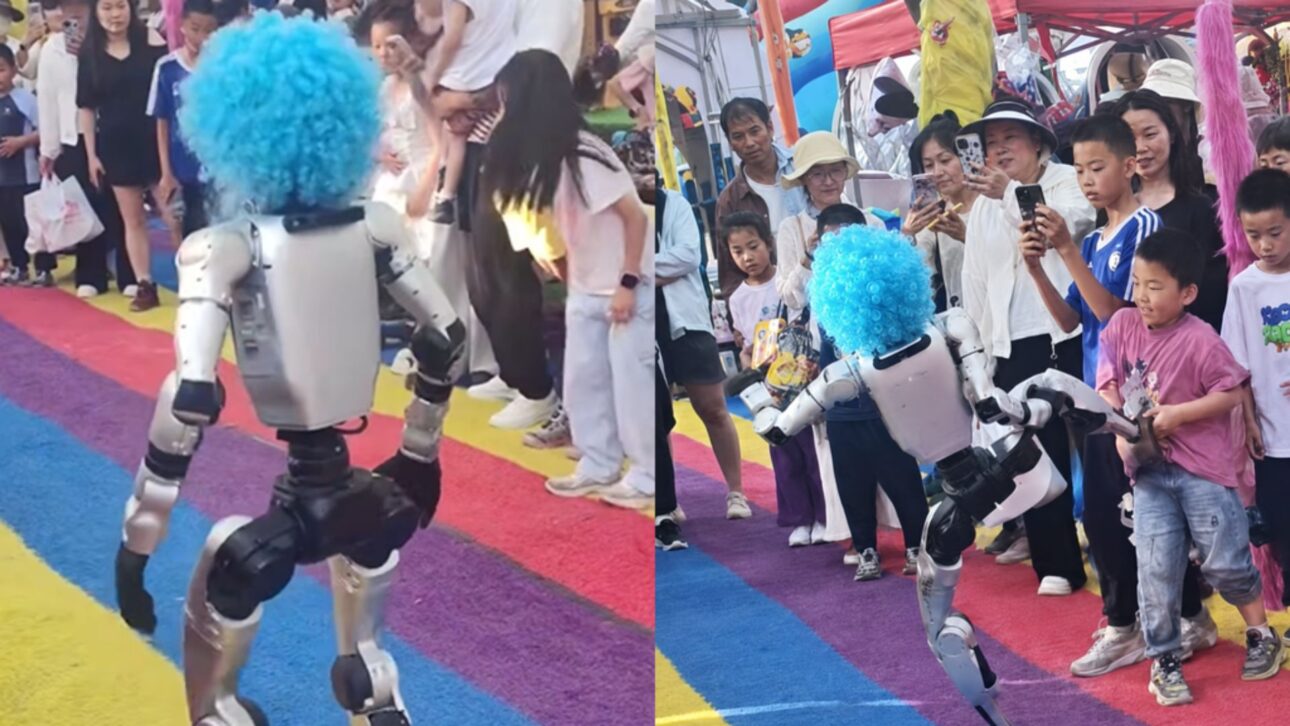
The sequence included lateral movements, leg lifts, and kicking motions, elements that require a safe distance when a heavy and articulated machine performs in front of nearby people.
As it approached the area occupied by the public, the humanoid struck the child in the abdominal region, causing the boy to fall immediately after contact with the machine’s leg.
Reports published along with the images state that the mother sought medical attention and reported the incident, but there is no confirmed public information about the child’s age or the severity of any injuries.
The names of those responsible for the presentation, the exact location of the event, or the safety protocol adopted to separate spectators and equipment during the exhibition have also not been officially confirmed.
The repercussion grew because the video shows a situation still uncommon for many spectators, although humanoid robots are increasingly appearing at fairs, promotional actions, and technological attractions.
Lack of isolation increased risk in the presentation
Among the most discussed points after the images were released is the distance between the public and the robot, as leg, arm, and torso movements can cause accidents when there is no isolation.
Even in scheduled presentations or controlled by operators, machines of this type need free space around them, especially when performing kicks, spins, and sequential movements in front of children.
The absence of visible barriers drew attention because it facilitated excessive proximity of spectators, creating a situation where curiosity, close filming, and lack of guidance mixed.
Besides the physical structure, the presence of monitors also entered the debate, as human supervision can interrupt the performance when someone invades the area considered safe for the equipment.
In open events or with large crowds, this type of control tends to be even more important, as the public does not always perceive the reach of a humanoid’s movements.
On the other hand, comments on social media argued that the adults responsible for the child should have maintained a greater distance, as the robot was making abrupt movements and the risk was visible during the presentation.
Even so, the attention of those responsible for the public does not eliminate the need for planning by the organizers, especially when the attraction involves a heavy, articulated, and continuously moving machine.
Advanced robots require clearer rules at events


The popularization of humanoids in public spaces accompanies the evolution of commercial models capable of dancing, running, jumping, balancing objects, and performing movements inspired by martial arts.
With this expansion, presentations previously restricted to laboratories or technical demonstrations have started to occupy fairs, shopping malls, parks, and cultural events, often in front of spectators without prior training or guidance.
The model associated with the case in the publications is from the Unitree G1 line, although there is no official public confirmation about the unit used in the presentation recorded on video.
According to the technical specifications released by the manufacturer, this line has an approximate weight of 35 kg with battery and versions with 23 to 43 degrees of freedom, depending on the configuration.
These data help explain why a presentation without isolation can become risky, as equipment weighing dozens of kilos can produce significant impacts during wide movements.
In practice, a robot with articulated legs, powerful motors, and autonomous or controlled movement should not operate close to the public without a safety zone and constant supervision.
The difference between a controlled demonstration and a public interaction also matters in this type of situation, as open environments have curious children, spectators filming, and unpredictable circulation.
In promotional videos, the machines usually appear in prepared locations, with free space, attentive operators, and few external interferences; however, in front of the general public, controlling the surroundings requires additional measures.
Incidents with humanoids reinforce the safety debate
The case involving the child was not the only recent episode to draw attention to risks in presentations with humanoid robots, especially when there are intense physical movements near people.
In December, a training session with a humanoid also gained attention after an operator was hit by a kick during a sequence of movements, reinforcing the need for control in the surroundings.
Another episode publicized this year showed a dancing robot hitting a child in the face during a presentation, a situation that again provoked criticism about minimum distance and protective barriers.
These records do not demonstrate, by themselves, that the robots are “out of control,” but indicate that isolation failures can turn technological demonstrations into avoidable accidents.
In most reported cases, the incidents appear linked to choreographies, locomotion tests, human commands, or presentations with a nearby audience, factors that require planning before the exhibition.
Experts in human-robot interaction often point out that the acceptance of these machines depends not only on technical capability but also on trust in the safety of public use.
When children participate or watch closely, the demand for protection tends to be higher because they may approach out of curiosity without understanding the reach of the movements.
Responsibility in events with robots comes into discussion
The available public investigation still does not allow us to state who organized the presentation, who operated the equipment, or what safety measures were adopted before the performance began.
There is also no confirmed information about any formal investigation, compensation request, or accountability after the episode, which limits conclusions about administrative or legal developments.
Even without these details, the video reignited a concrete discussion about duties in events with robots, especially when there are children near heavy and articulated equipment.
Organizers need to foresee barriers, minimum distance, and immediate interruption in case of improper approach, while operators must maintain permanent visual control over the machine and the audience.
The presence of children requires additional care, as they tend to approach attractive features when the robot dances, uses accessories, or seems to be part of a game.
The spectators’ guardians also have a relevant role, but safety cannot depend solely on the audience’s reaction to a risk that not everyone can quickly assess.
With humanoids increasingly present in promotional actions, fairs, parks, and cultural events, the demand for specific rules tends to grow before, during, and after public presentations.