Portuguese
  Spanish


iron meteorite found by Jim Koch in Dane County was stored for 15 years until it reached the Geology Museum in Wisconsin. Weighing almost 50 kg, the find displays rare marks from the Solar System, preserved fusion crust, and becomes a scientific piece for visitors at the American university in the museum.
The iron meteorite was discovered in May 2009 by farmer Jim Koch, while he was preparing an alfalfa field at Vienna EqHo Farm, in the city of Vienna, north of Madison, in Wisconsin, United States. The stone caught attention because it was too heavy to seem ordinary.
According to a report from the University of Wisconsin-Madison, published on April 2, 2024 by Will Cushman, the find was identified as the first meteorite recorded in Dane County, the 15th classified in Wisconsin, and the largest iron meteorite classified in the United States since 1981. The piece was stored for years before gaining a scientific purpose.
The plow pulled a stone that did not seem to belong to the field

Jim Koch was working in the field on a spring day when the plow lifted an irregular stone. Initially, it might have seemed like just another rock removed from the soil before planting, a common task for those dealing with agricultural soil and field preparation.
-
Starlink’s Direct-to-Cell Internet Takes Major Step Forward in Brazil with Regulatory Approval, Partnership with Carriers Needed for Antenna-Free Service

-
Brazilian Recycling Company Overcomes $200,000 Debt to Process 360 Tons of Plastic Monthly and Produce 27,000 Items Daily

-
The More You Love Someone, the Sleepier You Feel Around Them: Science Explains Why the Body Relaxes and Feels Safe with a Loved One

-
Kenyan Company Recycles Over 10 Million Flip-Flops from Indian Ocean Beaches into Elephant and Giraffe Sculptures Sold for Up to $1,200



The difference appeared when he tried to pick it up. The stone was unusually heavy and looked different from the common rocks in the field. That strange weight was the first sign that the object might not have a common terrestrial origin.
The farm kept the find for 15 years
Koch and his wife, Jan Shepel, suspected early on that the stone could be a meteorite. The hypothesis gained strength when family members observed the material and a small sample was cut for analysis. Shepel’s brother-in-law, Joe Zanter, a metallurgical engineer and UW-Madison alumnus, assisted in this initial verification.
Even with the suspicion, recognition took time. The iron meteorite remained for years in an annex of the Vienna EqHo Farm, protected under old carpets, while the couple tried to find someone interested in evaluating the find more closely. What seemed like an obvious discovery to them took time to be treated as a rare scientific piece.
The meteorite weighs almost 50 kg and became a local landmark
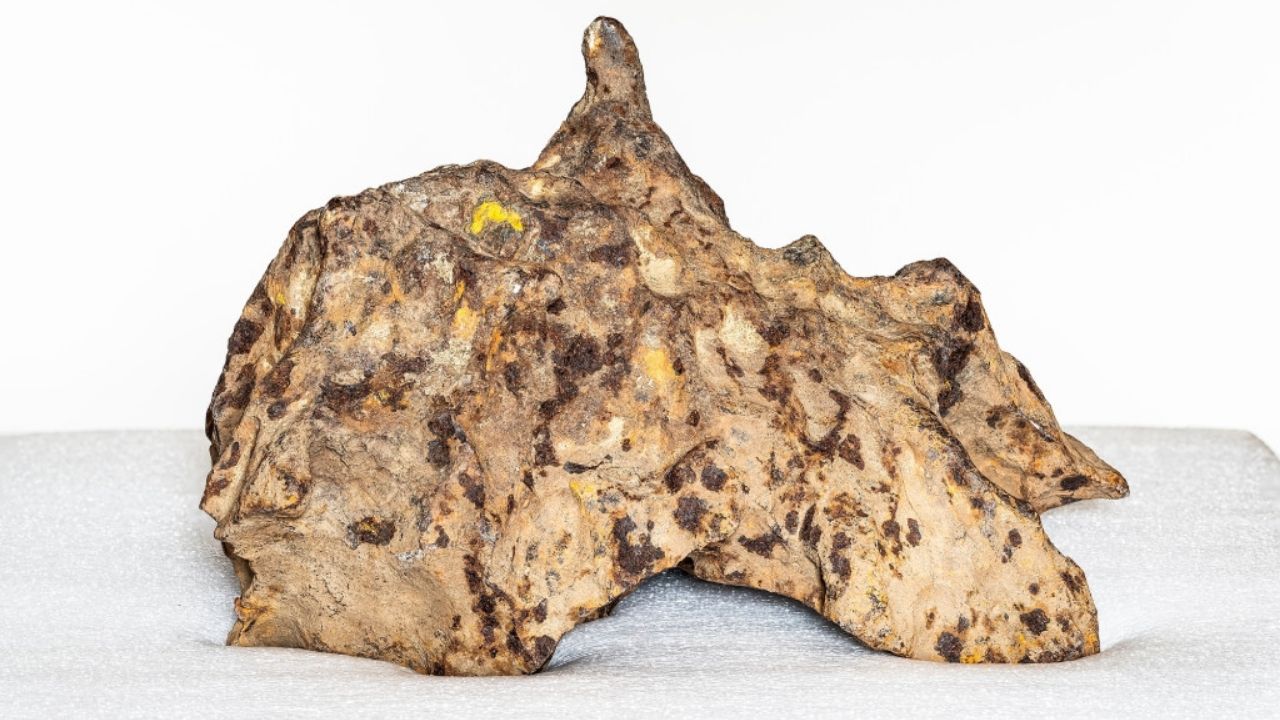
The piece weighs almost 50 kg, enough to impress even before any detailed analysis. This weight helps explain why Jim Koch noticed something unusual in the field. Iron meteorites tend to be dense, as they are primarily composed of metallic iron and nickel alloys.
The find became even more significant due to its location. It is noted as the first recorded meteorite in Dane County and the 15th classified meteorite in Wisconsin. An ordinary farm ended up on the scientific map because of a rock from space.
The scars tell the journey through the atmosphere
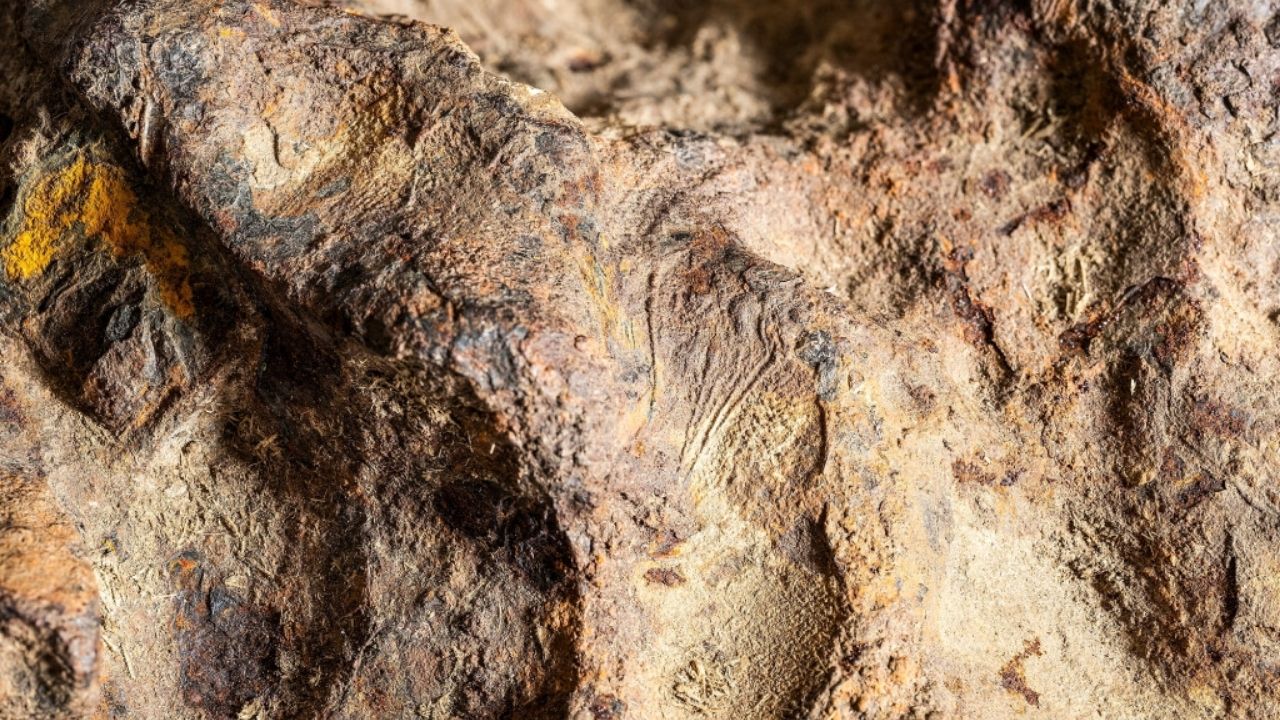
What caught the specialists’ attention was not just the size. The surface of the meteorite preserves rare marks associated with its passage through Earth’s atmosphere. Among them are flow lines, small ridges formed when the metal intensely heated during the fall.
Splash marks were also observed, signs left by droplets that detached and hit the meteor’s surface again. Together, these features are part of the fusion crust. These scars serve as a physical record of the moment the object crossed the sky at high temperature.
Intact fusion crust is rare in ancient iron meteorites
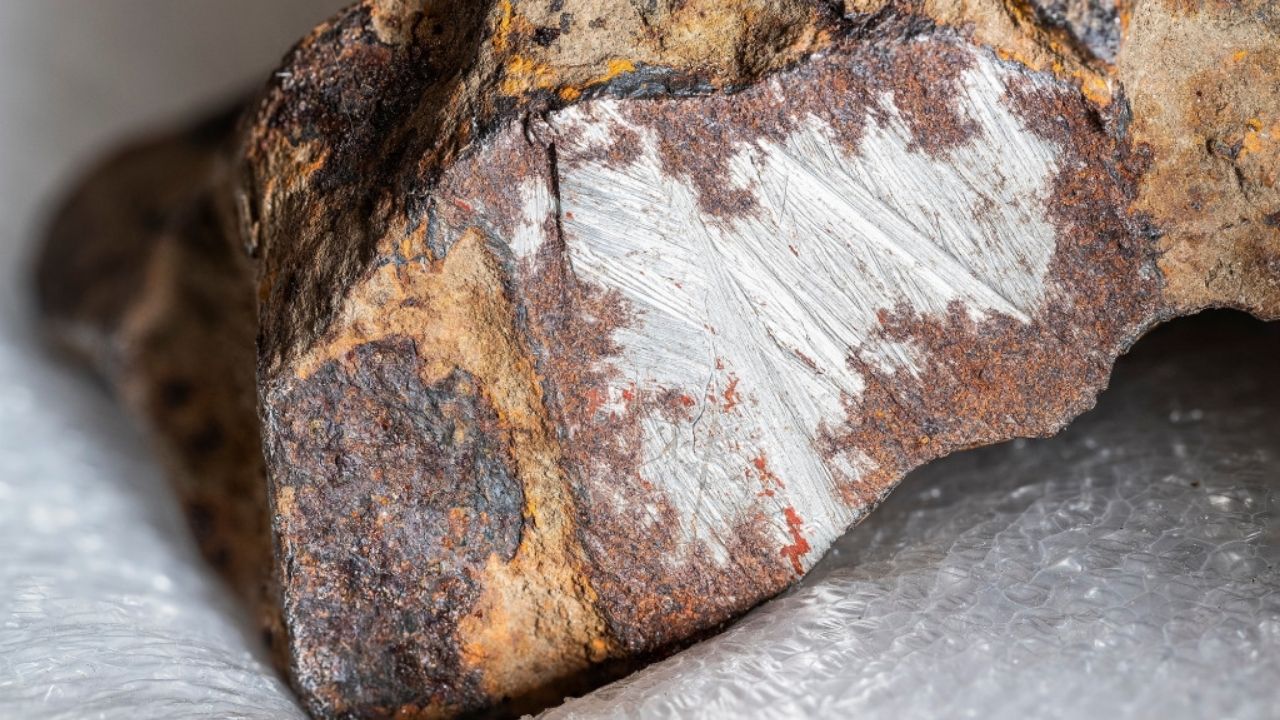
The curator Carrie Eaton, from the University of Wisconsin’s Geology Museum, highlighted that intact fusion crusts are uncommon in iron meteorites that have not recently fallen. This is because iron alters quickly on the Earth’s surface, mainly due to oxidation processes.
Therefore, the preserved marks indicate that the iron meteorite has probably not been on the planet for a long time on a geological scale. The estimate cited by the university suggests something on the order of a few hundred years. This is a short interval when compared to the history of objects formed in the early days of the Solar System.
The provisional name links the rock to the place where it fell
The object is provisionally called the Vienna meteorite, following the tradition of naming meteorites according to the place where they are found. This name still depends on the formal scientific classification process, which involves detailed analyses and expert review.
The team involved in the classification includes researchers from the University of Wisconsin-Madison and the Field Museum in Chicago. The process seeks to confirm the composition, origin, and characteristics of the material. It is not enough to look like a meteorite: to officially enter the scientific literature, the piece needs to undergo technical evaluation.
The museum became a destination for a piece from the beginning of the Solar System
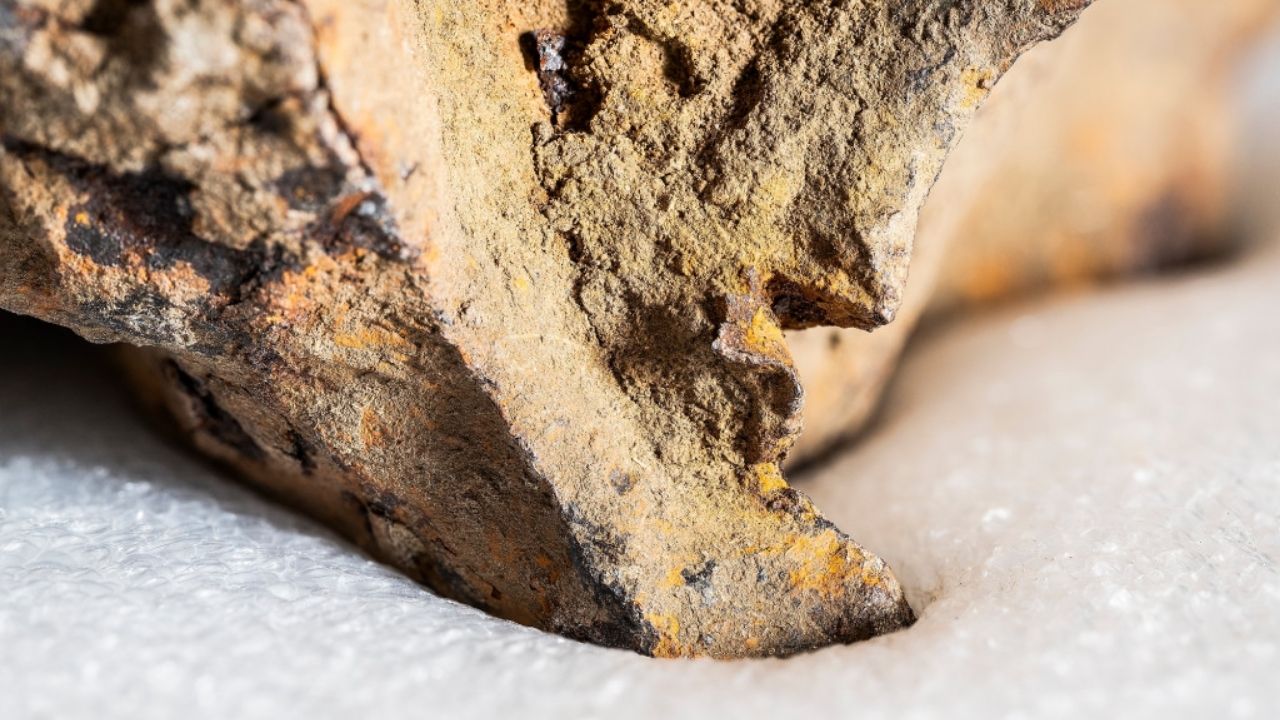
Koch and Shepel decided to sell the meteorite to the University of Wisconsin’s Geology Museum for a price below market value, with support from the institution’s sponsors. The decision allowed the piece to remain whole, close to where it was found, and accessible to the public.
For the museum, the iron meteorite is a rare educational opportunity. Students, children, researchers, and visitors can closely observe a fragment associated with the early history of the Solar System. The find ceased to be just a rural curiosity and began to fulfill a public function of science and natural memory.
The discovery shows how science also arises from chance
The meteorite’s journey reveals a curious path: it came from space, passed through the atmosphere, fell in a region that later became a farm, was pulled by a plow, was stored for years, and only then reached the museum. This sequence shows how scientific discoveries do not always start in laboratories.
It also highlights the importance of paying attention to common objects. An alfalfa field, a heavy stone, and a persistent suspicion were enough to open a story that connects agriculture, geology, astronomy, and scientific heritage. Sometimes, the Solar System appears in the least expected place: in the middle of plowed earth.
A farm stone that became a chapter of space
The iron meteorite found by Jim Koch in Wisconsin shows that a rare discovery can remain hidden for years before receiving proper recognition. Weighing almost 50 kg, with atmospheric entry marks and extraterrestrial origin, the piece turned a common farm into part of the state’s natural history.
Now the question remains: if you found a heavy and strange stone in a field, would you suspect it came from space or think it was just another common rock? Tell us in the comments what you would do if you came across such a find.