






 Portuguese
  Spanish


Electric wheelchair created by IFSP students uses repurposed parts from seized skateboards to reduce costs and expand accessibility.
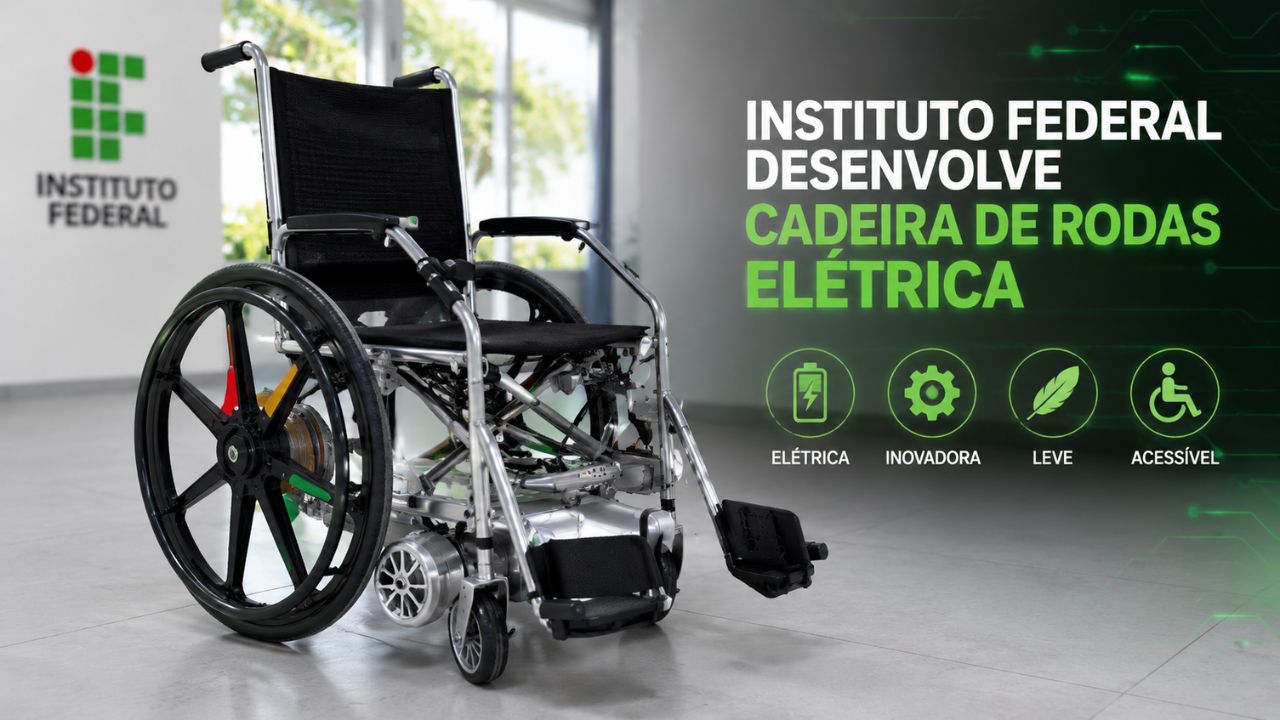
An initiative developed by students of the Federal Institute of São Paulo (IFSP), in Sorocaba, is transforming seized equipment into a solution aimed at inclusion. Using components taken from electric skateboards donated by the Federal Revenue Service, the team created a low-cost electric wheelchair prototype. The project, which began in 2021 and continues to evolve, seeks to offer a more accessible alternative for people with reduced mobility, while also expanding the possibilities of autonomy for future users.
How did the electric wheelchair project come about?
The proposal was born within the Sorocaba campus of IFSP and has been refined over the years with the participation of students and teachers. According to the initiative’s coordinator, electronics professor Sérgio Shimura, the first experiments used parts from hoverboards, popularly known as electric skateboards.
With the advancement of research, new versions were developed until reaching the current model. The structure uses two motors and a belt system responsible for the movement and steering of the chair.
-
Polar Air Mass to Hit Brazil: Temperatures to Plummet in Nine States, Near Freezing in the South with Frost Risk Until Monday

-
Chinese “dark factories” produce electric cars 24/7 with minimal human intervention, as Zeekr assembles 800 units daily, raising concerns in Brazil.

-
Spectacular Green Aurora Seen from Space Illuminates International Space Station, Captivates French Astronaut

-
In Tasmania, a Beach Features a Natural Stone Mosaic Formed by Earth’s Cracks Millions of Years Ago


The work gained even more momentum after a partnership was established with the Federal Revenue Service. In 2023, the agency allocated 37 seized electric skateboards to be used in the research.
Partnership allowed reuse of equipment
The collaboration between the educational institution and the Federal Revenue Service had already resulted in other actions previously. In November 2025, approximately 6,000 minicomputers were also passed on to IFSP.
In the case of the electric wheelchair, the components of the skateboards became fundamental parts for the construction of the equipment. The reuse of materials directly contributed to the reduction of production costs, one of the main differentiators of the initiative.
Besides financial savings, the proposal also gives a new purpose to equipment that would not be used commercially.
Technology Aimed at Inclusion
More than creating a motorized means of transportation, the researchers aim to expand usage possibilities for people with different levels of physical limitations.
Among the solutions analyzed by the team are alternative command systems, capable of making the equipment accessible for users with more severe motor impairments.
According to Professor Sérgio Shimura, the goal is to incorporate features that allow the wheelchair to be controlled by different means.
Among the possibilities studied are:
- Control by eye movement;
- Systems activated by breath;
- Interfaces adapted for different motor needs;
- Features aimed at increasing user autonomy.
According to the teacher, the proposal combines technological development and social inclusion in a single project.
Electric Wheelchair Can Reduce Costs on a Large Scale
The financial aspect is highlighted as one of the most relevant points of the research. Since a large part of the components is repurposed, the final cost of the prototype is much lower than the equipment traditionally found on the market.
Student José Guilherme highlighted that the reduced cost can facilitate the expansion of access to assistive technology, especially in public institutions.
According to him, the investment needed to acquire a conventional electric wheelchair could be sufficient to produce several units of the model developed by the students.
This characteristic opens up possibilities for use in places such as health centers, schools, and other public service structures.
Practical Learning for Students
In addition to the social benefits intended by the project, the initiative also functions as a professional training environment.
Team participant, student Gustavo de Paula Paixão states that the experience allows applying knowledge acquired in the classroom to a solution with the potential for real impact on people’s lives.
According to him, the technology created can cater to different contexts, from hospital environments to leisure and education activities.
The participation of students in all stages of development also contributes to technical improvement and the search for new solutions focused on accessibility.
Project was presented to President Lula
The work developed at IFSP gained national visibility in April when it was presented to President Luiz Inácio Lula da Silva during a visit to the institution’s new campus.
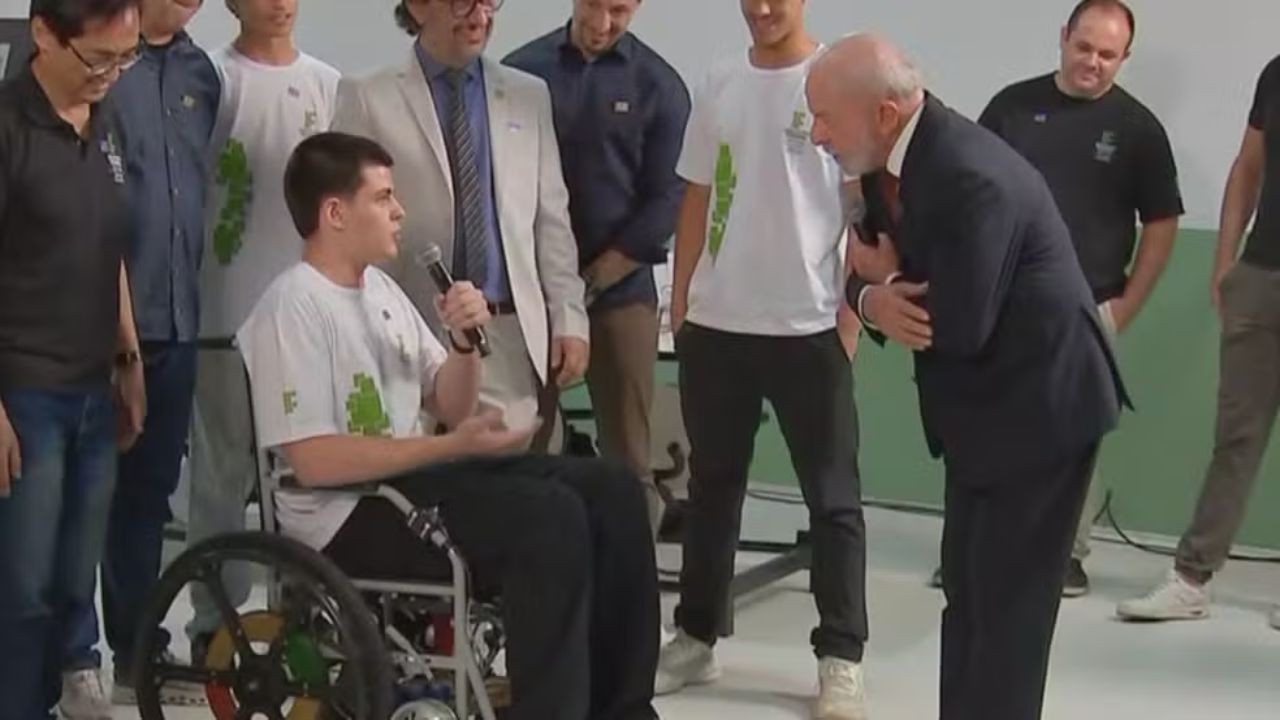
The demonstration took place as part of activities conducted at the Sorocaba unit and served to highlight initiatives that unite education, innovation, and social impact.
The presentation marked another stage in the project’s journey, which continues in the improvement phase.
Next steps of the research
The team is still working on improvements related to the performance and autonomy of the electric wheelchair. The researchers intend to develop more advanced versions of the equipment, maintaining a focus on accessibility and low cost.
The ultimate goal is to reach a model that can be easily reproduced and used in different contexts.
As the studies progress, the initiative demonstrates how the reuse of materials and the knowledge produced within educational institutions can contribute to creating solutions aimed at the needs of the population.
Combining innovation, inclusion, and cost reduction, the project developed by IFSP students seeks to expand access to assistive technologies and create alternatives for people who depend on mobility resources in their daily lives.
With information from g1


