






 Portuguese
  Spanish


Capão Alto, a city in the Serra Catarinense hit by severe drought, declared an emergency until August 2026 after losses of R$ 21 million with soybean, corn, bean, and pumpkin crops devastated, dairy farming compromised, and water sources at risk for human consumption in vulnerable rural communities.
A city in the Serra Catarinense is experiencing a water crisis that has already destroyed crops, compromised livestock, and left residents without guaranteed access to water. Capão Alto accumulates losses exceeding R$ 21 million in the agricultural sector according to a survey by the city hall, and the severity of the situation led Mayor Sadiana Arruda Melo Coelho Lopes to declare a state of emergency valid until August 2026, a measure that allows the city to access federal resources and adopt emergency actions to minimize the damage caused by the drought since the beginning of the year. The losses directly affect crops such as soybeans, corn, beans, and pumpkins, in addition to dairy farming, a sector where producers report increasing difficulties in feeding the herd.
The numbers from Epagri (Agricultural Research and Rural Extension Company of Santa Catarina) reveal the extent of the problem the city faces. The rainfall recorded in January was only 76.6 millimeters, less than half of the historical average for the period, which is 177.6 mm, a deficit that combined with temperatures above 30°C intensified soil moisture loss and compromised crop development at a critical stage of the production cycle. The city, which relies on agriculture as its economic base, saw its plantations dry up at the moment they most needed water, resulting in devastated fields that will not produce the expected harvest.
How the drought devastated the city’s crops in the Serra Catarinense

The impact on the plantations is widespread and affects crops that sustain the local economy. Soybeans, corn, and beans are the three pillars of the city’s agricultural production, and all have suffered significant reductions in productivity because the dry soil did not provide enough moisture for the plants to complete their growth and fruiting cycle. Pumpkins, grown on a smaller scale but important for the income of small producers, were also severely affected. In the fields, farmers who invested in seeds, inputs, and soil preparation watch the losses that already total R$ 21 million without being able to reverse the damage because the absence of rain is a variable that no agricultural technique can replace.
-
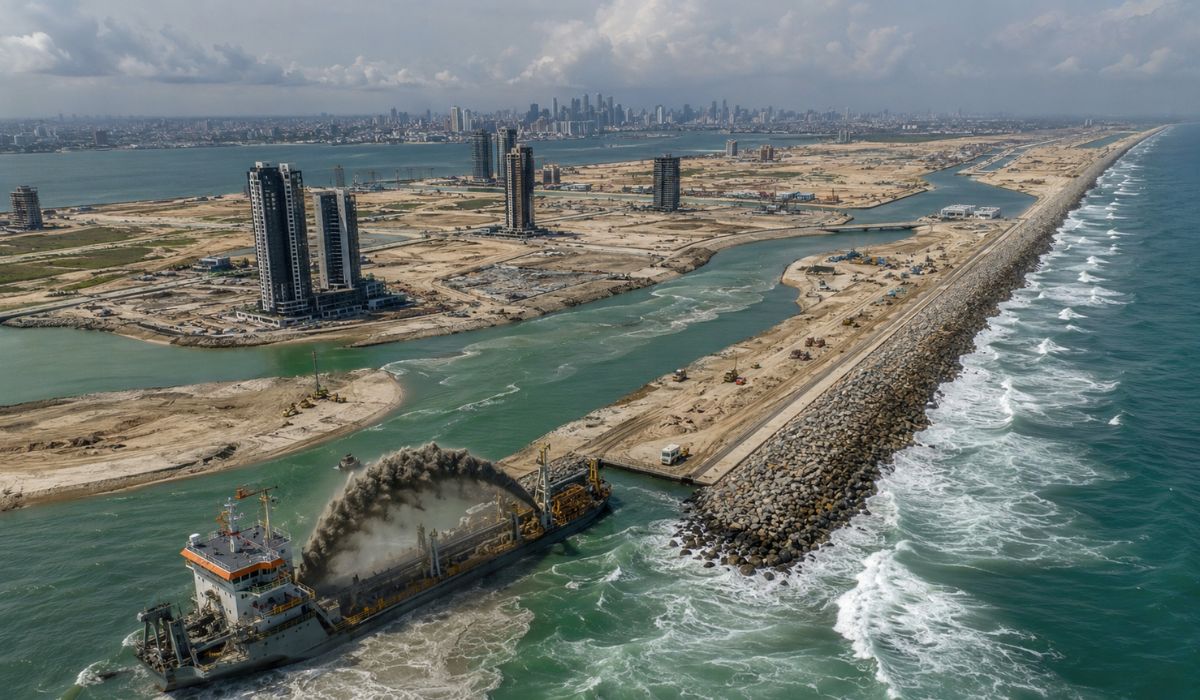
Nigeria Dumps 120 Million Tons of Sand into Atlantic to Build Massive City with 8.4 km Sea Wall for Protection Against Ocean Waves and Erosion

-
German Engineer Developed Diesel Engine Running on Vegetable Oil Decades Before Electric Cars Became Popular; Can This Forgotten Idea Work in 2026?

-
James Webb Telescope Uncovers Unexpected Clues on Mysterious Moon, Potentially Redefining Planetary Origins

-
$1.5 Billion Sleipnir Vessel Transforms Ocean into Floating Construction Site with 12 Hybrid Engines and Capacity to Lift 20,000 Tons


Dairy farming faces a parallel crisis in the city. With dry pastures and compromised forage production, livestock farmers need to buy feed in much higher volumes than usual to maintain herd feeding, an additional cost that reduces or eliminates the profit margin of the activity and for small producers can mean the difference between continuing in the activity or selling the animals for a fraction of the value. The drought not only destroys the current harvest: it compromises the city’s and the crops’ productive capacity for the following months because poorly fed animals produce less milk and take longer to recover productivity even when conditions improve.
Why the lack of water in the city is concerning beyond agriculture

The drought in the city does not only affect crops and herds. The Municipal Civil Defense Coordination reported that the water sources supplying the rural area have been compromised, increasing the risk of water shortages for both human consumption and animal watering, a scenario that turns the agricultural crisis into a humanitarian emergency when entire communities are left without access to the most basic resource for survival. The city faces the reality of residents who need to fetch water from increasingly distant sources or rely on water trucks that do not always arrive with the necessary regularity.
The situation is even more severe in the city’s vulnerable rural communities. According to a report from CRAS (Social Assistance Reference Center), residents registered in CadÚnico in the Barreira community face difficulties in ensuring access to water and lack the financial means to install reservoirs that would allow them to store enough volume to get through prolonged dry periods. For these families, drought is not an inconvenience: it is a direct threat to their health and their ability to remain on the land where they live, and without external support, the trend is for rural exodus to accelerate in a city that already has a small population and cannot afford to lose residents without compromising its viability.
What the emergency decree allows the city to do
The declaration of a state of emergency by Mayor Sadiana Arruda Melo Coelho Lopes is not a symbolic act: it is a legal instrument that opens doors for the city to access resources and expedite provisions. Based on federal legislation that regulates emergency situations within the scope of the National Civil Protection and Defense System, the city can request transfers from the federal government, contract emergency services without conventional bidding, and implement immediate relief measures for the most affected families and producers. The decree is valid until August 2026, a period that covers the months when the drought may continue to impact agricultural production and water supply.
Cooperplan, a local agricultural sector entity, was one of the organizations that formally requested the declaration. The request reflects the understanding that the city’s producers cannot face R$ 21 million in destroyed crops alone and that institutional support is a necessary condition for local agriculture to survive the crisis and recover when the rains return. The emergency actions enabled by the decree include everything from water distribution by water trucks to special credit lines for farmers and ranchers to replenish stocks of inputs and feed lost during the dry months.
What climate data indicates about the city’s future
The discrepancy between recorded rainfall and the historical average indicates that the city is facing an unusual climatic event. The 76.6 millimeters in January represent only 43% of the 177.6 mm expected for the month, a deficit that cannot be corrected with one or two weeks of rain and that leaves the soil so dehydrated that even normal precipitation in the following months may not be enough to restore the necessary moisture for planting the next crop. For the city, agricultural recovery depends not only on rain, but on enough rain at the right time for the productive cycle to resume without further losses.
Temperatures above 30°C that accompanied the drought exacerbated the problem by accelerating the evaporation of the little remaining moisture in the soil. The combination of intense heat and insufficient rain created conditions that the city faces with the drought in Serra Catarinense, a region known more for its cold than its heat, and which highlights a pattern of climatic variation that may recur more frequently in the coming years if global warming trends are confirmed. The city needs to consider investments in water capture infrastructure and storage that reduce vulnerability to events like the current one, preparation that costs resources today but avoids losses like the current R$ 21 million in the future.
And you, did you know that a city in Serra Catarinense was facing such a severe drought? Do you think the government should invest more in prevention? Leave your opinion in the comments.


