






 Portuguese
  Spanish


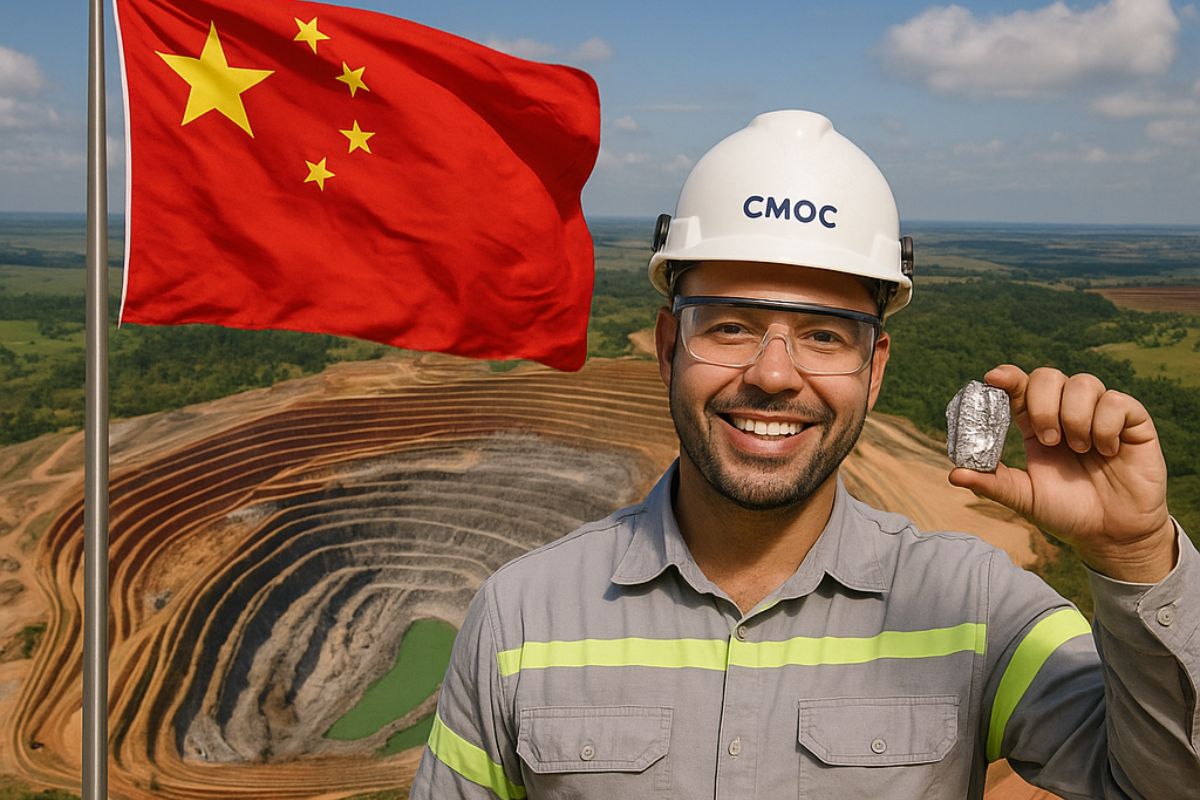


In 2016, the British mining company sold its strategic niobium operation in Catalão to the Chinese CMOC, in a billion-dollar deal that redefined the global market for this metal.
In the midst of the biggest crisis in the mining sector in decades, a billion-dollar and strategic deal was closed in Goiás. In 2016, the British giant Anglo American sold its coveted niobium operation in Catalão to the Chinese China Molybdenum (CMOC), marking the rise of a new power in the market.
The story shows how the need for a company to generate cash, combined with the strategic vision of another, created a success story that benefits the economy of Goiás to this day.
The Commodity Crisis and Anglo American’s Decision
The year 2016 was a period of strong turbulence for mining companies. The end of a long cycle of rising commodity prices put immense financial pressure on the largest companies in the world. To survive the crisis, giants like Anglo American needed to sell assets to reduce their debts and focus on their core businesses.
-
Driver Crosses 100-Year-Old Railway Bridge Over Uruguay River, Encounters Rural Couple Preserving Traditional Farming Methods

-
Rural Producer Returns to Brazilian Farmland, Builds Family Agricultural Business with Children’s Support and Industry Backing
-
Goiás Couple Boosts Artisan Cheese Production from 25 to 70 Kilos Daily with Technical Support, Transforming Family Life in Rural Brazil
-
13-Year-Old Discovers Ancient Roman Ring Near Mount Carmel, Now Set for Display in Jerusalem


It was in this context that the company decided to sell its Niobium and Phosphate businesses in Brazil. For Anglo American, it was a way to strengthen its financial balance sheet during a critical moment. For the market, it was a unique opportunity to acquire a world-class asset.
The Purchase of the Niobium Operation by CMOC

The agreement was announced on April 28, 2016. The buyer was China Molybdenum (CMOC), which paid US$ 1.5 billion in cash for the niobium and phosphate operations of Anglo American in Goiás and São Paulo. The transaction was completed quickly, and CMOC took control on September 30, 2016.
The acquisition of the niobium operation was a move of immense strategic importance, not only for the company but for China. Niobium is a critical metal, used to create lighter and stronger steel alloys, essential for high-tech industries. Brazil holds more than 80% of the world’s commercial niobium reserves, and by securing control of the second-largest mine on the planet, CMOC ensured direct and long-term access to this vital resource for China.
The Success of the New Owner: Records in the Catalão Niobium Operation
Under the new management, the niobium operation in Goiás not only continued its success but reached new heights. CMOC invested in technology and efficiency, and the results were impressive.
Production consistently grew, and in 2024, the company hit its historic record, with 10,024 tons produced. This volume consolidated CMOC Brazil as the second-largest producer of niobium in the world, accounting for about 11% of the entire global supply and making the Brazilian operation one of the profit pillars of the Chinese giant.
A Strategic and Successful Business

In retrospect, the sale of the niobium operation by Anglo American was a strategic move that benefited all parties. The British company obtained the capital it needed to overcome the crisis, while CMOC acquired a world-class asset that transformed it into a global power in mineral resources.
The story of the transaction is a perfect example of how the market reconfigures in times of crisis. The “gold mine” of niobium in Catalão did not stop shining; it simply changed hands, passing to a company that saw it as the pillar for its future growth strategy.





Só exploração e perca que o Brasil leva a politicagem entreguista.
Como dizia Raul Seixas, lotear o Brasil sai mais barato, ‘nós não vamos pagar nada’!
Sabem quem governaba o Brasil em 2016?…..é quem governava os EE.UU?..não sejam ignorantes…