






 Portuguese
  Spanish




Discovery of 150-Year-Old Bottle Still Sealed in Archaeological Dig at the Former Mining Town of Alta, Utah, Reveals Unexpected Details About Consumption Habits in the American West During the Height of Silver Mining in the Nineteenth Century
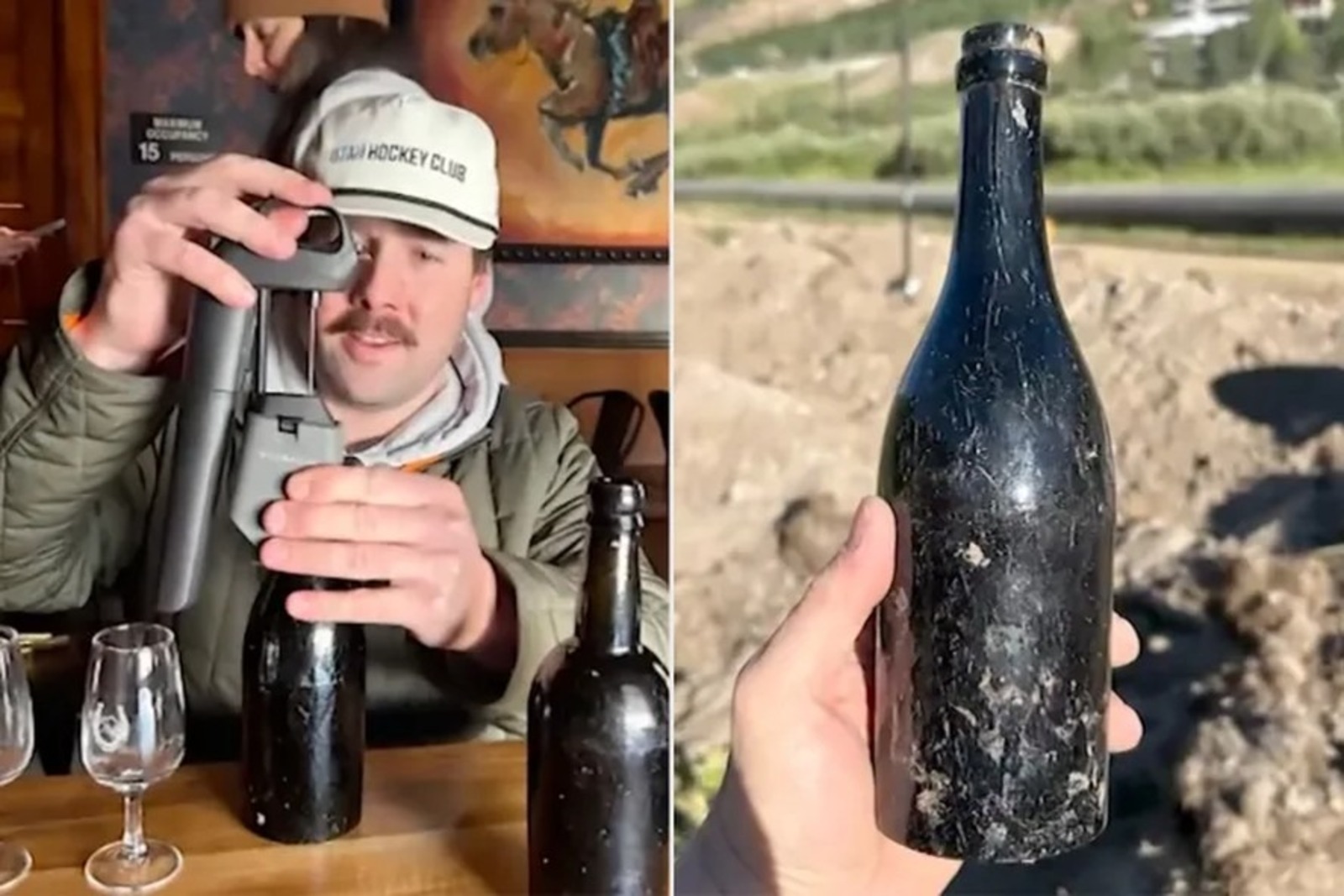
Archaeologists uncovered a 150-year-old bottle still sealed during excavations in the former mining town of Alta, Utah, in the United States. The bottle was found at an archaeological site that revealed thousands of objects linked to daily life in mining during the nineteenth century.
Dig Uncovers Artifacts from the Former Mining Town
The discovery occurred during a construction project that ultimately turned into a broader archaeological excavation.
The site corresponds to the former town of Alta, which at the end of the nineteenth century was an important center for silver mining.
-
Salvador’s Acarajé Vendors Turn Used Frying Oil into Income by Selling it for Biodiesel Production

-
Volunteer Revives Dead Lake in Bengaluru Overnight, Doubling Water Capacity and Attracting Kingfishers and Herons
-
1909 Train Car Once Destined for Abandonment Transformed into Luxury Accommodation in the U.S. After $3,000 Restoration

-
86-Year-Old Brazilian Man Starts Homemade Bread Business After Learning from TV Recipe


The excavations revealed thousands of artifacts capable of showing details about the daily life of the local population.
Among the items found were objects related to work in the mines and the daily life of the area’s residents.
Among the recovered artifacts was a leather helmet used by miners, bullets, shot glasses, and even a weight about seven kilograms. Even with this variety, the object that drew the most attention was the 150-year-old bottle.
Preserved Bottle Captured Researchers’ Attention
The 150-year-old bottle was found still sealed, with the cork intact, indicating excellent preservation. Researchers estimate that the beverage was produced between 1870 and 1890.
To avoid any damage to the artifact, the archaeologists decided not to open the bottle directly. The team sought support from a local distillery to analyze the content without compromising the integrity of the historic container.
Sample Was Taken Without Opening the Cork
Experts used a fine needle to extract a small sample of the liquid through the cork. The material was used for both chemical analysis and for a tasting controlled by the involved specialists.
According to Isaac Winter, a specialist from the distillery partner in the study, the condition of the beverage surprised researchers.
Even after more than a century buried, the sample still had perceptible characteristics.
Winter described the beverage as having notes of dried fruits and a hint of vinegar. Still, the specialist highlighted that the flavor remained recognizable after about 150 years stored underground.
Origin of the Beverage Is Still Being Investigated
The exact identity of the content of the 150-year-old bottle has yet to be confirmed. Researchers consider two main hypotheses for the beverage found at the archaeological site.
One possibility is that the liquid is a type of sherry. Another hypothesis suggests it may be a beer produced in the late nineteenth century, when Alta was at the height of silver mining.
Alta was one of the most productive mining towns in Utah before it declined in the early twentieth century. Today, the region is primarily known as a tourist destination focused on winter sports.
Researchers plan to conduct further tests to more accurately identify the composition of the beverage. The analysis of the 150-year-old bottle may reveal details about the consumption habits of the area’s residents at that time.
With information from Revista Galileu.





Já bebi vinhos do Porto mais velhos