






 Portuguese
  Spanish


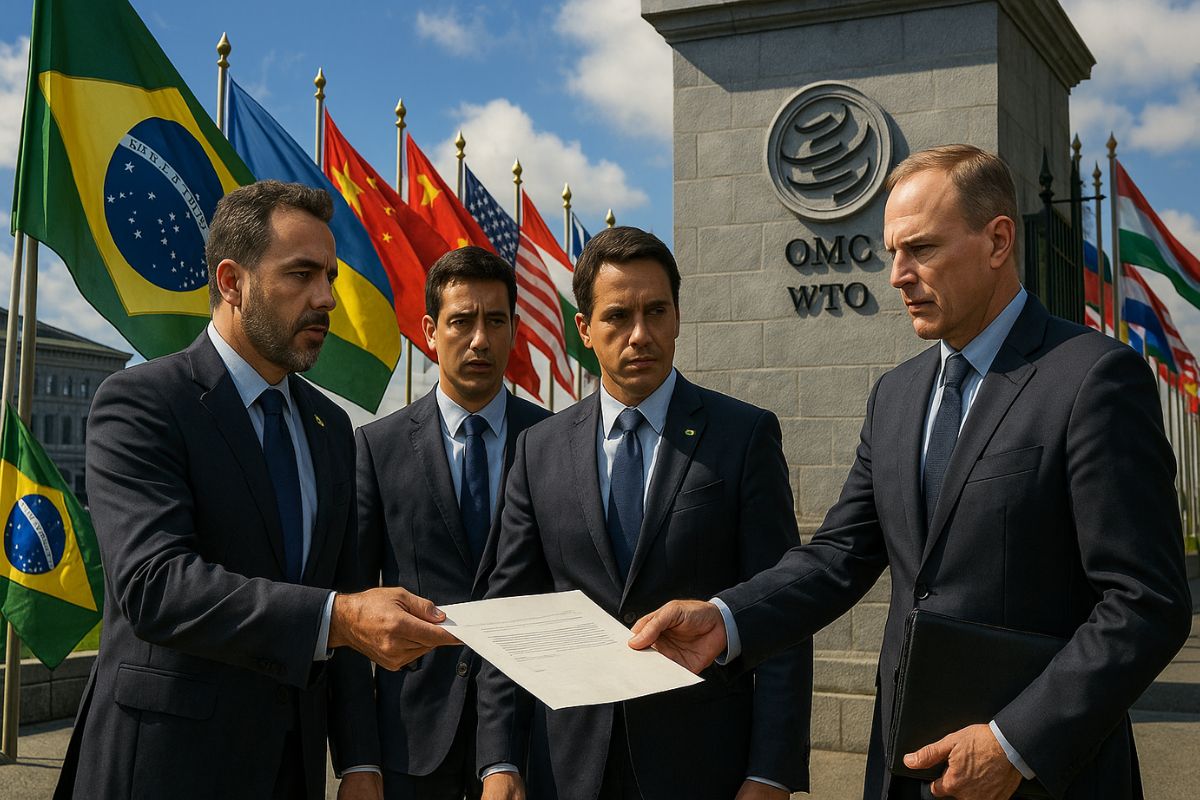

Brazil’s Letter to WTO Raises Global Alert: “You Could Be Next”. Itamaraty Accuses USA of Violating International Trade Rules and Warns Other Countries About the Risk of New Sanctions.
The Brazilian government sent a letter to the WTO (World Trade Organization) denouncing the tariffs imposed by the United States and warning that other countries may face the same situation. The document, drafted by Itamaraty officials, argues that the measures violate key articles of the GATT, an agreement governing international trade since 1994.
The initiative, considered symbolic but strategic, aims to mobilize international support and expose that the tariffs imposed are not purely commercial but are part of a broader geopolitical dispute, especially to curb China’s economic influence. The Brazilian message is clear: “What happened to us can happen to you”.
What Motivated Brazil’s Letter to WTO
The Brazilian text points out that products taxed by the USA are part of American production chains and that the decision goes against international trade rules. According to experts, the country is running a deficit, not a surplus, in trade with the United States, which reinforces the argument that the measures lack legitimate economic justification.
-
Brazilian Startup Turns Coffee Grounds into Plant-Based Leather, Cutting Water Use by Over 50 Times for High-Impact Sustainable Fashion

-
Eco Invest Auction Aims to Unlock $10 Billion in Investments, Focusing on Green Fertilizers, Critical Minerals, Batteries, and AI for Clean Industry in Brazil

-
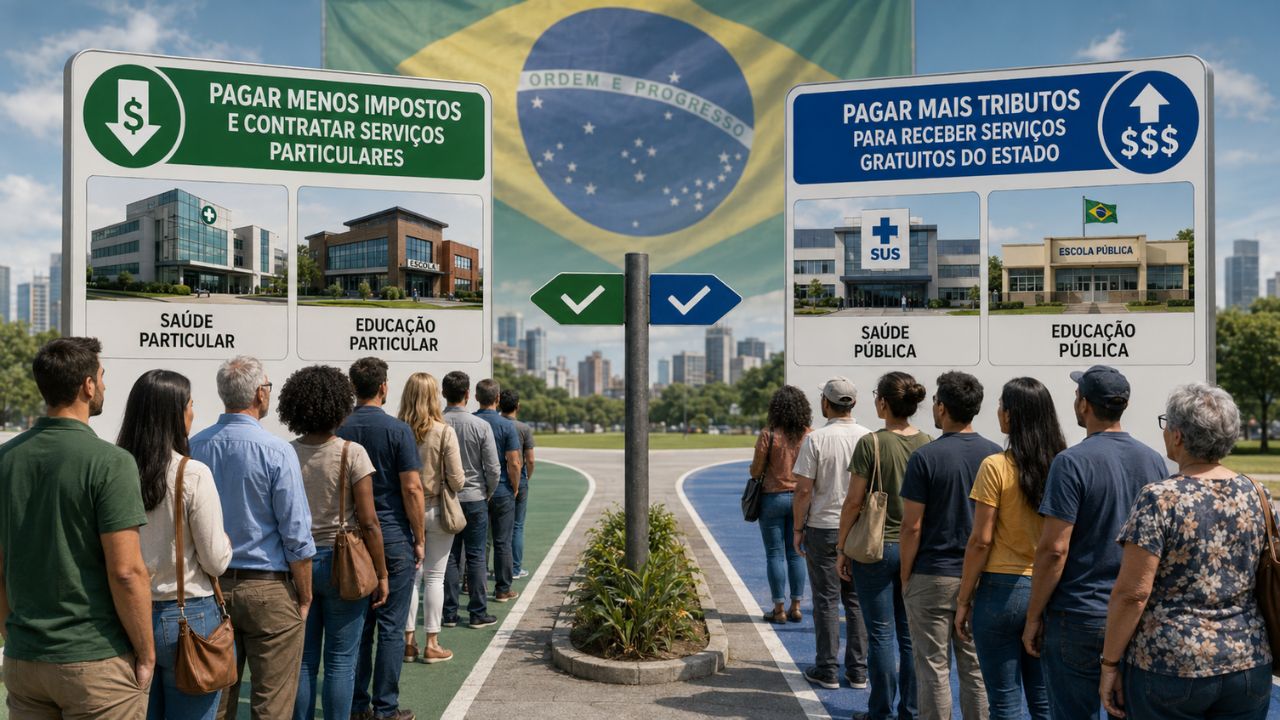
Half of Brazilians Prefer Lower Taxes with Private Health and Education, While 44% Opt for Higher Taxes for State-Provided Services, Datafolha Survey Reveals

-
Brazil’s Most Expensive Toll Rises to R$ 40.60 on Route from São Paulo to the Coast, Nearly Matching Bus Fare to Santos



Itamaraty precisely cited articles of the GATT that deal with undue penalties and discrimination among trading partners. The movement aims not only to challenge the tariffs but also to create a precedent for defense for other economies that may be targeted by similar actions.
Dispute Goes Beyond Tariffs
Analysts consulted emphasize that the tariffs imposed by the U.S. government are not merely a trade issue. They are part of a strategy to halt the industrial and technological rapprochement of Asian countries with China, repeating moves that the U.S. itself adopted in the 1990s to take advantage of cheap labor and keep inflation under control.
The Brazilian letter, therefore, also has a political denunciation character. The document signals that the scenario is not an isolated tariff dispute, but a clash for global hegemony, in which tariffs and sanctions serve as tools of strategic pressure.
Examples That Reinforce the Alert
Brazil reminded that Switzerland, a wealthy and traditionally neutral country, was also targeted by tariffs of nearly 40% on products like watches, but the real impact falls on the local pharmaceutical industry. Similar situations occurred with Vietnam and India, highlighting that the real target is to curb Chinese advancement in global production chains.
For experts, the Brazilian message to the WTO is a wake-up call for trading partners: no one is immune. In disputes of this magnitude, allies can suddenly become targets of sanctions.
Economic Interdependence Limits Offensive
Despite the aggressive rhetoric, there is a strong interdependence between the economies of the U.S. and China.
Sectors such as technology, renewable energy, and military industry rely on rare minerals controlled by the Chinese. This scenario has already led the U.S. government to backtrack on some measures, allowing space for negotiations and the maintenance of strategic supplies.
In Brazil’s case, this global interdependence opens up opportunities to diversify partnerships, strengthening trade relations with countries like China in sectors such as coffee, meat, and energy.
What do you think about Brazil’s letter to the WTO? Is it an effective measure to contain unjust sanctions or just a symbolic gesture? Your opinion is important; leave your comment and join the debate.





O Brasil tá certo em alerta o mundo,contra um presidente que quer destruir não só sua nação, mas outras em poder do auto imperialismo ditando regras,achando se o maior quando não passa de um projeto de didator# Brasil estamos com vc.