






 Portuguese
  Spanish


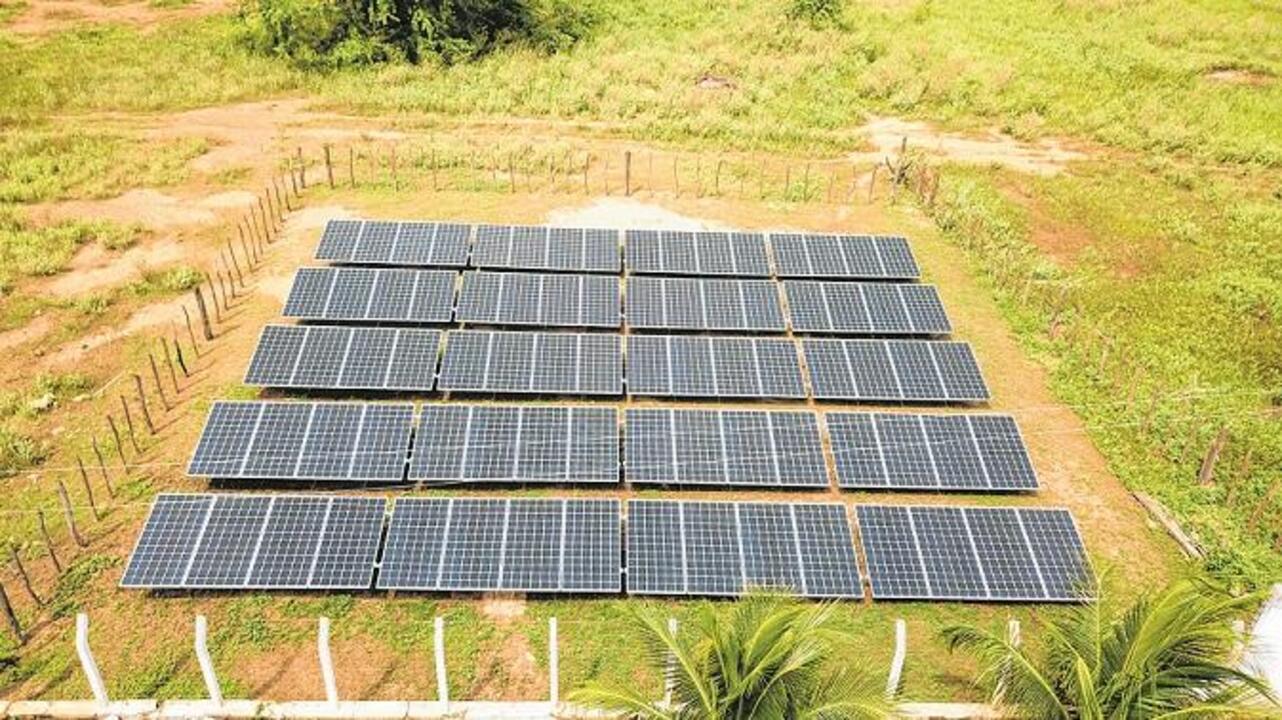

With Over Ten Thousand Connections and Operational Posts, Ceará Shines Among the States Contributing to Distributed Solar Energy Generation
The Brazilian Solar Energy Association – Absolar issued a statement this week discussing the Top 10 states with installed solar energy that is fully operational. For the happiness and pride of Northeasterners, the state of Ceará stood out with 10,402 operational connections, distributed across 181 municipalities, totaling a range of 98.4% compared to other states. This earned the state a spot in the Top 10 of Brazilian states with the highest installed capacity of solar energy in distributed generation.
Also Read
According to a recent mapping conducted by Absolar, Ceará has approximately 161.5 megawatts (MW) in operation, including residences, businesses, industries, rural properties, and other public buildings. Currently, around 13,229 electricity consumers are already experiencing reduced electricity bills and greater autonomy and electrical safety.
Ceará is TOP 10 in Solar Energy Generation
The state ranks 9th in Absolar’s ranking, with a strong chance of moving up in category. According to Absolar, Ceará alone is responsible for 3.5% of the entire Brazilian distributed solar energy generation fleet and units. In addition to Ceará, the state of Bahia is also standing out in the area.
-
Brazilian scientists are simultaneously advancing two research projects on clean hydrogen and driving solutions that could transform the energy matrix, enhance industrial competitiveness, and accelerate large-scale emission reduction targets.

-
Advancement in renewable energy: A R$ 150 million project launched by Petrobras and Finep aims to create state-of-the-art electrolyzers for green hydrogen, strengthening national research and preparing Brazil to compete in a billion-dollar energy market.
-
Illiterate or semi-literate grandmothers were trained to repair solar systems, open rural workshops, and light up homes that still depended on kerosene.
-
The world has bet on green hydrogen as the fuel of the future, but now faces the side effect: producing 1 kilogram requires about 9 liters of ultrapure water, and the largest projects on the planet are precisely in the driest regions of the Earth, where water is already scarce for people.





“Photovoltaic technology represents enormous potential for sustainable, economic, and social development for the people of Paraná, generating jobs and income, attracting private investments, and contributing to combating climate change,” reported Jonas Becker, state coordinator of Absolar in Ceará.
According to Rodrigo Sauaia, “photovoltaic technology is essential for the recovery of the economy after the pandemic, being the renewable source that generates the most jobs on the planet.”





