Portuguese
  Spanish



Pre-Stressed Concrete: Material Allows for Lighter, Stronger, and More Durable Structures, Being Widely Used in Large-Scale Projects in Brazil and Around the World.
Pre-stressed concrete is revolutionizing the construction sector by providing an effective solution to the tensile strength limitations of traditional concrete. Used in various applications, such as bridges, overpasses, reservoirs, silos, and even in residential and corporate buildings, this type of concrete is becoming a strategic choice for projects that require superior structural performance and architectural freedom.
What Is Pre-Stressed Concrete?
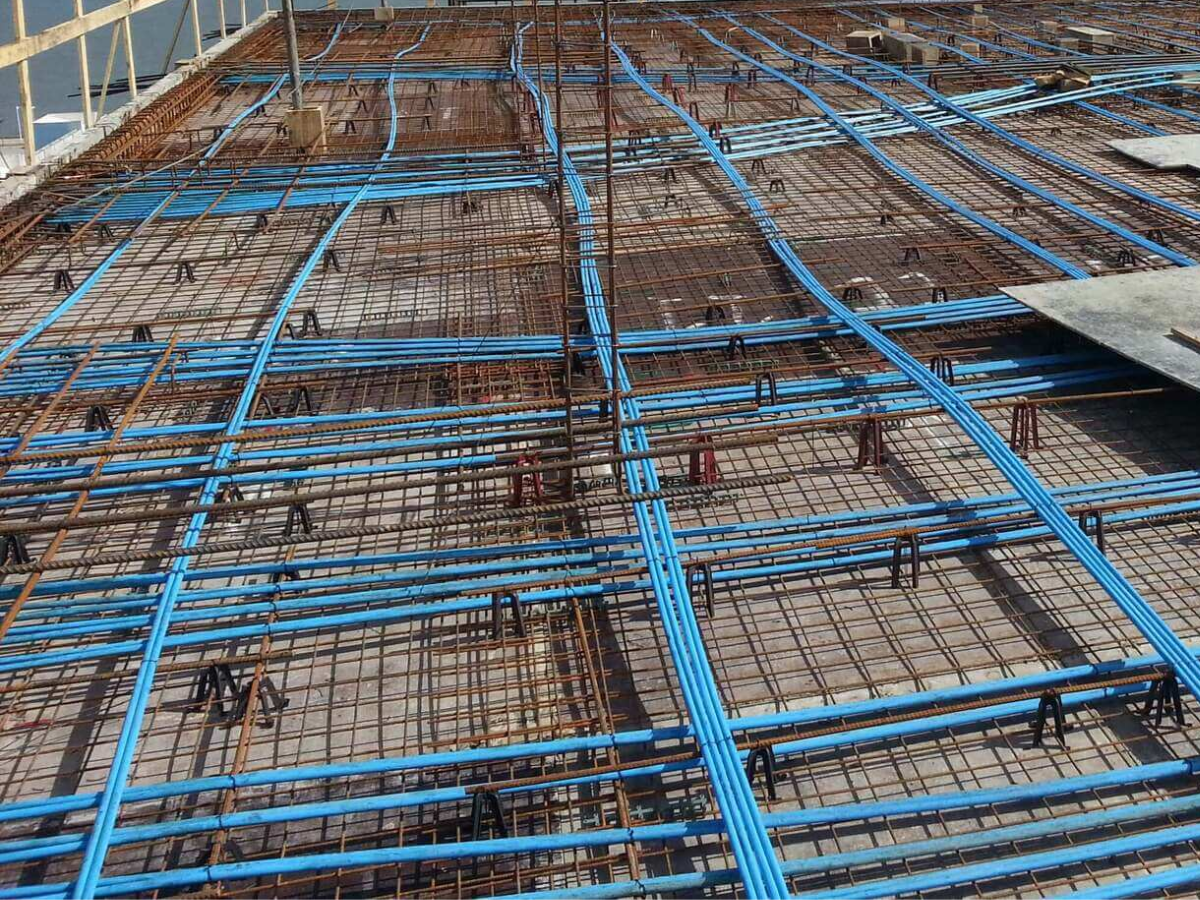
Pre-stressed concrete is a type of concrete that receives additional tension through the use of cables or steel wires that are tensioned before or after pouring.
This technique aims to apply prior compression to regions of the concrete that would be subjected to tension during use, increasing its strength and reducing the occurrence of cracks.
-
Bridge Rebuilt in Just One Year Reconnects Two Brazilian States

-
Custom Furniture Costs in Brazil Expected to Range from $350 to Over $1,450 per Square Meter by 2026, with Kitchens, Closets, and Laundries Highlighting the Impact of Premium Features
-
Australia Builds Entire Airport from Scratch to Spark Development of New City
-
17-Story Building with 112 Apartments Opens in Australia to House Homeless Population, Offering Fully Equipped Units with Daily On-Site Support


This means that pre-stressed concrete allows for more efficient use of materials, making structures lighter and more durable.

What Are the Most Common Applications?
This type of concrete is present in various infrastructure works and buildings:
- Offshore oil extraction platforms
- Bridges, overpasses, and walkways
- Silos and water reservoirs
- Wind farms
- Slabs of residential and commercial buildings with large spans
An emblematic example is the Rio-Niterói Bridge, which uses 1,152 pre-stressed concrete beams with 43,000 steel cables.
What Are the Types of Pre-Stressed Concrete?
There are three main types:
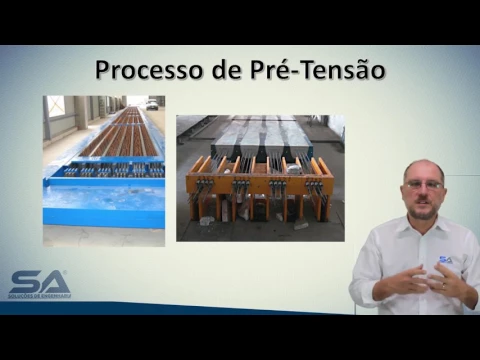
1. Pre-tensioned: the steel is tensioned before pouring and anchored by adhesion after hardening.
2. Post-tensioned bonded: the stressing is applied after the cure of the concrete, using grout injection to ensure the adhesion of the cables to the concrete.
3. Post-tensioned unbonded: similar to the previous one, but without grout injection, suitable for works like raft foundations.
Advantages and Disadvantages
The use of pre-stressed concrete offers significant benefits:
- Reduction of structural cracks
- Material savings due to superior strength
- Lighter structures, facilitating transport
- Feasibility of large spans and slimmer elements
- Simpler maintenance compared to metal structures
Another positive point is the ability to produce precast elements with better performance, which speeds up project timelines.
Despite the advantages, there are challenges in using pre-stressed concrete:
- Requires specialized labor and specific equipment
- Greater complexity in execution and quality control
- Difficulties in renovations and future maintenance
- Risk of corrosion under tension
- Still heavy compared to metal structures
What Is the Difference Between Reinforced Concrete and Pre-Stressed Concrete?
While reinforced concrete uses steel bars passively inserted for strength, pre-stressed concrete goes further by applying prior tension with cables or steel wires.
This results in strengths two to three times greater for the concrete and up to five times for the steel, compared to conventional reinforced structures.
When to Choose Pre-Stressed Concrete?
Pre-stressed concrete is ideal for:
- Large-scale projects (bridges, shopping centers, corporate buildings)
- Aggressive environments (exposure to seawater, for example)
- Projects requiring large clear spans
For simple or smaller-scale projects, traditional reinforced concrete may still be more economical and practical.
With its combination of strength, durability, and application flexibility, pre-stressed concrete stands out as a high-performance solution for the challenges of modern engineering.
Whether in iconic projects like the São Paulo Museum of Art (MASP) or in everyday structures, this material proves that innovation is shaping a safer and more efficient future in construction.
Source: Tecnosil.