






 Portuguese
  Spanish


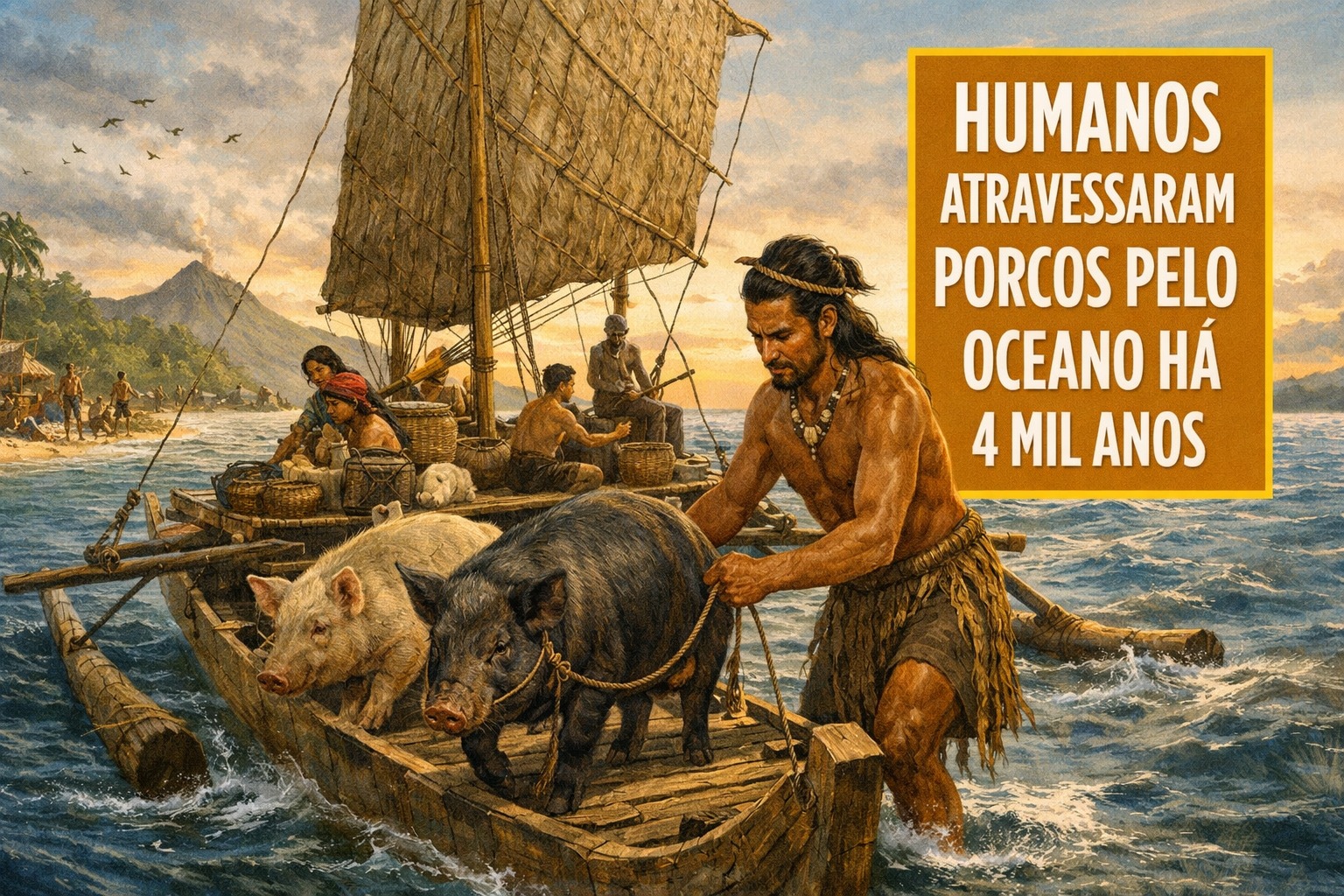


Genetic Analyses Of Hundreds Of Samples Indicate That Human Populations Transported Pigs Between Islands Of Indonesia And The Pacific Around 4 Thousand Years Ago, Crossing Natural Biogeographical Boundaries, Altering Isolated Ecosystems, Influencing Local Cultures And Redefining Modern Discussions About Conservation And Native Species
Detailed genetic analyses indicate that pigs were intentionally transported by Austronesian peoples between islands of Indonesia and the Pacific around 4 thousand years ago, revealing how human action shaped ecosystems, local cultures and current debates on conservation.
The Wallace Line And The Pig Exception
Animals and plants have not always spread naturally across the islands of Indonesia, a fact observed in the 19th century by biologist Alfred Russel Wallace, cited by GALILEU.
He described a biogeographical boundary, known as the Wallace Line, which separates Asian and Australian species, limiting the natural circulation of various mammals.
-
John Deere’s Autonomous 9RX Tractor Uses 16 Cameras for 360-Degree Vision, Operates in Short Weather Windows While Monitored by Smartphone

-
Scientists Develop Needle-Free Insulin That Penetrates Skin, Reduces Glucose in Animals Within an Hour, Paving the Way for Diabetes Patches and Creams for Humans

-
After 40 Years of Research, Powdered Coconut Water to Be Produced in Brazilian Biorefinery, Aiming to Revolutionize Health for Children, Elderly, and Hospital Patients
-
Queen Guitarist Brian May Collaborates with ESA Scientists to Study Asteroids Bennu and Ryugu Using 3D Simulations


Pigs, however, represent a striking exception, with populations present on both sides of the Line and distributed to remote regions of Polynesia.
Genetic Study Published In Science
A new study, published in Science on January 1, investigated the human role in the spread of these animals throughout Southeast Asia.
The research analyzed genetic data from 117 modern and ancient pigs, combined with 708 living and archaeological samples.
Scientists also compared 585 mitochondrial genomes, identifying patterns of similarity that indicate deliberate transport between distant islands.
Evidence Of Human Transport
Considered invaders in many contexts, pigs were likely introduced by Austronesian-speaking peoples during migratory processes.
According to researchers, the genetic mixing found reveals repeated displacements carried out by human communities over generations.
These movements explain why pigs exhibit combined ancestries that are difficult to trace without advanced genetic techniques.
Reconstruction Of Ancient Routes
Based on the data, scientists reconstructed dispersion routes that began long before organized agriculture in the region.
The earliest evidence points to peoples from Sulawesi, associated with the first rock art records, as responsible for the initial introductions.
They likely brought pig species east of the Wallace Line, altering local ecosystems that were still minimally impacted by humans.
The Acceleration 4000 Years Ago
About 4000 years ago, agricultural communities intensified the transport of domesticated pigs between islands of the western Pacific.
The journey likely started in Taiwan, traveling through the Philippines, northern Indonesia and Papua New Guinea, according to the study.
From there, the animals reached peripheral islands, such as Vanuatu and regions of Polynesia, consolidating a broad assisted dispersion.
Domestic And Wild Pigs
Not all introduced pigs remained under human control, and many escaped, forming stable wild populations.
On islands like Komodo, pigs and wild boars hybridized, becoming important prey for Komodo dragons.
This interaction created unexpected ecological relationships, influencing food webs and the survival of endangered species.
Cultural And Environmental Impacts
Despite the less distinct biogeographical separation, pigs assume distinct cultural roles among the islands of the Pacific.
In some societies, they are considered spiritual beings, while in others, they are seen as destructive agricultural pests.
This ambiguity complicates conservation policies, which must balance cultural values and measurable environmental impacts.
Debates On Conservation
For Laurent Frantz from Queen Mary University, a central dilemma arises regarding the concept of native species.
He questions whether species introduced thousands of years ago should be excluded from conservation efforts.
The discussion involves cultural, social, and biological factors, making environmental management decisions particularly complex.
Lasting Effects Of Human Action
The study highlights how human arrival triggered lasting ecological processes on islands in Southeast Asia and the Pacific.
According to Greger Larson from the University of Oxford, pigs spread rapidly across newly colonized islands.
By sequencing ancient and recent genomes, researchers linked these dispersals to the distribution of human populations over time.
With information from Galileu Magazine.






Son 4 mil como dice en el afiche.
Alguno artículos dicen que el origen de los cerdos provienen de los jabalíes domesticados de la China y seleccionados para para la obtención de grasa como combustible y alumbramiento. De allí pasaron a europa
Hace 4 años ya existían los controles bromatologicos y estudios ambientales
¿Hace 4 años?
Debe ser hace 4 mil años.