






 Portuguese
  Spanish


Toyota Presents The bZ7, Large Electric Sedan Developed In Partnership With GAC, Equipped With Huawei Engine, HarmonyOS Cockpit, And Initial Focus On The Chinese Market, Where It Will Face Competitors Like BYD Han And Nio ET7.
Toyota has released the first images of the bZ7, a fully electric sedan developed with GAC for the Chinese market.
The model is set to debut in 2025 and takes the place of the largest member of the bZ (“beyond Zero”) family, positioning itself directly against rivals such as BYD Han and Nio ET7.
With 5.13 m in length, 1.965 m in width, and 3.02 m in wheelbase, the bZ7 targets the medium-large sedan segment and brings cutting-edge technology, including HarmonyOS in the cockpit and an electric motor supplied by Huawei.
-
Nissan Versa Offers Surprising Space and Comfort for Under $10,000, Impressing with Japanese Engineering

-
Changan Hunter K50 REEV: New Hybrid Pickup with 1,031 km Range and 4×4 Drive Set to Launch in 2026

-
Brazilian Company Unveils 3.3-Meter Foldable Micro Capsule: Inflates in Under Two Minutes, Fits Small Spaces, and Includes Bed, Table, and Outdoor Shower

-
1.5 Engine Dominates Chinese Cars for Decades with Billion-Dollar Strategy Focused on Tax, Advanced Technology, Over 40% Efficiency, and Aggressive Global Expansion


Launch And Positioning In The Chinese Market
Announced by the joint venture GAC-Toyota, the bZ7 was designed to compete at the top of the world’s largest electric vehicle market.
The strategy is part of a clear move: to expand the Japanese automaker’s presence in lengths over 5 meters, currently dominated by local brands.
For now, the manufacturer is working on the sedan as a project for China, with no plans for export to other regions.
Platform, Dimensions, And Weight
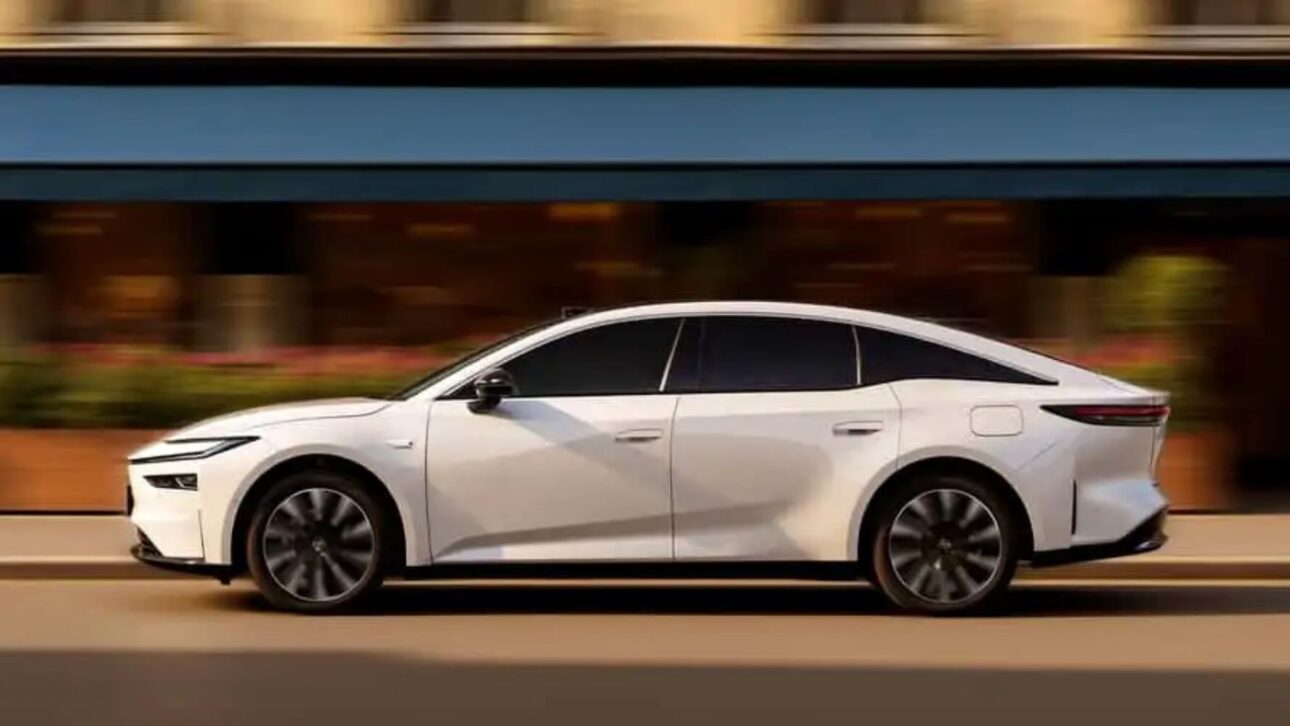
The bZ7 is born with executive sedan proportions, aiming for interior space and comfort on long trips.
The confirmed dimensions are 5,130 mm in length, 1,965 mm in width, and 3,020 mm in wheelbase.
The height varies according to the homologated version, maintaining a low profile.
The curb weight of 2,275 kg reinforces its size and anticipates the need for a robust electric setup for adequate performance and highway efficiency.
Powertrain And LFP Battery From CALB-Tech
In the powertrain, Toyota opted for local components.
The sedan uses a Huawei electric motor with up to 207 kW (278 hp) and a top speed of 180 km/h.
The battery, with LFP chemistry (lithium-iron-phosphate), is supplied by CALB-Tech.
The total capacity of the battery pack and the homologated range have not yet been announced and should be detailed in the upcoming technical presentation before the launch.
In the meantime, the promise is for a balance between safety, durability, and cost, typical characteristics of LFP cells.
Fastback Style And Efficiency Solutions
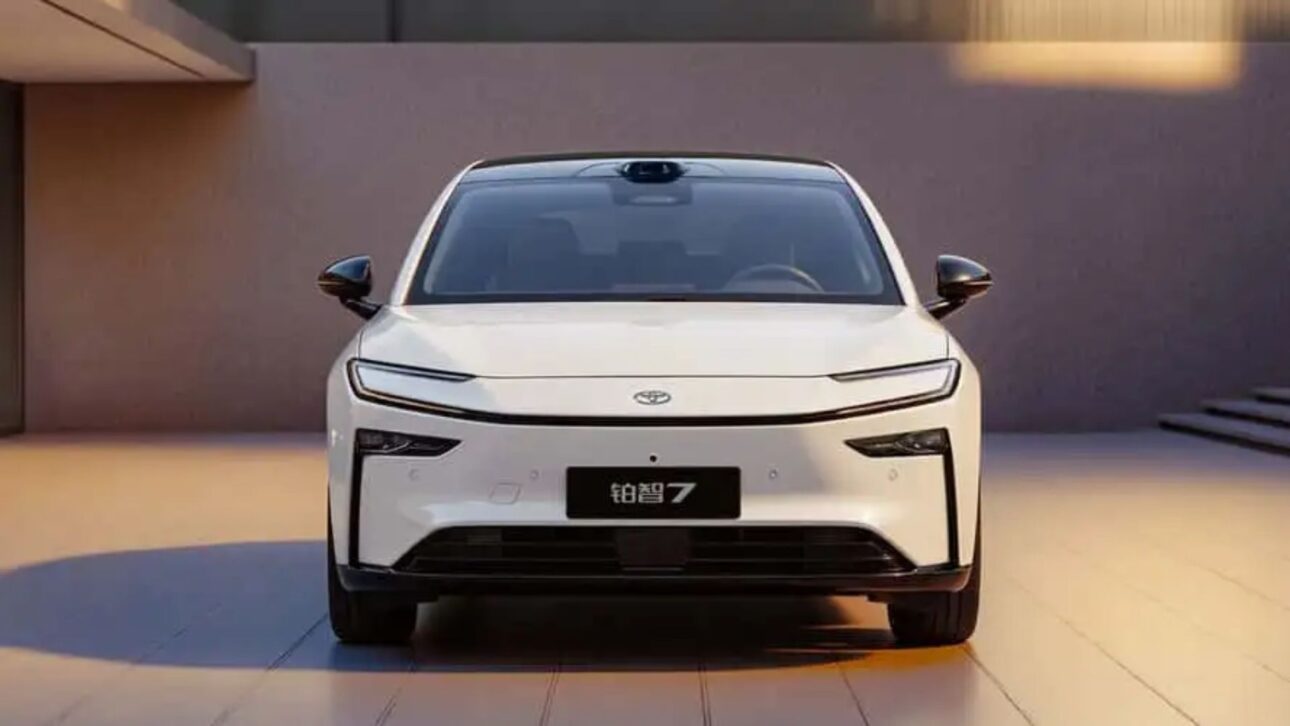
The body style features aerodynamic lines and a fastback look.
The roof gently slopes down to the trunk lid, where a discreet integrated spoiler helps manage air flow.
The front adopts a “C” shaped lighting design that is already seen in other bZ models.
On the sides, the frameless doors and flush door handles reinforce the modern proposal.
The 21-inch wheels are fitted with 255/40R21 tires, a combination that fills the arches well and suggests a focus on stability.
The presence of lidar on the roof enables advanced driving assistance features, with additional perception for lane-keeping systems, adaptive cruise control, and low-speed maneuvers.
Minimalist Cabin And HarmonyOS Cockpit
Inside, the bZ7 repeats the minimalist design language seen in the bZ family.
The three-spoke steering wheel and the trapezoidal instrument panel are separated from a wide central display dedicated to infotainment.
Ambient lighting and wireless charging for smartphones are part of the package.
The highlight, however, is the software layer.
In addition to usual connected services, Toyota announces a cockpit based on HarmonyOS and integration into the Xiaomi digital ecosystem, with typical connected home functions and control of devices through the car’s central system.
These features are more relevant in the Asian context, where superapps and local systems dominate daily usage.
Equipment And Assisted Driving
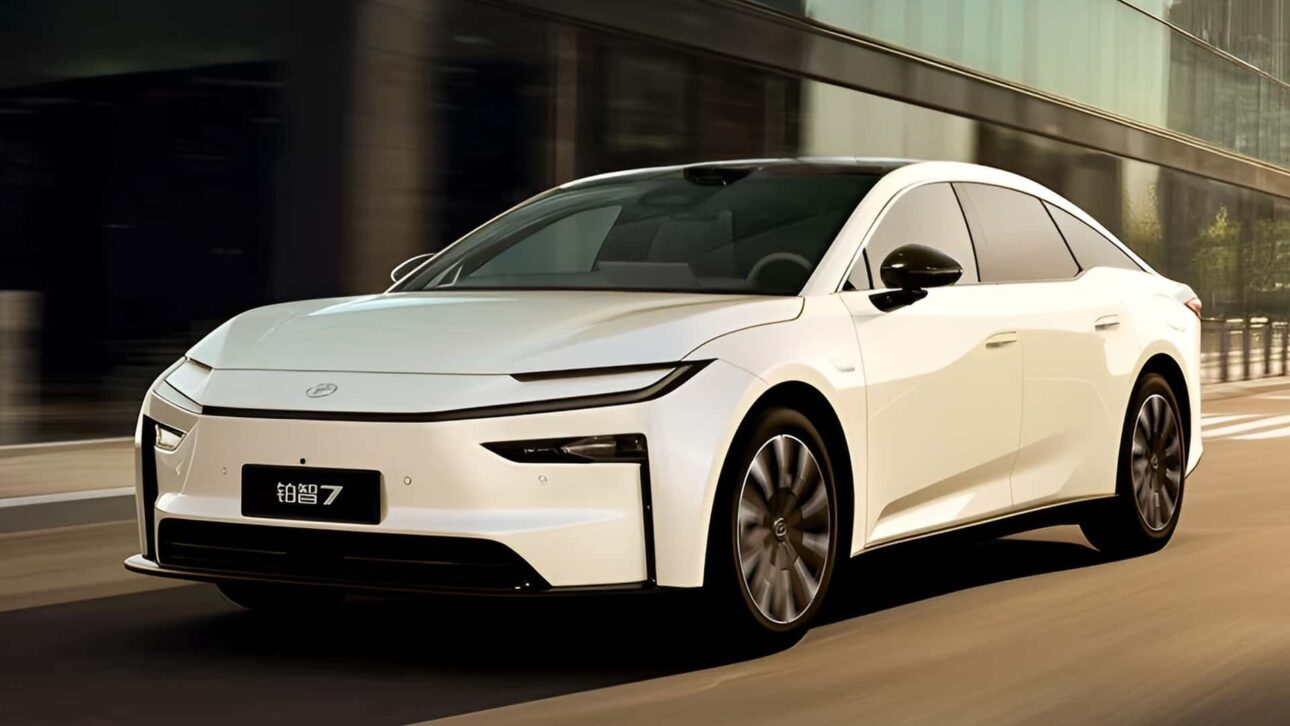
The reading of the images and homologation records indicates a state-of-the-art assistance system.
The lidar sensor on the roof works in conjunction with cameras and radars, enhancing environmental detail and enabling more sophisticated ADAS functionalities, particularly on expressways.
The design of the headlights, with “C” elements, contributes to a unique visual signature and is expected to feature full-LED lighting.
The 21” wheel package with 40 profile tires indicates a commitment to comfort and quick responses.
Still, suspension calibration and sound insulation levels will only be known after the first independent tests.
Rivalry With BYD Han And Nio ET7
Toyota is targeting a market segment where BYD Han and Nio ET7 have accumulated experience and reputation.
The bZ7 counters with three main strengths: generous dimensions, integration of local software — with HarmonyOS and Xiaomi services — and technical partnership with Huawei in the powertrain.
Additionally, the LFP chemistry is likely to appeal to consumers concerned about durability and cost per kilometer.
On the other hand, pricing, range, and availability of variants will be decisive in measuring competitiveness against already established rivals.
Electrification Strategy With GAC
While it adjusts its electric portfolio in Europe and the United States, Toyota is accelerating specific projects in China in partnership with GAC.
The bZ7 expands the brand’s presence in higher segments and continues the line that includes the SUV bZ4X and the smaller sedan bZ3X.
The strategic reading is clear: compete where the market is evolving faster, absorbing local technologies for software, batteries, and electric propulsion to accelerate the development cycle.
What Is Left To Reveal
The brand is expected to soon present the numbers for battery capacity and range, as well as details on charging, power variants, and possible traction configurations.
Also pending are complete assistance package data, contents per version, and connectivity tools outside of China.
Until then, the bZ7 emerges as Toyota’s most ambitious proposal among electric vehicles, combining executive sedan dimensions with local digital infrastructure and a clear focus on the Chinese audience.
Based on this set, the bZ7 has the potential to compete with BYD and Nio in the large electric sedan segment in China, or will it depend on aggressive pricing and competitive range to convince consumers already accustomed to local software ecosystems?


