Portuguese
  Spanish


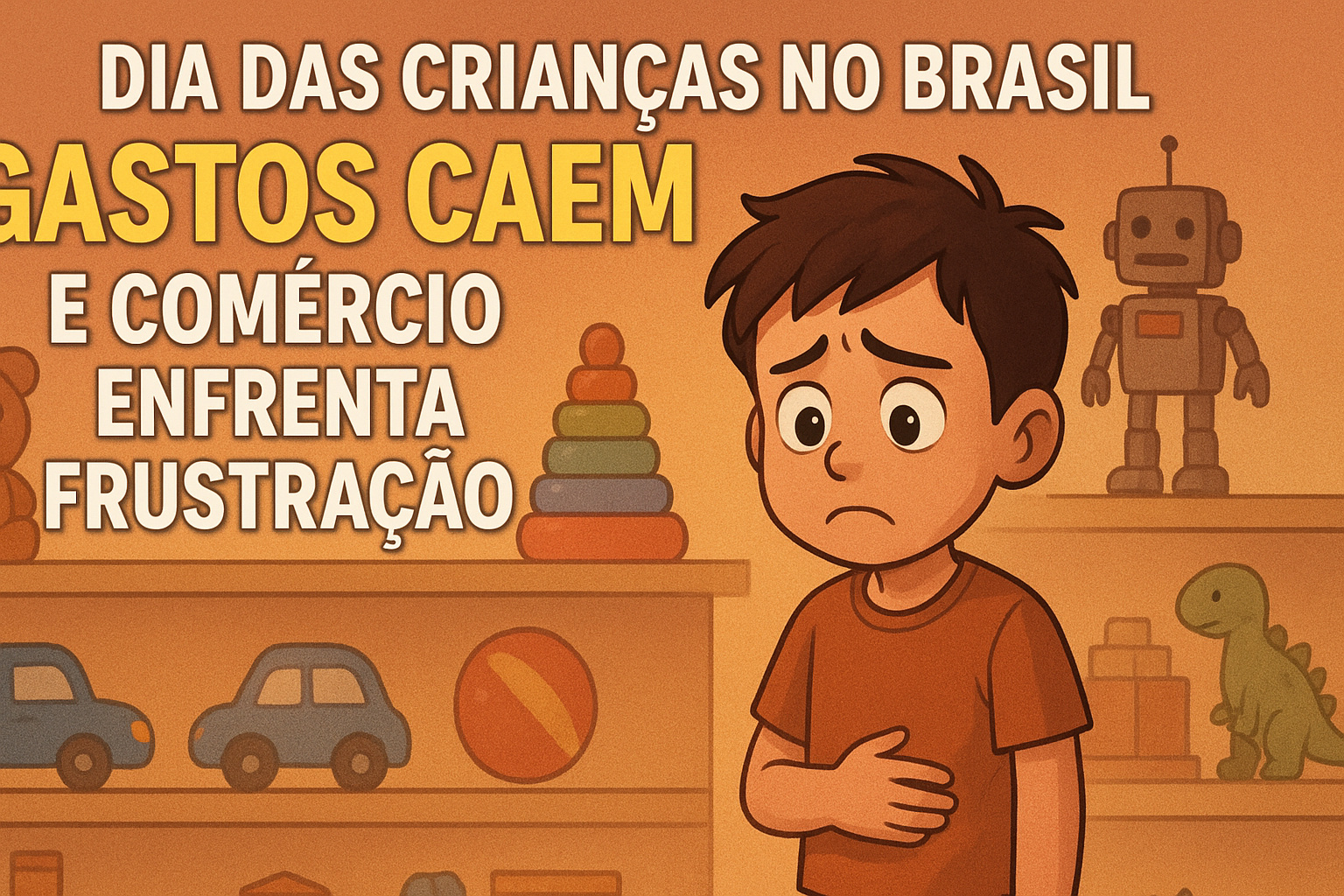


Children’s Day Should Move R$ 2 Billion in Brazil, but Indebted Families Reduce Spending, and Commerce Reports Weak Sales.
On the eve of Children’s Day, the commerce in Belo Horizonte expects to move more than R$ 2 billion, according to a survey by the Belo Horizonte Chamber of Commerce (CDL-BH).
The survey indicates that families plan to spend an average of R$ 150 on gifts, but in practice, the scenario is different. Retailers report weak sales, highlighting the impact of the economic crisis on holidays and the Brazilian market.
The president of the Association of Merchants of Downtown BH, Flávio Freis Assunção, confirms: “This is a year when people are really holding back.
-
Brazilian Startup Turns Coffee Grounds into Plant-Based Leather, Cutting Water Use by Over 50 Times for High-Impact Sustainable Fashion

-
Eco Invest Auction Aims to Unlock $10 Billion in Investments, Focusing on Green Fertilizers, Critical Minerals, Batteries, and AI for Clean Industry in Brazil

-
Half of Brazilians Prefer Lower Taxes with Private Health and Education, While 44% Opt for Higher Taxes for State-Provided Services, Datafolha Survey Reveals

-
Brazil’s Most Expensive Toll Rises to R$ 40.60 on Route from São Paulo to the Coast, Nearly Matching Bus Fare to Santos




Children’s Day only confirms this. Families are indebted, buying very little, just trinkets. They don’t even want to use their credit cards for installments. This is the true year of the trinket.”
Average Spending Promises, but Reality Disappoints
The initial expectation of R$ 150 per family contrasts with the reality of retailers, who report purchases far below expected. According to Assunção, the current average spending hardly reaches R$ 30.
“We are merchants, we live on hope. Now we just have to wait and pray,” he says.
The scenario shows how the Brazilian economy directly influences consumption habits during traditional holidays, including Children’s Day.
Therefore, even dates that usually boost the market face challenges when families are indebted or cautious.
Consumers Seek Cheaper Alternatives
Among consumers, caution is also evident. Freelancer Caroline Faria shares her reality: “Things are tight. I talked to him and he understands.
” She will not buy gifts this year, reinforcing the impact of the economic situation.
Other consumers try to adapt without letting the date pass unnoticed. Bruna Cristina Teixeira Pereira, a benefits assistant, explains:
“Everything is really expensive, but there has to be at least a little trinket. I want to work miracles because I can’t spend much.”
Thus, this change in behavior highlights how Children’s Day in Brazil is no longer just about celebration, but also about financial planning and caution in the consumer market.
Commerce Bets on Last-Minute Shoppers
Despite low movement, merchants still have hope. Many believe that consumers will leave their shopping for the last days before the holiday, as a way to try to balance their budget.
This strategy shows the resilience of the market, even in times of economic downturn. According to Assunção,
“Children’s Day only reinforces that commerce needs to adapt to the financial reality of families, offering more accessible and flexible options.”
Reflection of the Economy in Brazil
The scenario of Children’s Day illustrates how economic challenges directly affect the Brazilian market.
Debts, rising prices, and inflation reduce families’ purchasing power, impacting holiday dates and altering consumption habits.
Experts highlight that this behavior may influence other dates on the commercial calendar, showing that financial planning and market adaptation will be essential to balance expectations and reality.
Conclusion: Trinkets, Adaptation, and Caution
This Children’s Day, the lesson is clear: the expectation of spending does not always materialize. The Brazilian market faces frustration while families seek more economic alternatives.
Between trinkets and small surprises, the date still preserves its meaning, even in times of economic restrictions.
Thus, the combination of family planning, adaptation of commerce, and attention to the economy will be decisive for the success of Children’s Day in 2025 in Brazil.