Portuguese
  Spanish


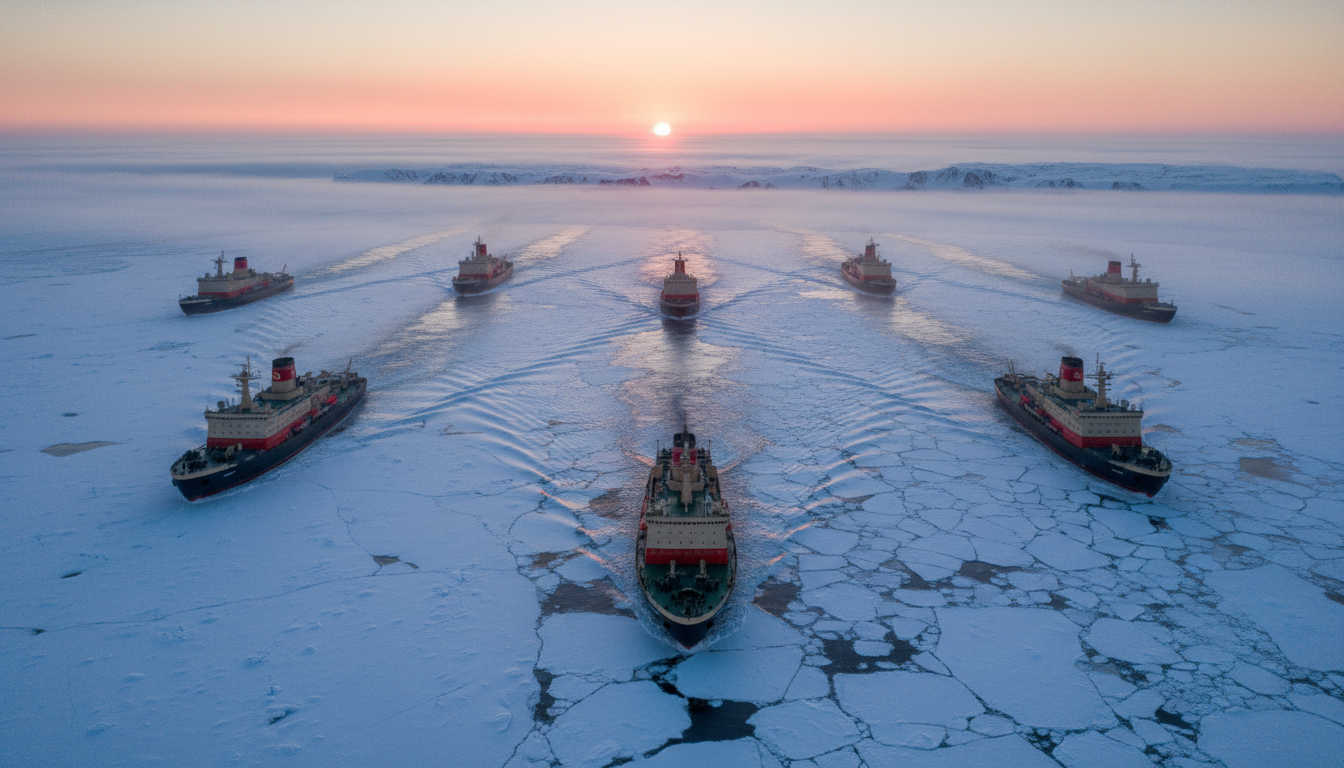
Companies Are Striving to Dominate Nuclear Power Technology at Sea. Currently, More than 200 Nuclear Reactors Are in Operation Aboard Ships Generating Power in the Oceans.
Core Power, a nuclear sector startup, is joining forces with Lloyd’s Register and maritime giant Maersk to explore how fourth-generation nuclear power at sea could be the key to the future of carbon-free cargo ships. The initiative aims to modernize regulations and overcome technical challenges, aiming to introduce this nuclear power technology at sea into global shipping in the next 15 years.
This collaboration seeks not only to drastically reduce greenhouse gas emissions but also promises to redefine standards for energy efficiency and safety in the sector. With international regulations becoming increasingly stringent regarding carbon emissions, the adoption of nuclear power at sea emerges as a viable and necessary solution to meet global environmental goals.
The use of compact and safe nuclear reactors could allow ships to operate for long periods without the need for refueling, reducing operational costs and increasing logistical efficiency.
-
Brazil’s Angra 3 Nuclear Plant Reaches 66% Completion; Government Faces 2026 Deadline to Decide on $24 Billion Project’s Future

-
American company drills a 1,830-meter hole in Kansas using oil well technology, places a nuclear reactor inside, and claims it will generate electricity without any cooling tower.
-
Canada invests more than 2 billion dollars to upgrade an old nuclear laboratory and try to rival the world’s major atomic energy powers.
-
Nuclear company backed by Bill Gates partners with Hyundai for next-generation 345 MW nuclear reactor



Meet the First Nuclear Ship
On July 21, 1959, the ship NS Savannah marked the beginning of a new era in commercial shipping. Built at an astronomical cost of US$ 46.9 million (equivalent to US$ 495 million in 2024) as part of President Dwight D. Eisenhower’s “Atoms for Peace” program, the vessel was a demonstrator designed to show how nuclear power at sea could be used in peaceful commercial operations.
Although it was a masterpiece of nautical engineering and a beautiful example of atomic era aesthetics, the Savannah operated only from 1962 to 1972 before being retired. It now serves as a museum ship in Baltimore, Maryland.
Until then, only four nuclear cargo ships had been developed, and only one, the Sevmorput, is still in operation in Russia, serving commercial routes in the Arctic. The market for these ships never materialized due to high life cycle costs, the need for highly trained crews, and a lack of port infrastructure for nuclear vessels.
What Is the Current Status of Nuclear Power Technology at Sea?
However, the shipbuilding industry is changing in response to the need for carbon neutrality by 2050. It is estimated that the sector burns 300 million tons of fossil fuels per year, generating 3% of global greenhouse gas emissions. Several alternatives are being explored, but nuclear power, in the form of fourth-generation reactors, is seen by many companies as the most practical solution.
Currently, there are around 200 nuclear reactors in operation on 160 military ships and submarines worldwide, with an excellent safety record. However, these military reactors are not suitable for civilian vessels, primarily due to safety concerns.
For this reason, companies like TerraPower from the U.S., British Newcleo, Core Power, Norway’s NuProShip, Italy’s Fincantieri, and Japan’s Imabari Shipbuilding are investing in an offshore nuclear power reactor for large container ships and similar vessels.
Challenges Encountered in Nuclear Power Production at Sea
The proposed reactors are similar to the advanced modular reactors being developed for land use. Among the most promising models are the thorium-fueled molten salt reactor, the lead-cooled fast reactor, and the helium-cooled pebble bed reactor.
These reactors do not need to be sealed in pressure vessels like traditional commercial reactors. They are less complex, operate at lower temperatures, and are inherently safe, with self-regulating nuclear reactions and coolants that solidify in the event of an accident.
Despite the technical challenges to be overcome, the regulatory issue is the most complicated for the consortium led by Lloyd’s Register. Therefore, the partners are focused not only on creating the best technical and commercial justification for fourth-generation offshore nuclear-powered ships but also on how to align or update existing regulations to make these vessels leaders in the next decade and a half.