Portuguese
  Spanish


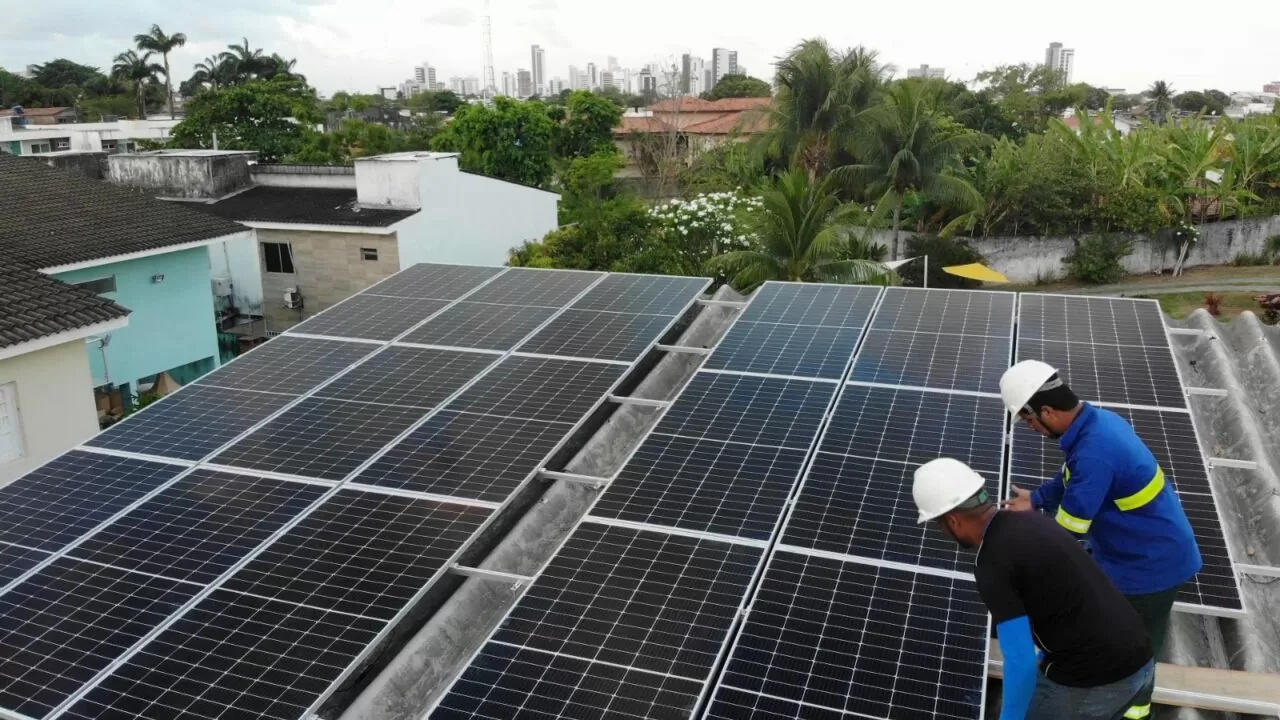

Recife Launches Tender for the Use of Solar Energy in Public Buildings, with Expected Annual Savings Exceeding R$ 8 Million and Significant Reduction in CO₂ Emissions.
The City Hall of Recife is taking another strategic step towards energy efficiency. The municipal administration announced the launch of a tender aimed at replacing the conventional energy used in public buildings with solar energy, an initiative that combines cost reduction, environmental sustainability, and budget predictability.
The tender will be published this Thursday (11) in the Official Gazette of the Municipality and will involve approximately R$ 34.5 million.
Tender Provides Significant Discount on Energy Tariff
According to the tender document, the winning company will be responsible for supplying solar photovoltaic energy at low voltage to power equipment and public buildings in the municipality.
-
Over 60 Tractors Take to the Streets in Lopera as Solar Parks Compete with Olive Groves, Affecting 13,000 to 100,000 Trees According to Conflicting Reports

-
Brazil’s Vitória Airport to Launch Solar Plant Covering Area of 10 Soccer Fields, Boosting Clean Energy and Cutting Costs
-
Switzerland Converts Train Tracks into Solar Power Plants with Removable Panels to Generate Energy Without Using Additional Land
-
Surge in Solar-Powered Homes in Brazil Leads to Grid Strain and Connection Restrictions in Three States




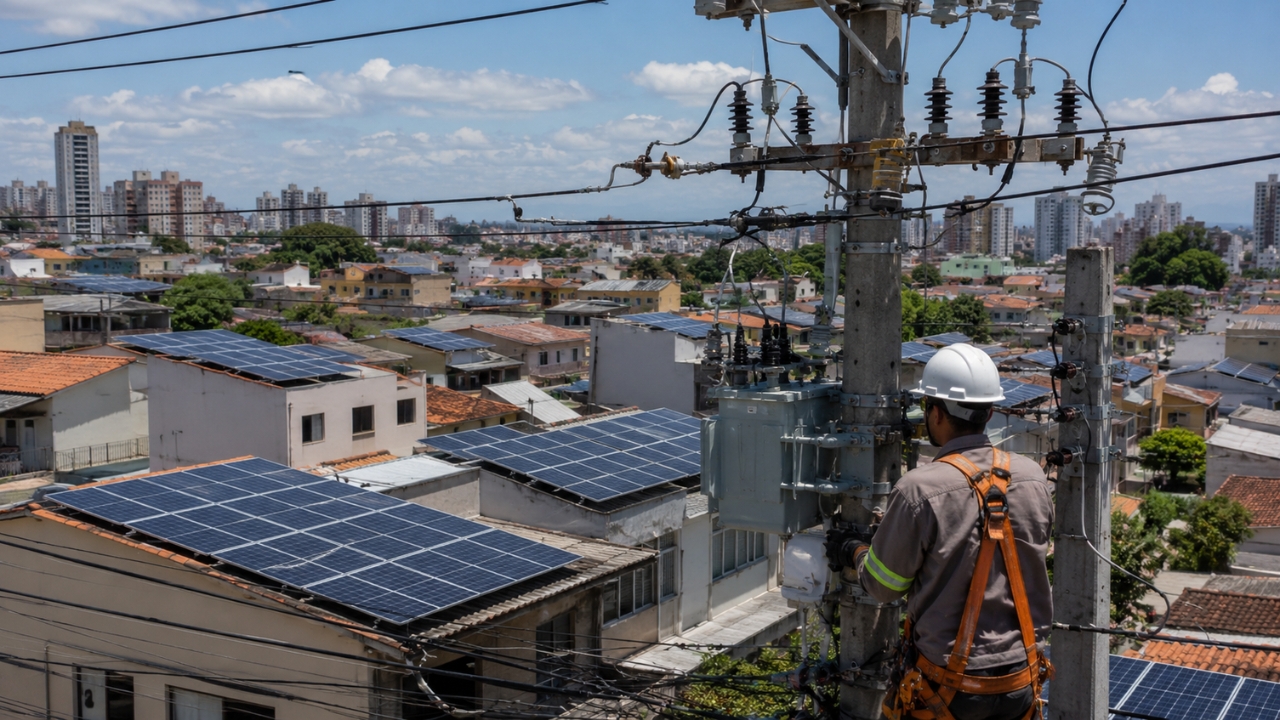
The proposal establishes a minimum discount of 25.35% compared to the tariff currently paid by the municipal administration.
As a result, the City Hall estimates a direct savings of over R$ 8.7 million per year. This relief in public accounts occurs, especially, in a scenario seeking greater fiscal control and better use of public resources.
One of the main differentiators of the project lies in the chosen format. In the distributed generation model as a service, there is no need for initial investment by the public authority.
This means that the City Hall will not bear the costs of construction, purchase of solar panels, or technical infrastructure.
All responsibility for the installation, operation, and maintenance of the solar energy systems will fall on the contracted company.
The municipality will only be responsible for the payment of the energy compensated directly on the bill, ensuring immediate economic viability and reducing financial risks.
Sustainability and Fiscal Responsibility Go Hand in Hand
According to the General Comptroller of the Municipality (CGM), responsible for the project design, the initiative combines administrative efficiency and environmental commitment.
For the Controller General Severino Andrade, adopting solar energy in public buildings reflects a public policy aligned with sustainability without compromising fiscal responsibility.
In addition to financial savings, the measure will contribute to the reduction of greenhouse gas emissions.
The estimate is that the contract will prevent the release of about 1,000 tons of CO₂ per year, strengthening the energy transition in the urban environment.
Solar Energy Strengthens the City’s Climate Goals
The project also directly engages with the Local Climate Action Plan (PLAC) of Recife. The city has a high solar radiation index, a factor that enhances the potential for photovoltaic generation and makes solar energy a strategic alternative for the public sector.
The expansion of this clean matrix contributes to consolidating a silent, renewable source integrated into the urban dynamics, reducing dependence on fossil sources and strengthening decarbonization policies.
Regulated by the National Electric Energy Agency (ANEEL), the adopted model functions as a type of “energy checking account.” The energy generated by the contracted plant is injected into the local distributor’s grid and converted into virtual credits.
These credits are automatically deducted from the electricity bills of the municipality’s consumer units, without the need for a direct physical connection between the plant and the public buildings. Thus, the City Hall expands the use of solar energy with operational simplicity and continuous budget control.