Portuguese
  Spanish


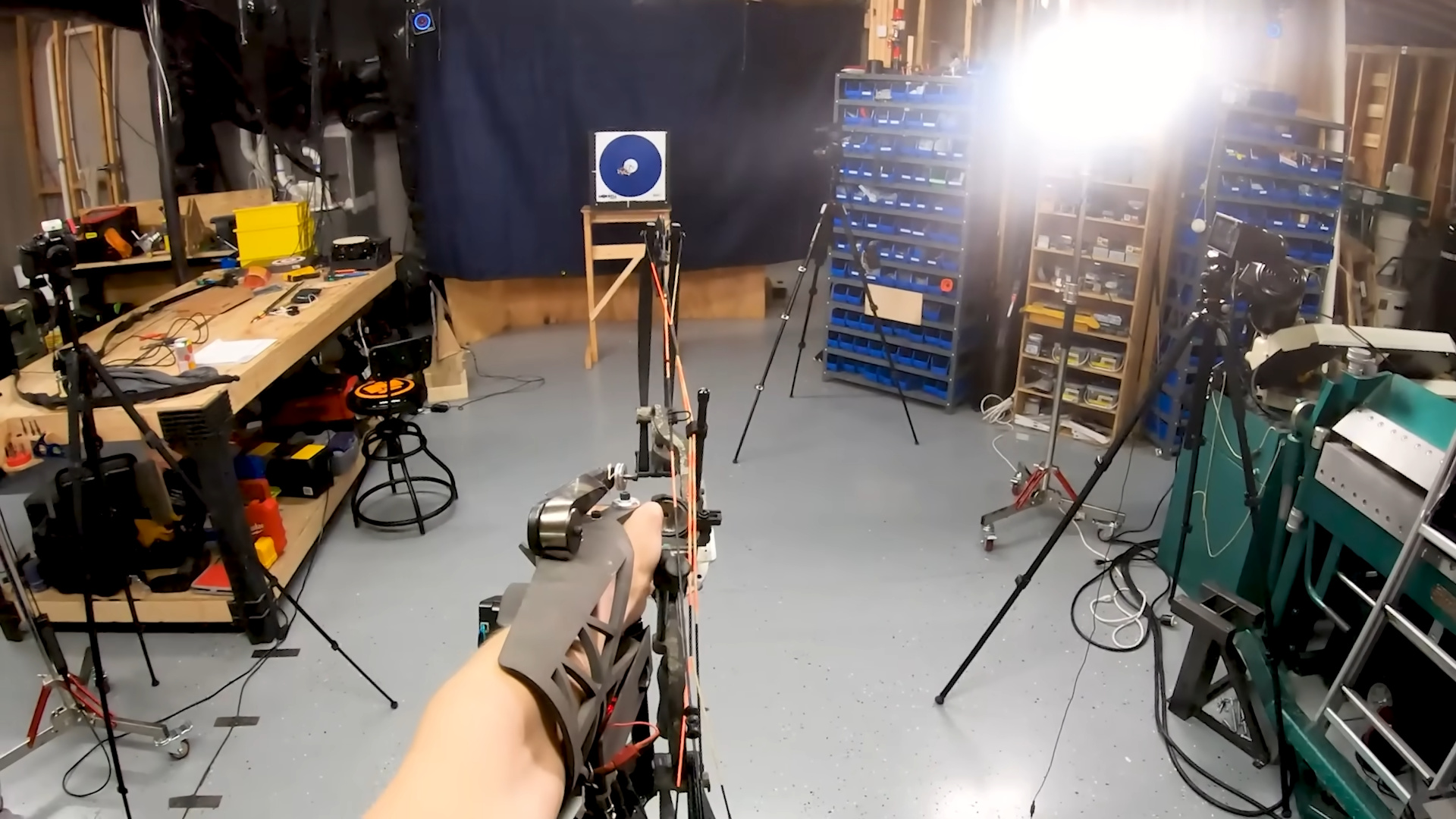


Discover How Engineer Shane Wighton Developed an Intelligent Bow Capable of Shooting Self-Guided Arrows with Absolute Precision. This Homemade Invention Promises to Revolutionize the Practice of Archery
Engineer Shane Wighton, known for the channel Stuff Made Here, developed a self-guided bow and arrow that automatically adjusts the arrow’s trajectory and fires on its own. Combining advanced sensors, cameras, and sophisticated algorithms, the device offers high accuracy on both static and moving targets, showcasing the potential of technology applied to archery.
This homemade invention highlights how creativity and technical knowledge can generate innovative solutions for traditional sports. It allows for safer, more educational, and engaging experiences, even for those who have never practiced archery before. Additionally, it reinforces interest in technology applied to sports, bridging tradition and innovation.
The Concept of the Intelligent Bow
The intelligent bow was created to reduce the margin of human error and increase consistency in shooting. Unlike traditional bows, where accuracy depends on the archer’s skill, the self-guided bow uses motors, sensors, and algorithms that identify the target, calculate the trajectory, and adjust the shot in real-time.
-
Chinese “dark factories” produce electric cars 24/7 with minimal human intervention, as Zeekr assembles 800 units daily, raising concerns in Brazil.

-
Spectacular Green Aurora Seen from Space Illuminates International Space Station, Captivates French Astronaut

-
In Tasmania, a Beach Features a Natural Stone Mosaic Formed by Earth’s Cracks Millions of Years Ago
-
China’s Artificial Sun Reaches 100 Million Degrees, Six Times Hotter Than the Sun’s Core, Putting Beijing Ahead in the Race for Infinite Energy



Wighton used common electronic and mechanical components, adapting them to respond quickly to changes in the target’s position.
The system combines automatic adjustments in the bow’s angle, shooting force, and arrow stabilization, ensuring reliable results in controlled tests. This approach demonstrates the potential of technology to create automated training devices for beginners.
How Does the Self-Guided Arrow Work?
The self-guided arrow combines motion sensors, cameras, and ballistic control algorithms. When pointing the bow at the target, the system calculates the ideal trajectory and adjusts the shot instantly.


In public demonstrations, Wighton was able to hit moving targets and conduct delicate tests, such as shooting an apple balanced on a Lego.
These experiments, although conducted in controlled environments, showcase the equipment’s accuracy and highlight its ability to demonstrate complex concepts of ballistics and engineering in an educational manner.
Engineering and Innovation in the Homemade Invention
The creation of the intelligent bow required advanced knowledge in mechanical engineering, programming, physics, and ballistics. Shane Wighton applied principles of material resistance, motion analysis, and motor control to build a functional and safe system.
Experts in sports technology claim that the project represents a fusion of tradition and innovation. The homemade invention demonstrates how creative solutions can transform performance in traditional sports, creating new opportunities for training, recreational practice, and sports education.
Impact of the Intelligent Bow on Modern Archery
Wighton’s intelligent bow demonstrates potential to transform the practice of archery. Beginners can achieve consistent results in controlled tests, while professionals can use the equipment as a demonstration and training tool.
Studies suggest that the introduction of technologies in traditional sports tends to increase engagement among beginners, especially young people. Although there is no specific data on archery, the self-guided bow offers a new way to stimulate interest, learning, and inclusion of new practitioners.
Furthermore, the invention provides educational opportunities, such as introducing concepts of physics and engineering in practical, playful contexts. This can be beneficial in schools, sports clubs, and technology workshops.
Comparison with Traditional Technologies
Before Wighton’s project, compound bows and optical sight systems sought to improve accuracy, but none offered real-time automatic adjustments. The self-guided bow stands out by integrating complete automation, trajectory analysis, and instant adaptation, ensuring high accuracy in demonstrations.
This technology complements human skill without replacing it, creating new possibilities for training, learning, and recreational competition. The device also shows that engineering solutions can be applied to traditional sports without compromising the essence of the practice.
Innovation That Redefines Archery
Shane Wighton’s intelligent bow shows that a homemade invention can transform traditional practices, offering high accuracy in controlled conditions. The device combines engineering, sensors, and algorithms to create safe, educational, and engaging experiences.
For both beginners and professionals, the self-guided bow represents an innovative approach, complementing human skill and expanding the potential of modern archery. The invention proves that tradition and technology can coexist, stimulating creativity, learning, and interest in traditional sports.
Additionally, the project highlights how technology channels, such as Stuff Made Here, can popularize technical knowledge and inspire new inventors, encouraging safe experimentation and hands-on learning.
Shane Wighton’s work demonstrates that creative solutions, even homemade, can redefine traditional sports practices, offering new ways to learn and have fun. The self-guided bow and arrow combines tradition, engineering, and technology, showing that innovation and education can walk hand in hand in modern archery.