Portuguese
  Spanish


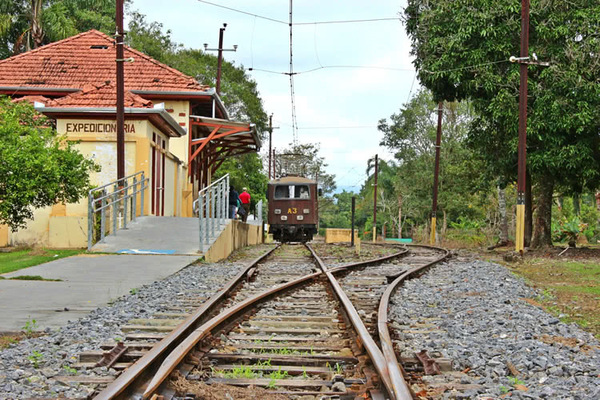

The Governor of São Paulo, Tarcísio de Freitas, announced last Tuesday (28) an investment of R$ 160 million in the modernization and reform of the imposing Campos do Jordão Railway (EFCJ).
The investment in the reform of the Campos do Jordão Railway is for tracks, rolling stock, and other equipment; the line has a length of 47 kilometers, six train stations – Pindamonhangaba, Expedicionária, Piracuama, Eugênio Lefévre, Abernéssia, and Emílio Ribas – and several stops and platforms along its route.
The EFCJ offers 8 rail services: from the majestic Suburban Train to the charming Piracuama Tourist Train; from the traditional Tourist Tram to the sparkling Urban Tourist Tram; from the iconic Maria Fumaça to the enigmatic Themed Tourist Trains and finally, to the notorious Mountain Train. With these services, the EFCJ connects the cities of Pindamonhangaba, Santo Antônio do Pinhal, and Campos do Jordão grandly.
Governor Tarcísio de Freitas Studies Privatization of the Railway
Investment Strike: São Paulo decides on 15 privatizations on Tuesday. Governor Tarcísio de Freitas and members of the São Paulo State Government’s Investment Partnership Program Council met last Tuesday (28) to implement a privatization package that includes, among other measures, the concession of the Campos do Jordão Railway.
-
Belo Horizonte’s Beltway Project Risks Losing $5 Billion to Metro Expansion if Court Doesn’t Act Soon; State Government Plans New Lines with IDB Support

-
Brazil to Auction 9,000 km of New Railways, Aiming to Attract $28 Billion by 2026

-
Brazil Plans $160 Billion Investment to Revitalize Railways and Reduce Reliance on Long-Distance Trucking
-
Retired Railway Workers in Brazil Preserve Locomotive for 52 Years, Now See It Donated by the Government


This significant investment, amounting to approximately R$ 160 million, will be used to modernize and reform the electrified railway, with tracks, rolling stock, and other equipment. With this, the government hopes to create a gradual improvement in the conditions of services provided in the region.
In this way, the hiring of consulting services for the evaluation of the privatization of the Basic Sanitation Company of the State of São Paulo (Sabesp) was also approved. This would be the first major state-owned enterprise to be privatized. Other projects aimed at education, culture, urban development and housing, lotteries, intercity road and waterway transport, road infrastructure, and water resources were also approved.
With these measures, the government aims not only to fulfill a metonymy of the investments needed for significant improvements in the region but also to eliminate a possible euphemism in the relationship between the state and the services offered to the population.