Portuguese
  Spanish


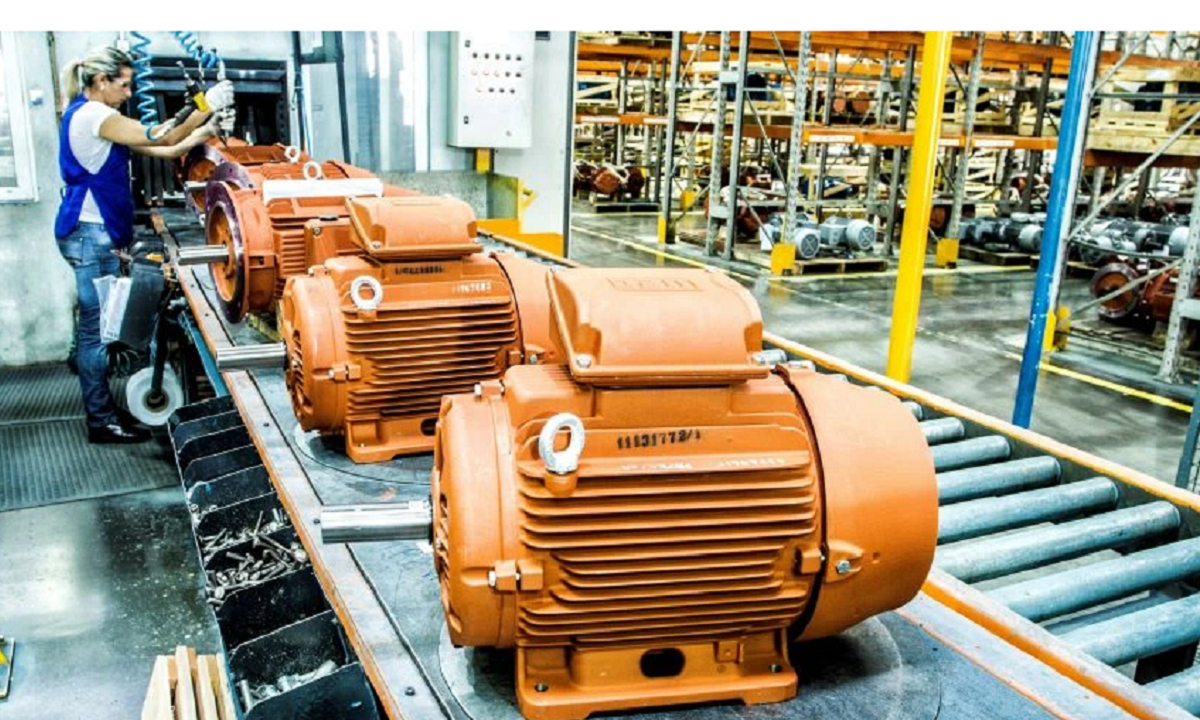

The New Factory Will Exclusively Produce Industrial “Electric Traction” Motors in Santa Catarina After Million-Dollar Investment from the Company
The electric motors and industrial paints company Weg is planning to increase its production capacity by up to 25% in the coming years, after making million-dollar investments in the construction of a new factory in the company’s industrial complex in Jaraguá do Sul, Santa Catarina.
The focus of the investment made in Weg’s new factory is the production of industrial motors and “electric traction” motors, according to a company statement, without providing further details on the venture on Monday, the 27th. The expected investment is approximately 660 million reais over the next three years. Weg’s expectation is to complete the construction of the new factory by the first quarter of 2024.
“In addition to expanding the manufacturing and export logistics buildings, Weg has made investments in the factory that will be built dedicated to industrial motors and mainly motors to serve the electric mobility segment,” the company stated.
-
Concrete-filled PVC homes could be cheaper than traditional masonry, UPF research finds; with ready modular panels, less waste, and faster construction, the Concrete-PVC system aims to cut costs and transform affordable housing in Brazil.

-
Brazilian House Built with 32.8 Tons of Construction Debris Offers Affordable Housing Solution
-
Americans Build Entire Homes in a Day Using Compact Sand Foundations and Pre-Made Wooden Trusses, Reducing Construction Costs

-
China’s Largest Floating LNG Plant, NGUYA, Sets Sail for Congo: 2.4 Million Tons Annually for Italy’s Eni


Company Actions After Investments in the New Factory
Weg’s shares fell after the opening, declining by 1% at 11:18 AM, while the Ibovespa rose by 0.25%, following the investments in the new factory. Weg stated that the investments made will turn it into a modular factory, to allow for a gradual increase in production capacity according to market growth in the coming years.
According to analysts from Itaú BBA, Weg’s announcement was “positive,” reinforcing the assessment of the company’s growth in the medium and long terms and capturing opportunities in the electric mobility segment.
“Our model prices in 20% growth in electromechanical industrial equipment in 2022, 13% in 2023, and 12% thereafter. Domestic installations will serve local customers and also generate revenue through exports for Weg,” analysts Daniel Gasparete, Gabriel Rezende, and Luiz Capistrano stated in a report.
Other New Factories: Nestlé’s Factory in SP is the Company’s First in the World to Receive a Dedicated 5G Internet Network, with Machines ‘Talking’ to Each Other
The factory of Nestlé, located in the municipality of Caçapava in the interior of São Paulo, responsible for producing 2 million units of KitKat chocolate per day, already features 5G internet. Now, the line showcases another technological advancement with the use of ‘robot-car,’ whose response time is instantaneous.
The machine consists of an antenna that responds to commands from a central unit. The device can move and brake faster due to the ultra-fast 5G network. Thanks to 5G, Nestlé can make the new machine transport the wafer to the chocolate station to produce KitKat.
The Nestlé network exists thanks to a partnership between Ericsson and Embratel. The band used is 3.5 GHz. In tests, the average browsing speed reached 700 megabits per second, while the latency, which is the response time between devices, was only 8 milliseconds.
The 5G internet has enabled the connection between multiple devices simultaneously, something that will allow for the development of artificial intelligence, the Internet of Things (IoT), augmented reality, cloud data storage, and other functionalities. In the future, the factory could evolve from automated to autonomous.
Nestlé’s president in Brazil, Marcelo Melchior, stated in an interview with Estadão/Broadcast that it feels like the factory can now think for itself. For example, the station could identify a low stock of cocoa and independently order a restock.
The Nestlé network is also being used with augmented reality glasses, providing accurate images of the plant, which help train employees without needing to stop the production line. The glasses are also used for remote maintenance, meaning a technician from another country can check a problem on the line without having to take a flight.