






 Portuguese
  Spanish


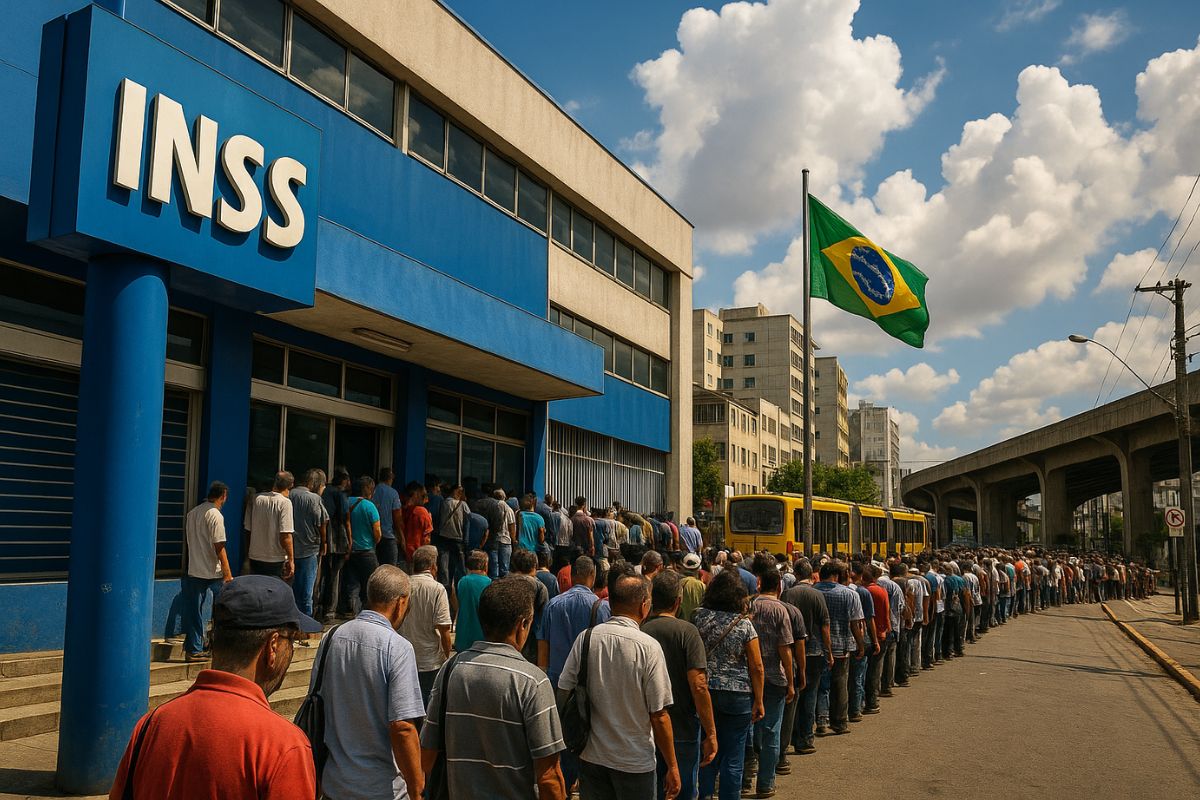


Suspension of the Queue Reduction Program Directly Affects the Time for Analyzing Social Security Benefits, and More Than 2.6 Million Brazilians Are Awaiting a Response While the INSS Requests Budget Support of R$ 89.1 Million from the Government
The INSS has temporarily suspended the queue reduction program, created to accelerate the analysis of social security and assistance benefits. The decision, made due to a lack of resources, interrupts one of the agency’s most effective mechanisms in addressing the backlog of processes, which today exceeds 2.6 million requests pending.
The Benefits Management Program (PGB) had been in effect since April 2025 and provided bonuses to employees who analyzed more applications than the daily target. The suspension comes at a time when the agency was already facing pressure due to delays in granting benefits, and the resumption will depend on the release of R$ 89.1 million requested from the Ministry of Social Security.
What is the Queue Reduction Program and Why Was It Interrupted
The queue reduction program, officially called PGB, works as an incentive system for INSS employees who analyze a greater number of cases than expected.
-
Owner of Havan Visits Paraguay to Discuss Lower Taxes, Local Suppliers, and International Expansion with President

-
Brazilian Construction Retail Chain Closes After 60 Years, Begins Liquidation Sale Across Five Cities

-
Brazil Approves Landmark Bill Requiring Workplace Adaptations for Autism Inclusion

-
Brazil’s Micro-Entrepreneur Program May See Major Changes: Income Cap Could Increase to R$ 130,000, Annual Inflation Adjustments, and Allow Hiring of an Additional Employee



This bonus has been pointed out as essential to reduce the average waiting time, especially during periods of high demand, like the current one.
According to the president of INSS, Gilberto Waller Jr., the suspension is temporary and motivated by the lack of budget.
In a letter sent to the Ministry of Social Security, Waller stated that the continuation of the PGB depends on a financial boost of R$ 89.1 million.
Until the funds are released, new extraordinary analyses are prohibited, and all pending tasks return to the regular queue.
Immediate Effects and Increase in the Benefits Queue
With the temporary end of the queue reduction program, the impact is immediate for those awaiting pensions, allowances, and benefits.
The number of stalled requests exceeds 2.6 million, according to data from the Transparency Portal.
In March, the peak reached 2.7 million insured individuals waiting, representing one of the largest queues in the recent history of INSS.
Employees warn that, without the incentive from the PGB, productivity tends to decline, further prolonging the average granting time.
In many cases, the delay exceeds the 45 days stipulated by law.
The suspension occurs precisely during a period when the government is attempting to implement administrative efficiency measures to reduce the pension liability.
INSS Seeks Budget Supplement to Resume the Program
In the request sent to the Ministry of Social Security, the presidency of INSS highlighted that the PGB plays a strategic role in managing queues and acknowledged the efforts of the employees participating in the program.
According to the document, the agency is working with the economic team to enable the budget supplement and ensure the resumption of extraordinary analyses as soon as possible.
The text also emphasizes that the program does not represent an increase in permanent expenses, as the bonus payment depends on the achievement of concrete targets.
Thus, the model is seen as a controlled-cost solution to unlock the backlog of stalled benefits without the need for an expanded workforce.
Challenges and Consequences of the Suspension
Public policy experts evaluate that the suspension of the queue reduction program exposes a structural fragility in the pension management of the country: the reliance on temporary mechanisms to compensate for the lack of employees.
Since 2019, the number of INSS employees has been declining while the demand for benefit analysis continues to grow.
With the current volume of requests, it is estimated that thousands of beneficiaries may experience additional delays of up to two months in the responses to their requests.
The situation is particularly concerning for retirees, people with disabilities, and insured individuals awaiting temporary incapacity benefits.
Each month of waiting represents a direct impact on the income of entire families.
Next Steps and Expectation for Resumption
Although the INSS has classified the suspension as a technical halt, there is still no defined timeframe for the resumption of the program.
The expectation is that the Ministry of Social Security approves the release of funds within the next few weeks, which would allow reactivating the payment of bonuses and accelerating analyses again.
In the meantime, the agency advises that insured individuals monitor their processes through the Meu INSS app or website, and avoid resubmitting requests already in process.
The agency guarantees that no request will be canceled, only redistributed within the standard queue.


