Portuguese
  Spanish


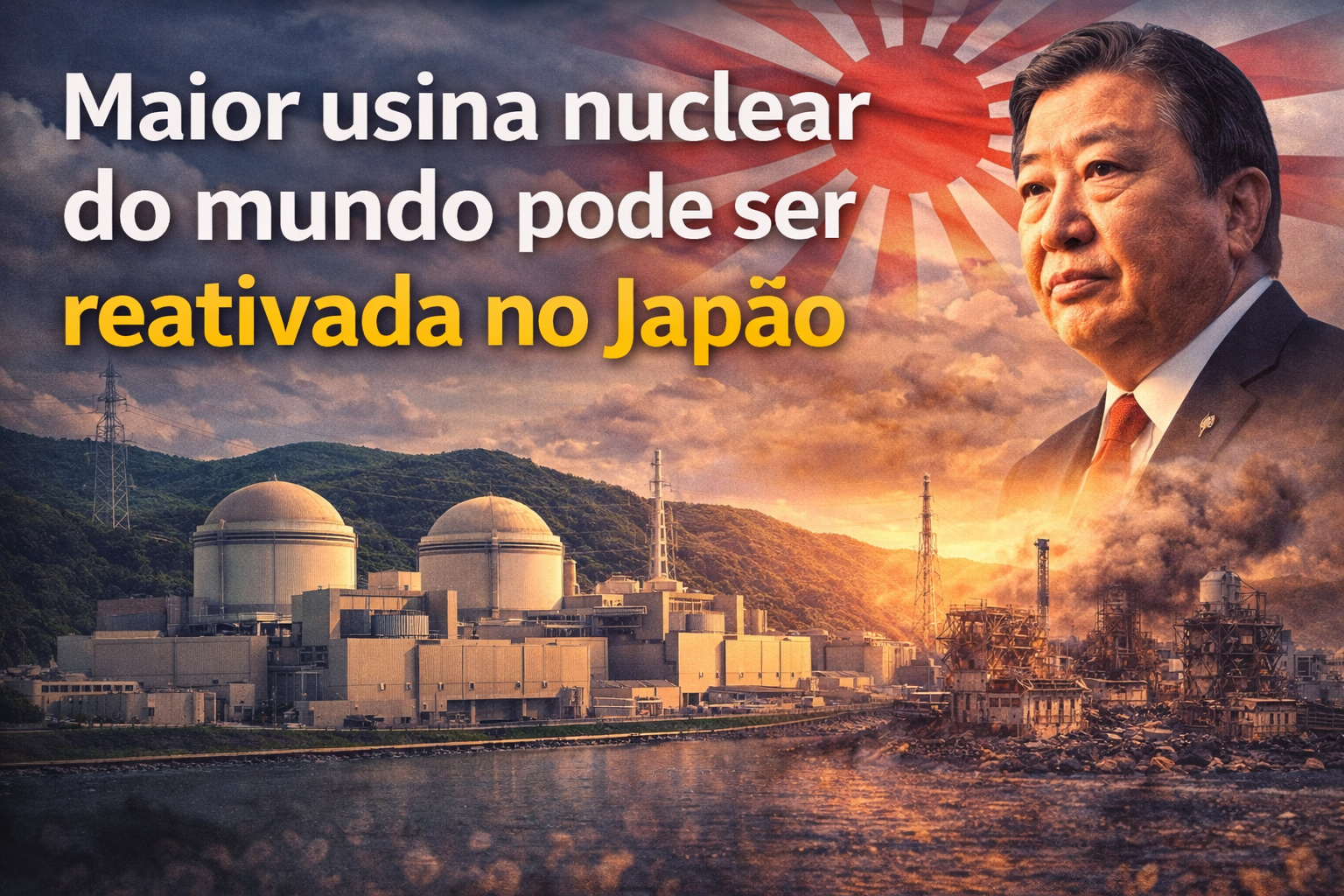


Japan Advances In Restarting The Kashiwazaki-Kariwa Nuclear Power Plant, 15 Years After Fukushima, Amid Debates On Safety And Energy.
Fifteen years after the Fukushima accident, Japan is moving towards the restart of the Kashiwazaki-Kariwa nuclear power plant, the largest in the world by installed capacity. The decision involves local authorities, national regulators, and the Tepco operator, as well as reigniting the debate over energy security in the country.
Recently, the Niigata prefectural assembly supported Governor Hideyo Hanazumi’s decision. Thus, the process gained political and institutional momentum, bringing the country closer to one of the most symbolic restarts since Fukushima.
Kashiwazaki-Kariwa Nuclear Power Plant Back At The Center Of Decisions
Located in northern Japan, the Kashiwazaki-Kariwa nuclear power plant features seven reactors and a total capacity of 8.2 gigawatts. With this volume, the plant can supply power to about seven million households.
-
Nvidia Secures Billion-Dollar Deal to Supply Up to 170,000 AI Accelerators to a 360 MW Data Center in Indonesia, Aiming to Transform Batam into an Advanced Computing Hub

-
NuScale proposes revised plan for six VOYGR SMR reactors in Poland after ending U.S. project

-
Holtec and EDF Submit Joint Proposal to Install Four SMR-300 Reactors in England with Combined Capacity of 1.3 GW
-
Brazil’s Angra 3 Nuclear Plant Reaches 66% Completion; Government Faces 2026 Deadline to Decide on $24 Billion Project’s Future


Despite this, all units have been offline since the Fukushima accident. Although the 2011 earthquake and tsunami did not directly impact the plant, the government decided to suspend operations as a precaution.
Seismic History Prompted Structural Reinforcements
Before Fukushima, the plant had already experienced shutdowns. In 2007, the Niigata-Chuetsu earthquake caused damage to the plant site.
As a result, Tepco strengthened the plant’s resistance to seismic shocks. Since then, technicians have improved structural systems and safety protocols, preparing the complex for a possible restart.
Tepco Prioritizes Units 6 And 7 Of The Nuclear Power Plant
While conducting the decontamination process at Fukushima Daiichi, Tepco is focusing its efforts on units 6 and 7 of Kashiwazaki-Kariwa. The company sees these units as the fastest path to a restart.
Each reactor uses Advanced Boiling Water Reactor technology, with a capacity of 1,356 megawatts electric. According to the company’s estimates, the return of operations could increase annual profits by about US$ 638 million.
Regulatory Approvals Accelerate The Process
The Japan Nuclear Regulation Authority approved the resumption of units 6 and 7 back in December 2017. However, Tepco needed the political and social approval from Niigata prefecture.
Now, with local approval, the company is moving towards the operational stage. In June, technicians completed the fuel loading of unit 6, reinforcing the restart schedule.
Unit 6 May Mark Tepco’s Return After Fukushima
Tepco has until September 2029 to implement all required anti-terrorism safety measures. Even so, local authorization allows unit 6 to operate until that deadline.
As a result, unit 6 may become Tepco’s first reactor to resume operations since the Fukushima accident, a historic milestone for the Japanese nuclear sector.
Government Bets On Information To Gain Public Support
Governor Hideyo Hanazumi acknowledges that the restart of the nuclear plant divides opinions in the prefecture. Still, he advocates transparency as the main tool to broaden public support.
“The way to handle the Kashiwazaki-Kariwa nuclear plant has long been a major issue for the people of Niigata prefecture.
Although opinions on the resumption of the Kashiwazaki-Kariwa nuclear plant are currently divided among the public, we believe that by continuing to provide accurate information about nuclear generation and raising awareness about safety measures and disaster prevention, we can increase public understanding of the plant’s restart,” he said.
Younger Generations Show Greater Acceptance Of The Restart
According to the governor, recent surveys indicate that support grows as the population’s knowledge of nuclear safety increases. Additionally, the generational factor is noteworthy.
“Moreover, the survey revealed that people in their 20s and 30s tend to be more favorable to the plant’s restart than older generations,” he added.
This behavior suggests a gradual shift in the perception of nuclear energy in Japan.
Nuclear Energy Regains Ground In Japan
Before Fukushima, Japan’s 54 reactors accounted for about 30% of the country’s electricity. After the accident, the government shut down all units and reformulated safety regulations.
Currently, of the 33 reactors deemed operable, 14 have resumed functioning. Another 11 are still in the approval process.
Thus, the potential restart of Kashiwazaki-Kariwa reinforces the gradual return of nuclear energy. At the same time, Japan is trying to balance safety, electricity generation, and public trust after Fukushima.