Portuguese
  Spanish



Oil Royalties: Besides Macaé, Other Cities in RJ Such as Campos and São João da Barra Have Benefited Greatly from Petrobras’ Profit
Petrobras’ new strategic positioning guarantees millions in oil royalties to the coffers of Macaé, Campos, and São João da Barra, all located in the state of Rio de Janeiro. Last Thursday, the Brazilian state oil company announced a record achievement of surpassing the United Arab Emirates in oil production for the second consecutive month (the third largest oil producer in OPEC).
Also Read
- Many Job Openings to Work at the Global Australian Oil and Gas Multinational Worley
- 400 Job Openings in Various Regions and Sectors to Work at the French Multinational Bureau Veritas
- Oil Companies Aim for Gas Power Plant in Macaé and Form Partnership to Compete in Auction Scheduled for April 30 by the Government
With the disinvestment of assets in the international auction bank, such as the sale of BR Distribuidora, Petrobras secured a net profit of R$ 40.1 billion in 2019, a 55.7% increase over 2018. This is the second record news regarding Petrobras’ revamped business model.
-
Brazil’s ANP Opens 86 New Oil Blocks in the Equatorial Margin, Expanding the Amazon River Mouth Frontier

-
OPEC+ Boosts Oil Supply by 188,000 Barrels per Day in July 2026, Leading to Price Drop from $112 to $89 per Barrel in Under Two Months

-
TotalEnergies Signs 20-Year Deal to Purchase 2 Million Tons of LNG from Alaska, Boosting Project Viability
-
Turkey Deploys Çağrı Bey Drilling Ship to Explore New Oil Frontier Off Somalia’s Coast

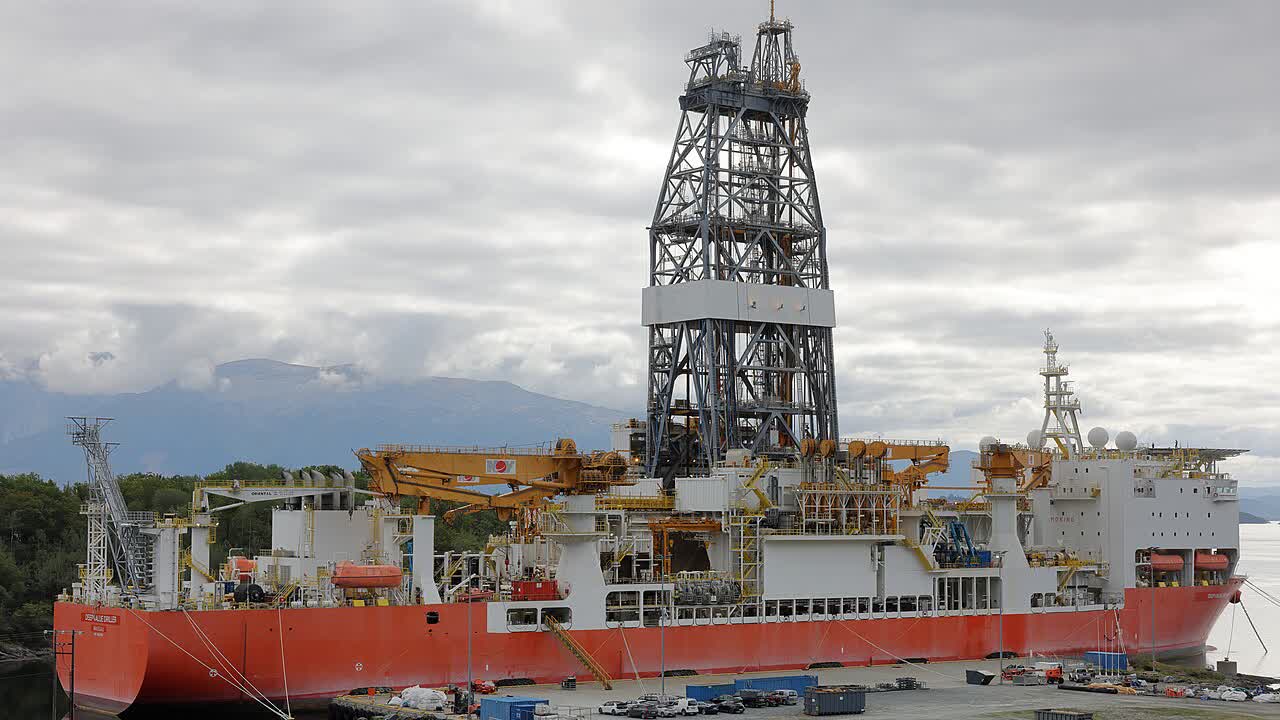
The formula of the current management involved expanding offerings in auctions of new oil exploration areas, selling subsidiaries like TAG and BR Distribuidora, and a significant investment in production in new fields.
Petrobras was able to achieve this net profit in 2019, breaking a cycle of consecutive losses, betting on an area of great interest to the state of Rio: production. The state-owned company gained momentum with a 13.7% increase in oil and natural gas production in the fourth quarter of 2019 compared to the same period in 2018: over 3.025 million barrels of oil equivalent per day (BOE/day).
This 2019 performance exceeds that of 2010, when profit was R$ 35.19 billion, the most significant mark for Petrobras to date. The company recorded losses from 2014 to 2017, registering a profit of R$ 27.779 billion in 2018.
The report also notes a record R$ 129.2 billion in EBITDA, which is the operating profit excluding interest, taxes, depreciation, and amortization. This represents a 12.5% growth compared to 2018. According to the state-owned company, this performance was achieved thanks to lower production costs and fewer contingencies.
Oil Royalties
The oil-producing municipalities located in the northern region of Fluminense in RJ, such as Macaé, Campos, and São João da Barra, recorded an increase in royalty revenues this February.
The municipalities filled their coffers last Friday (20). According to superintendent Wellington, this influx was due to the favorable situation of increased production combined with oil barrel prices and the dollar exchange rate.
“This occurred due to the high variation of the dollar between US$ 62 to US$ 70 in December, even with the exchange rate dropping from R$ 4.22 to R$ 4.00 during the same period. Coupled with a more significant improvement in production in the pre-salt areas with the Lula and Buzios fields. A stable value is expected for March and a decrease in April due to February’s production and a decline in demand due to the coronavirus,” said Wellington.
Among those recognized, Macaé was the municipality that benefited the most, receiving R$ 62.30 million compared to the previous deposit of R$ 55.51 million, an increase of +12.2% compared to last month.
Campos received R$ 27.320 million compared to R$ 24.45 million from the January transfer (+11.8%), Cabo Frio will receive R$ 12.638 million compared to R$ 11.50 million (+9.9%).
Rio das Ostras collects R$ 11.29 million compared to R$ 9.83 million (+14.8%), and São João da Barra R$ 8.410 million compared to R$ 7.88 million (+6.6%).