Portuguese
  Spanish


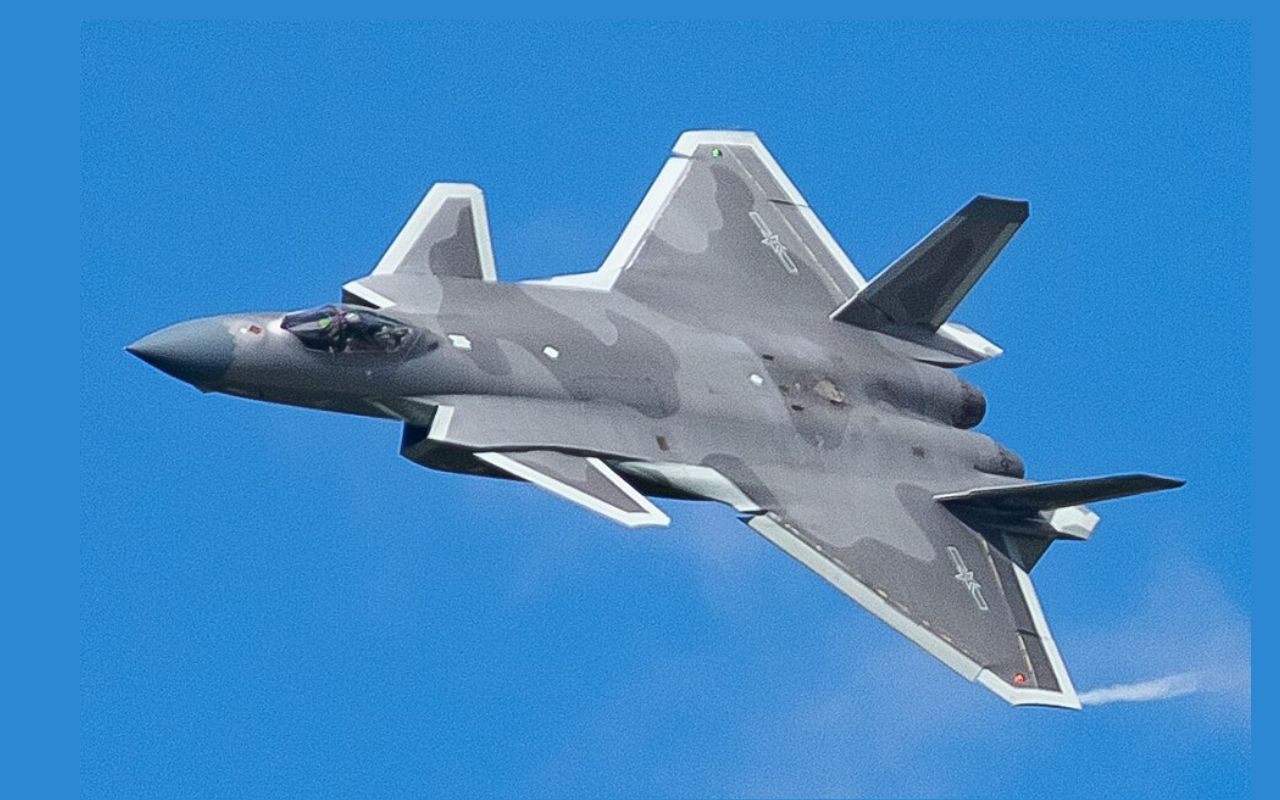

With its inaugural flight in 2011 and operation since 2017, the Chengdu J-20 emerges as China’s response to the F-22 and F-35 fighters.
The military advancement of China has gained prominence with the Chengdu J-20, a stealth fighter of the fifth generation developed by the Chengdu Aerospace Corporation for the People’s Liberation Army Air Force. The aircraft, which made its first flight on January 11, 2011, and entered service in 2017, achieves speeds exceeding Mach 2 and positions itself as one of the most advanced in the world. The project emerged in the late 1990s, evolved with strategic investments, and today reinforces Chinese air power amid the global competition for technological superiority.
Furthermore, the development of the fighter meets China’s need to modernize its armed forces and compete directly with powers like the United States and Russia. Thus, the Chengdu J-20 has become a key piece in the country’s military strategy.
Chengdu J-20: a fifth-generation fighter that changed the global landscape
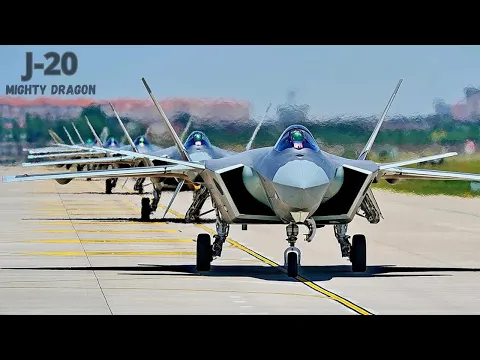
The Chengdu J-20 is considered the third fifth-generation stealth fighter to enter mass production, following only the American models F-22 and F-35. However, it brings important differentiators, such as greater missile transport capacity compared to the Sukhoi Su-57.
-
New Brazilian Frigate Equipped with Advanced Missiles and Radars to Safeguard Strategic Maritime Areas

-
New Brazilian Frigate Equipped with Advanced Missiles and Radars to Protect Strategic Maritime Areas, Including the Blue Amazon and Pre-Salt Reserves
-
China Unveils Laser Weapon Capable of Instantly Neutralizing Military Drones, Marking a Significant Advancement in Air Defense Technology
-
U.S. Navy’s Ticonderoga-class Cruiser Becomes a 9,800-Ton Missile Fortress with Advanced Aegis System Capable of Tracking Hundreds of Targets



On the other hand, the highlight is not only in firepower. The fighter combines stealth — that is, low radar detection — with high speed and advanced electronic systems. This allows for strategic operations in highly monitored environments.
Another relevant point is that the model was also the first stealth fighter in the world to gain a two-seat version, expanding its operational possibilities.
Origin of the project and evolution of the Chengdu J-20 fighter
The development of the Chengdu J-20 began with the J-XX program, still in the late 1990s. In 2008, the Chinese Air Force officially approved the project of the Chengdu Aerospace Corporation, known as Project 718.
Meanwhile, other competing proposals were analyzed, including a larger model developed by Shenyang. Still, the Chengdu project was chosen for presenting a better balance between performance and feasibility.

In December 2010, the first prototype underwent initial testing. A few months later, it made its inaugural flight, marking the beginning of a new phase in Chinese military aviation.
Variants of the Chengdu J-20 expand the fighter’s capabilities
Over the years, the fighter has received different versions, each with specific improvements. Among the main variants, the following stand out:
- J-20A: first mass production version, officially introduced in 2017
- J-20B: enhanced model with thrust vectoring, increasing maneuverability
- J-20S: two-seat version, still in development, first seen in 2021
The J-20B variant, for example, incorporates more advanced engines, capable of providing better combat performance. The J-20S may pave the way for more complex missions, including coordinated operations and advanced training.
Performance impresses: speed, range, and altitude
The Chengdu J-20 features numbers that reinforce its position among the most advanced fighters on the planet. It can reach a maximum speed of approximately 2,469 km/h and operate at altitudes of up to 20,000 meters.
Additionally, the range is also noteworthy. The fighter can cover up to 6,000 km under ideal conditions, with a flight endurance of between three and four hours. This significantly enhances its capability to operate in long-distance missions.
Another highlight is its climb rate, which exceeds 300 meters per second, allowing for a rapid response in combat scenarios.

Embedded technology places the fighter at another level
The Chengdu J-20 stands out not only for its physical performance. Its onboard technology is one of its main differentiators.
Among the most advanced systems are:
- Active Electronically Scanned Array (AESA) Radar
- Electro-Optical Targeting System
- Infrared Search and Track
- Electronic Warfare and Countermeasures Systems
These features allow for the detection, tracking, and neutralization of threats with high precision. Additionally, they enhance the aircraft’s survivability in hostile environments.
Armaments Strengthen the Offensive Power of the Chengdu J-20
The fighter was designed to operate with internal armaments, which maintains its stealth characteristic. It can carry different types of air-to-air missiles, including short, medium, and long-range models.
Among the main armaments are the PL-10, PL-12, and PL-15 missiles, as well as precision-guided bombs. This combination allows it to engage in both direct combat and strategic missions.
Therefore, the Chengdu J-20 establishes itself as a versatile and highly lethal platform, capable of performing multiple roles on the modern battlefield.

Featured image: N509FZ | Wikimedia Commons