






 Portuguese
  Spanish


Mining Sector Advances in Modernizing Processes, Using Renewable Energies and Increasing Energy Efficiency to Achieve Carbon Neutrality.
Decarbonization has consolidated itself as an urgent global demand, leading several sectors to implement tactics to reduce their greenhouse gas (GHG) emissions. In mining, the shift to more sustainable operating methods is essential to mitigate the environmental damage associated with the sector.
In the context of the mining sector, adopting strategies that favor sustainability has become imperative. The mining industry, by investing in renewable energy technologies and enhancing energy efficiency, seeks not only to reduce its ecological footprint but also to contribute to carbon neutrality. This is a necessary transformation to ensure a more eco-friendly and balanced future.
Mining Sector and Its Challenges in Reducing GHG Emissions
According to the Brazilian Mining Institute (IBRAM), mining stands out as one of the industrial sectors with the lowest greenhouse gas (GHG) emission rates. Mining companies are increasingly investing in advanced technologies and innovative practices to achieve the long-sought carbon neutrality. Among the main actions implemented are the modernization of mining processes, the adoption of renewable energy sources, and the use of technologies that enhance energy efficiency. Some of these companies are already replacing fossil fuels with cleaner alternatives, such as biofuels.
-
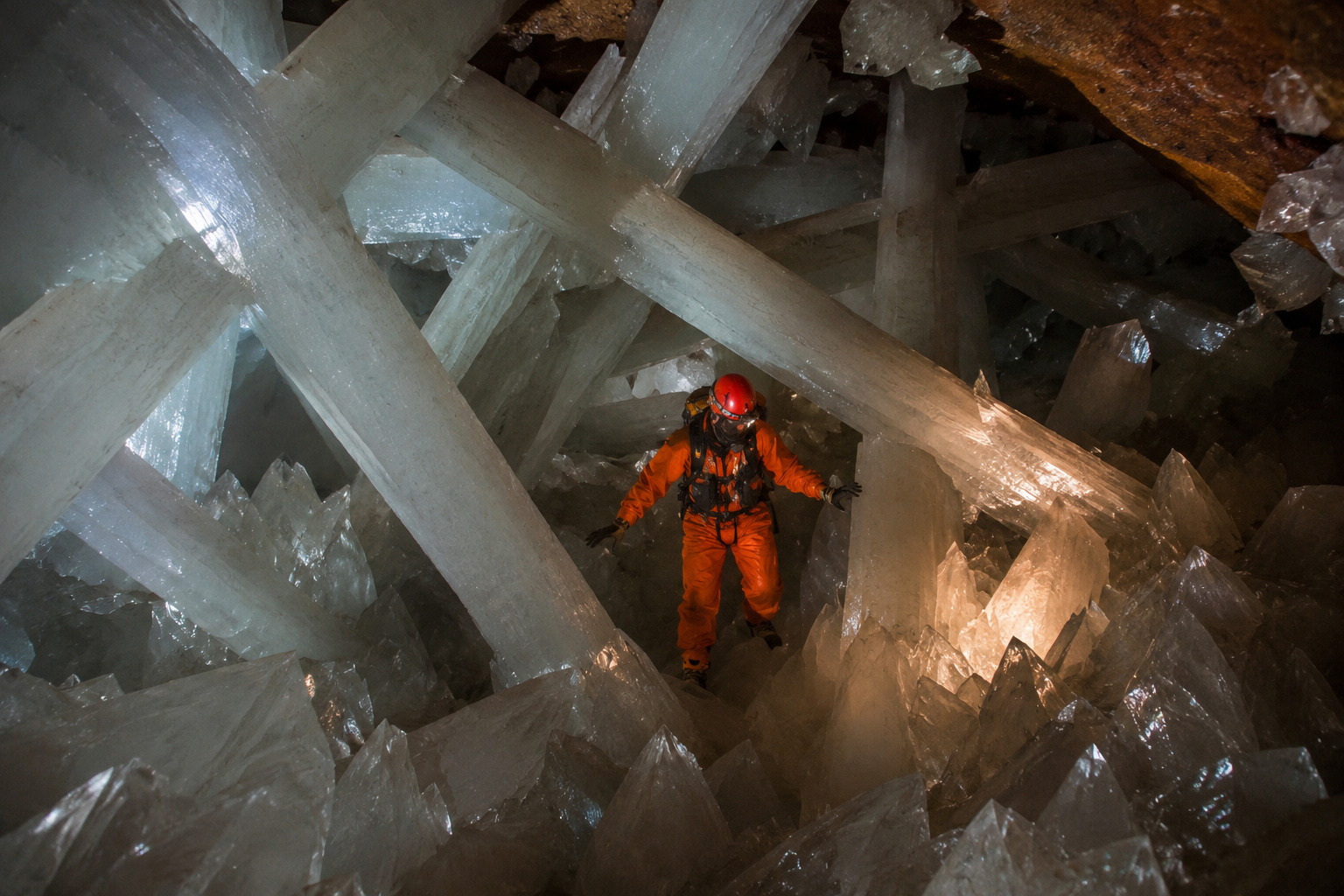
Mexico’s Giant Crystal Cave: A Deadly 58°C Underground Palace with 11-Meter Crystals Formed Over Nearly a Million Years

-
China Dominates Over 90% of Rare Earth Refining, Prompting Global Concerns: Canada and Japan Launch Billion-Dollar Plan to Reduce Dependency and Safeguard Batteries, Semiconductors, and Defense

-
Ancient Mines in Spain Reveal Tools and Metals That May Explain Bronze Age Trade with Scandinavia
-
XCMG Launches 240-Ton Mining Truck in Brazil, Promising Increased Productivity with Lower Fuel Consumption


Innovations and Sustainable Technologies
The introduction of electric equipment and the improvement of beneficiation technologies are effective emission reduction strategies. Energy efficiency can be significantly enhanced through these practices. Furthermore, the use of renewable energies, such as solar and wind energy, has become a common practice in the mining industry, with the aim of reducing dependence on unsustainable energy sources. Investing in sustainable technologies is a crucial step towards sustainable production.
Emission Reduction Targets and Sustainability
In this context, it is worth highlighting the commitment of CMOC Brazil, one of the leading companies in the sector, that is actively committed to transparency and accounting for its emissions. The company published the complete GHG inventories for the baseline years of 2022 and 2023 in the Public Emissions Registry of the Brazilian GHG Protocol Program of the Getúlio Vargas Foundation (FGV). These actions reaffirm CMOC’s seriousness in monitoring and reporting its emissions, ensuring responsible environmental management. The company is incessantly investing in innovation to reduce its carbon footprint.
A practical example of this innovation is the replacement of gasoline with ethanol in its fleet of flexible vehicles, which not only reduces carbon emissions but also promotes sustainable biofuel production in Brazil. As part of its reduction strategies, CMOC has set ambitious targets: to reduce emission intensity per processed mineral unit by 15% by 2022, reach peak emissions by 2030, reduce emissions by 38% by 2040, by 67% by 2045, and achieve carbon neutrality by 2050. Modernizing its equipment is also a priority, especially at the Phosphate Mine, where electric technologies are being incorporated to optimize energy consumption and reduce dependence on fossil fuels.
Transparency and Sustainability Reports
Furthermore, CMOC already uses more than 50% renewable energy and intends to maintain this proportion until next year, ensuring increasingly sustainable operations. Another significant commitment is to increase the proportion of reused water, with a target of reaching 85% by the same period, which would raise the recirculation rate by 2.7% across all operational units. Transparency is a vital part of the commitment to sustainability, and many mining companies are adopting disclosure practices for emission inventories and sustainability reports, providing a clear view of their environmental impacts and the measures taken to mitigate them.
On the Path to Decarbonization in Mining
In summary, the mining sector is on a significant trajectory towards decarbonization. The adoption of clean technologies and sustainable practices is redesigning the future of mining, contributing to the global reduction of emissions and environmental protection. Mining companies, through their concrete actions and innovative strategies, are showing that it is possible to align production with environmental sustainability, reinforcing their commitment to energy efficiency, environmental management, and sustainable production. The modernization of processes and the use of renewable energies are fundamental in this transition, ensuring that the sector continues to evolve in an environmentally conscious manner.
Source: LUANA RIBEIRO







Bom dia também