Portuguese
  Spanish


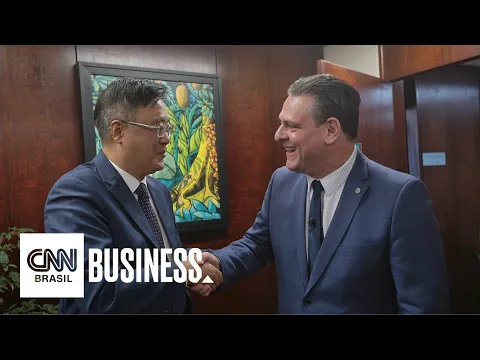
The Minister of Agriculture and Livestock of Brazil, Carlos Fávaro, met with the Ambassador of China in Brazil, Zhu Qingqiao, on Thursday (23) to discuss agricultural cooperation between the countries. The visit occurred after the Brazilian government confirmed the case of bovine spongiform encephalopathy (BSE) in an animal from the region of Marabá, Pará.
The meeting was attended by Minister Fávaro to clarify the measures being taken by the Brazilian government to monitor the BSE case. The Chinese ambassador highlighted that he was impressed with Brazil’s readiness to adhere to the sanitary protocol established between the countries and reinforced the importance of agricultural cooperation.
“The Brazilian government is fully transparent, determined, and agile in fulfilling its obligations to our partners”, said Minister Fávaro during the meeting. He also stated that it is important to maintain the supply of high-quality products, especially for markets like the Chinese one – which is one of the main destinations for Brazilian beef exports.
After The Case Of Mad Cow Disease In PA, Minister Of Agriculture Meets With Chinese Ambassador

In light of the BSE case in Pará, Brazilian exports to China are temporarily suspended until the information is properly analyzed by the governments of both countries. A sample has been sent for analysis to a reference laboratory of the World Organisation for Animal Health in Canada, where the atypical occurrence of the disease may be confirmed.
-
Brazilian Government Allows Workers to Use Severance Fund as Loan Collateral, Caps Interest at 1.99% Monthly

-
Brazil to Enforce New Rules on Betting Ads for 2026 World Cup, Mandating Warnings on Addiction and Financial Risks
-
Brazil to Gradually Increase Annual Revenue Cap for Microentrepreneurs to Between $130,000 and $140,000 by 2028
-
Toll Fees Drop by Up to 50% in São Paulo State’s Interior, Now as Low as $1.70


Amid the partnership between the countries, it is important to highlight that both are interested in promoting healthy agricultural cooperation, as Brazilian proteins are very important for Chinese consumers. Thus, both seek to maintain regular beef exports without compromising the quality of the supplied products.
Minister Fávaro Reveals Possibility Of Reassessment Of Self-Embargo With China, Depending On Transparency Of Current Case.
The Minister of Agriculture and Livestock, Carlos Fávaro, stated that it is possible to review the self-embargo agreement for beef exports to China. This decision was made after the confirmation of a case of bovine spongiform encephalopathy (BSE) on Thursday (23).
The sanitary protocol established in 2015 between the two countries provides for the temporary suspension of animal protein exports in such cases. However, some sector entities criticized the current protocol as it provides for suspension even in case of confirmation of atypicality – when the disease occurs naturally due to the advanced age of the animal.
In response to the criticisms, Minister Fávaro explained that “it was the protocol that was built and what was possible at the time to open exports.” Brazilian exports to China amount to about US$ 8 billion per year, accounting for 61% of Brazilian exports.
The sample of the test that confirmed the BSE has been sent for analysis to the reference laboratory of the World Organisation for Animal Health (OIE) in Alberta, Canada. If confirmed as an atypical occurrence of the disease, Fávaro stated that it is possible to review the current protocol. For this, it is necessary to show transparency and speed in communication and analysis of cases.
The Chinese ambassador praised Brazil’s readiness to comply with the sanitary protocol and said he hoped to promote agricultural cooperation between the countries, given that Brazilian exports are very important for both sides.
Minister Fávaro suggested a visit by the secretaries of International Relations and Animal Defense to China to provide more information about the case. However, Zhu Qingqiao stated that it was not necessary. The start date for discussions about the review of the agreement was not specified by the minister.