






 Portuguese
  Spanish


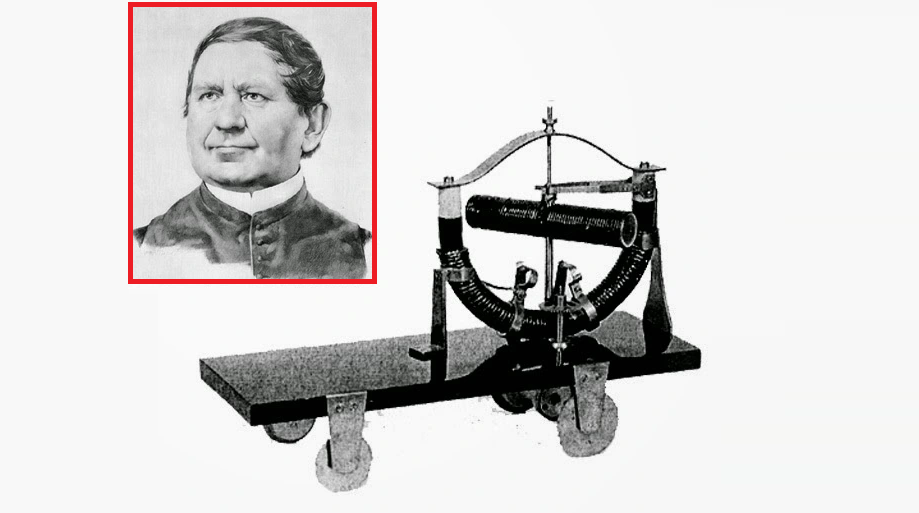


Centuries Before Tesla, A Hungarian Priest Demonstrated The Viability Of Electric Cars, Anticipating A Revolution In Transportation.
Electric cars are often seen as a recent innovation, filled with futuristic technologies that promise to replace fossil fuel-powered vehicles. However, their origin dates back to the early 19th century. Nearly 200 years ago, the first experiments with electricity applied to transportation were already underway.
The Invention Of Anyos Jedlik And The First Electric Motors
In 1828, the Hungarian engineer, physicist, and Benedictine priest Anyos István Jedlik created a primitive electric motor and used it to move a small model of a vehicle.
This prototype, although rudimentary, demonstrated the potential of electricity as a source of propulsion. However, it was more of a technical experiment than a usable car for transportation.
-
Jetour S06 Launches in Brazil as a More Affordable Plug-In Hybrid SUV Than BYD Song Plus and Haval H6, But Tests Highlight Its Shortcomings

-
Electric and Hybrid Cars Set to Transform Brazilian Streets: A New Era Begins
-
Chinese Giant Invests $1.3 Billion in Brazil to Produce 50,000 Cars Annually, Create Jobs, Develop Local Suppliers, and Manufacture Electric, Hybrid, and Combustion Models by 2027

-
Unprecedented achievement in India: a colossal 650-ton, nearly 3,000 hp excavator is transformed into 100% electric, marking a new phase in heavy mining.


Jedlik was born in 1800 and had access to a privileged education, joining the Benedictine Order at the age of 17. As a teacher and researcher, he dedicated himself to the study of electromagnetism, and in 1827, he developed an electromagnetic rotating device—one of the first electric motors in history.
His motor had the three essential components for a direct current motor: stator, rotor, and commutator.
Despite the innovation, Jedlik did not immediately apply his motor to practical vehicles. His model was more a proof of concept, demonstrating that electricity could be used to generate movement.

The Role Of Robert Anderson
The Scottish chemist Robert Anderson was also one of the pioneers in the development of electric vehicles. Between 1832 and 1839, he created a prototype powered by electric cells, closer to the traditional concept of an automobile. However, his model lacked a rechargeable battery, a limiting factor for its practical viability.
The evolution of electric cars received a significant boost in 1859, when Gastón Planté developed rechargeable lead-acid batteries. This innovation allowed energy storage and made the movement of electric cars more efficient.
In 1888, Gustave Trouvé presented an electric tricycle at the International Electricity Exhibition in Paris. The model marked a milestone in the evolution of electric cars, influencing their popularization and improvement. That same year, Andreas launched the Flocken Elektro Wagen, considered the first electric car in history.
Popularization And Decline Of The Electric Car
The introduction of rechargeable batteries facilitated the adoption of electric vehicles, which began to be used by taxi drivers and members of the elite.
The high cost limited access to these vehicles, but their advantages were evident: silent operation, no gas emissions, greater comfort, and modernity.
Despite these qualities, combustion vehicles began to gain popularity for several reasons:
- Lower final price for consumers;
- Discovery of large oil reserves, making gasoline cheaper;
- Poor electrical infrastructure, hindering the use of electric cars;
- Introduction of automatic starting in combustion engines, eliminating the need to crank a handle to start.
The Return Of Electric Vehicles
The rise of fossil fuel-powered vehicles persisted for decades, but World War II brought a new scenario. Fuel scarcity rekindled interest in electric cars, now more technologically developed and competitive.
Today, electric vehicles face challenges to widespread adoption in Brazil. Among the main obstacles are:
- High cost compared to combustion vehicles;
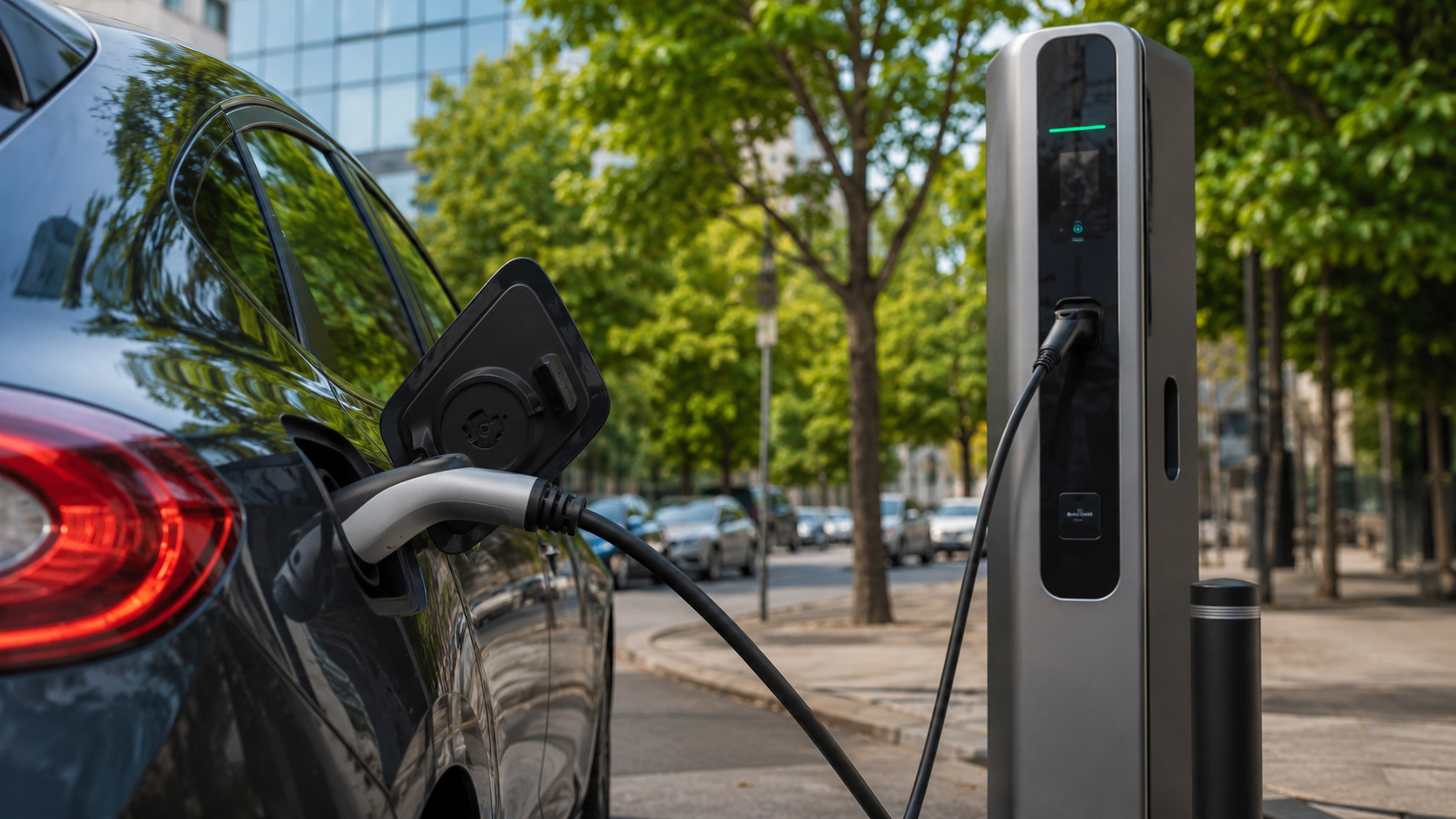
- Insufficient charging infrastructure, with only 3,254 charging points in the country as of May 2023.
Still, the trend toward electrification in the automotive sector continues to grow, driven by the search for more sustainable solutions and advances in battery technologies.




E qual a durabilidade de um carro elétrico? No Brasil isto é importante. É só ver a idade média da frota de automóveis.
O termo sustentável é uma falácia!
Carro elétrico é um estelionato mundial e por muito tempo será urbano