Portuguese
  Spanish


Expansion of the Biogas Plant in Paraná Promises to Strengthen the Energy Transition and Consolidate Jacarezinho as a Sustainable Hub in Brazil
The city of Jacarezinho, in Northern Paraná, is undergoing a moment of transformation with the expansion of the biogas plant in Paraná, a result of the partnership between PlanET Biogás Brasil and RENU Energia.
The project aims to increase the production capacity of the plant to up to 15 thousand cubic meters of biogas daily. Thus, the fuel can replace thousands of liters of diesel and help reduce greenhouse gas emissions.
In this way, the initiative not only strengthens the energy transition but also places the city in a strategic scenario.
-
Brazil on Track for Record 40.7 Billion Liters of Ethanol in 2026/27 Season, Driven by Corn Ethanol
-
Petrobras Approves $1.2 Billion Refinery in Brazil to Produce Aviation Fuel and Diesel from Plants

-
US$ 7 billion, green hydrogen, and steel with up to 95% less CO₂: the first green steel plant on the planet emerges in Sweden and targets Brazil as the next chapter

-
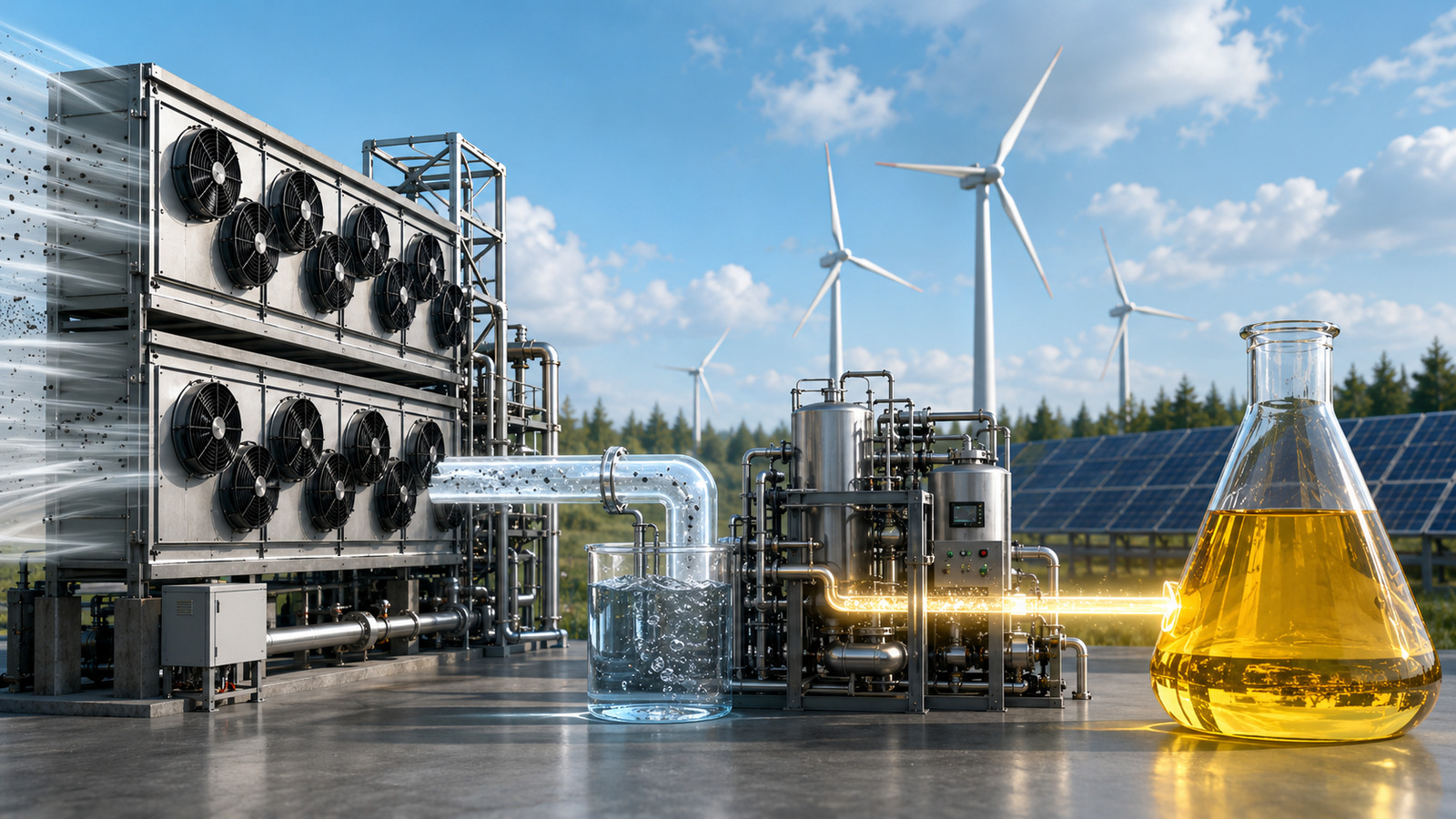
Swedes manage to create synthetic fuel with CO₂, water, and renewable energy, compatible with current engines, but face a huge problem: the energy expenditure is still double the return.

Moreover, the proposal goes beyond clean energy production, as it turns waste into renewable resources, strengthens the circular economy, and generates regional development.
The expansion also demonstrates how Brazil is accelerating the use of second-generation renewable energies, where organic waste ceases to be an environmental problem and becomes an economic resource. In this sense, Jacarezinho becomes part of a national movement of cities that are references in clean technology.
The Importance of Biogas in the Energy Matrix
Biogas emerges as one of the most promising fuels for a future less dependent on fossil fuels.
It comes from biogas, obtained from the decomposition of organic waste, and can fuel heavy vehicles, industries, and even natural gas networks.
Therefore, in addition to being renewable, it reduces logistics costs and enhances energy security across various sectors of the economy.
In Brazil, the growth of this market follows a global trend.
According to the Biogas Panorama 2024, the country already operates over 1,633 biogas plants, with an installed capacity of 4.7 billion Nm³ per year.
Since 2019, the sector has recorded an average growth rate of 19% per year, demonstrating that the demand for clean energy is continuously intensifying.
Furthermore, the increase in biogas and biogas production opens up space for new business chains, such as technology suppliers, environmental consulting, and plant maintenance. This creates specialized jobs and generates opportunities for local companies, strengthening the economy of the regions where these plants are installed.
In this regard, the plants that purify biogas into biogas are also gaining traction.
Currently, there are 79 units in operation, with a capacity of 667 million Nm³ annually.
Thus, the number is expected to grow with new investments, reinforcing Brazil’s position as a powerhouse in the energy transition.
Additionally, recent public policies have stimulated the sector with tax incentives, long-term financing, and technological research programs, consolidating biogas production as a strategic activity for the sustainable development of the country.
Jacarezinho at the Center of the Circular Economy
The expansion of the biogas plant in Paraná places Jacarezinho in a prominent position.
The city will house one of the most modern units in the country, capable of meeting the growing demand for renewable fuels.
For PlanET Biogás Brasil, the initiative consolidates the vision of the circular economy.
CEO Luciane Fornari emphasizes that increasing production means uniting technology and sustainability strategically.
Therefore, she states, biogas has already become the protagonist of the Brazilian energy transition, with a direct impact on reducing dependence on fossil fuels.
RENU Energia also views the project as a fundamental step towards the forefront of the circular economy.
In this sense, CEO Marco Zolet asserts that the company’s goal is to transform Jacarezinho into a reference in the biogas market, creating an environment of innovation and competitiveness.
In addition to the energy aspect, the project promotes environmental education and technical training. Universities and technical schools in the region are already planning partnerships to train local professionals, ensuring that the skilled workforce keeps pace with the sector’s growth.
Regional Development and New Investments
The expansion of the plant represents more than just technological and environmental advancements, as it drives the local economy.
The mayor, Marcelo Palhares, highlights that the initiative creates qualified jobs, attracts investments, and opens new business opportunities.
According to him, Jacarezinho gains momentum by establishing itself as a strategic center for biogas production in Brazil.
Thus, this achievement could transform the city into a sustainable development model, fostering new partnerships between the public and private sectors.
Historically, agricultural regions such as Northern Paraná have always played an important role in the national economy.
However, now, with the intelligent use of waste, the city enhances its relevance, connecting agro-industrial tradition with energy innovation.
Furthermore, the establishment of new industries and services related to biogas is likely to create economic clusters, adding value and strengthening regional competitiveness. This multiplier effect makes Jacarezinho a reference not only in energy but also in sustainable economic development.
A Fuel for the Future
The impact of biogas goes beyond Jacarezinho.
After all, the fuel can fuel cargo transportation fleets, reduce costs with diesel, and decrease pollutant emissions.
Additionally, it helps industries meet increasingly stringent environmental goals in global markets.
Experts assess that biogas production strengthens Brazil’s energy independence and diversifies the matrix, which is already one of the cleanest in the world thanks to the weight of hydroelectric power and other renewable sources.
Therefore, by investing in this fuel, Paraná reinforces its position as an innovative state in energy solutions.
In this context, the region already excels in biogas programs and, at the same time, enhances its leadership by expanding the use of biogas.
Thus, the initiative strengthens the state’s prominence in the search for solutions that combine economy and sustainability.
Additionally, the expected growth in demand for biogas places Jacarezinho and Paraná in a strategic position for the export of technology, environmental consulting, and even biogas to international markets, increasing the global competitiveness of the sector.
The Future of the Biogas Plant in Paraná
The project in Jacarezinho is part of a larger movement, uniting government, businesses, and society in search of sustainable solutions.
Therefore, it demonstrates that it is possible to reconcile economic development with environmental preservation, by leveraging resources that were previously discarded.
In the coming years, biogas is expected to gain even more space, both in public policies and in private investments.
Moreover, the fuel could become a key element for Brazil to achieve carbon neutrality goals and position itself as a global reference in clean energy.
Thus, the expansion of the biogas plant in Paraná is not limited to an isolated project.
It symbolizes the advancement of an entire sector, while projecting Jacarezinho as an energy and sustainable hub.
Therefore, the city combines innovation, economy, and environmental preservation in a single purpose, consolidating its role in the future of the Brazilian energy transition.
Furthermore, the visibility gained by Jacarezinho should inspire other Brazilian cities to invest in biogas, showing that it is possible to align economic growth, technology, and environmental responsibility practically and effectively.