





 Portuguese
  English
  Spanish
  3 min of reading
  0 comments


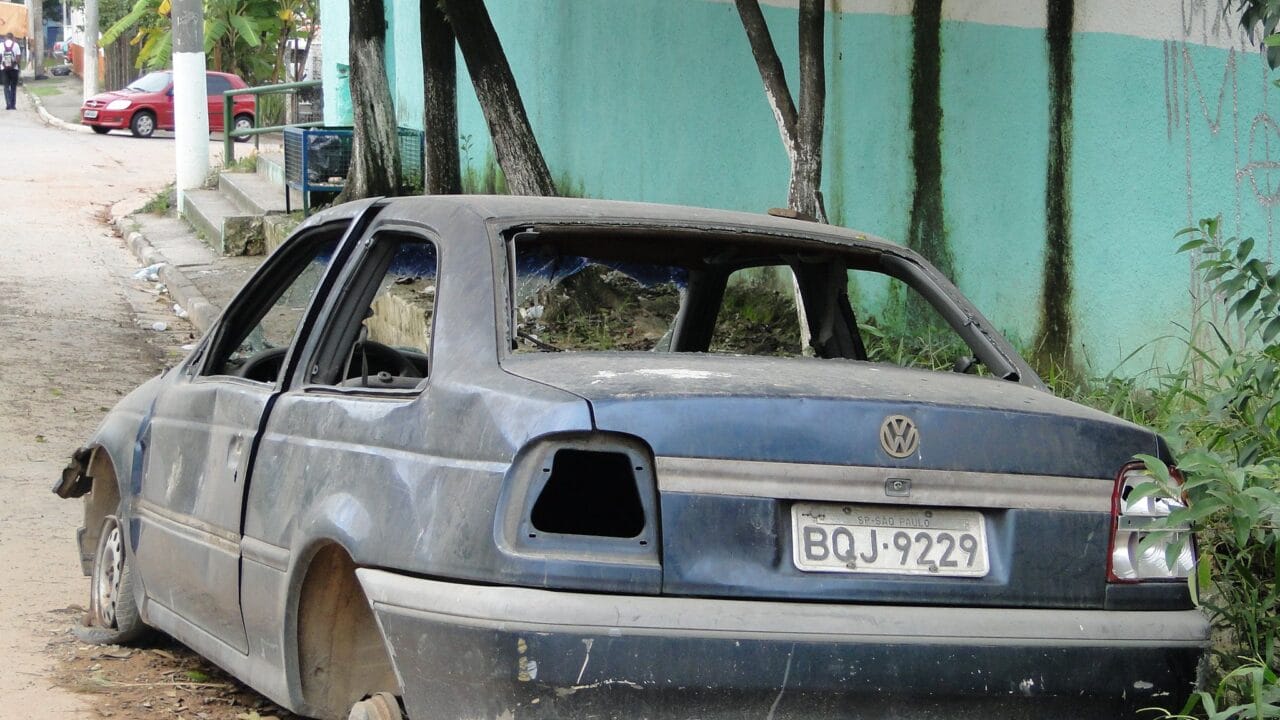
Brazil Is One of the Countries with the Most Abandoned Cars in the World; Discover the Fate of These Vehicles.
Brazil has a fleet of approximately 9 million vehicles, as indicated by IBGE (Brazilian Institute of Geography and Statistics). This large number of vehicles considerably increases the cases of abandoned cars across the country, which has affected many states in the federation.
Compared to countries like the United States, Brazil has less strict laws regarding abandoned vehicles, which contributes to the accumulation of cars on the streets. Restrictions on documentation and poor infrastructure make it difficult to properly discard or reuse these vehicles.
According to law 13.478/02 of December 30, 2002, in the city of São Paulo, abandoned cars must be correctly discarded in yards specified by the city hall, under penalty of fine, which was increased to R$ 25 thousand by law 17.916/23, signed by Mayor Ricardo Nunes (MDB-SP) on March 24, 2023.
-
Hyundai launches a 7-seater “premium van” cheaper than Jeep Commander, Toyota SW4, and Chevrolet Trailblazer in Brazil; for around R$ 76,000 in conversion without taxes, Hyundai Alcazar features a turbo engine, diesel option, manual, automatic or DCT transmission, 6 airbags, and a family package that Brazilians don’t have yet, but India does.

-
Cheap car, expensive repair: Renault Kwid 2020/2021 with 127,000 km requires a new engine costing R$ 11,500, and the final bill exceeds R$ 16,000.

-
Renault 4 electric gets Plein Sud version with a fabric roof that opens 92 cm, starting at €37,290 and featuring 28 driving assistants in a nostalgic bid to drive in the open air without sacrificing interior space.

-
Used Renault Logan surprises with its space, giant 510-liter trunk, and affordable maintenance.



Even with laws and fines, the lack of enforcement and the habit of citizens abandoning vehicles on the streets have contributed to the accumulation of these cars. Once collected, the cars are usually sent to yards managed by the regional Detran for auction or parts disposal.
In recent years, the São Paulo city hall has collected more than 6,000 cars from public roads, highlighting the seriousness of the problem. The lack of responsibility from some owners and the inefficiency in locating them have worsened the situation.
To address these cases, the city hall has a standard service for urban occurrences, such as the number 156, notifying owners to remove abandoned vehicles. If the owner cannot be located, the removal is done to the city hall yard, after a review of documentation by the Military Police.
In summary, the problem of abandoned cars requires more effective measures for enforcement and punishment to discourage this practice, as well as investments in infrastructure for the correct disposal and reuse of these vehicles.
Problem of Abandoned Cars in Brazil
Brazil has a fleet of approximately 9 million vehicles, as indicated by IBGE (Brazilian Institute of Geography and Statistics). This large number of vehicles considerably increases the cases of abandoned cars across the country, which has affected many states in the federation.
Compared to countries like the United States, Brazil has less strict laws regarding abandoned vehicles, which contributes to the accumulation of cars on the streets. Restrictions on documentation and poor infrastructure make it difficult to properly discard or reuse these vehicles.
According to law 13.478/02 of December 30, 2002, in the city of São Paulo, abandoned cars must be disposed of correctly in yards specified by the city hall, under penalty of fine, which was increased to R$ 25 thousand by law 17.916/23, signed by Mayor Ricardo Nunes (MDB-SP) on March 24, 2023.
Even with laws and fines, the lack of enforcement and the habit of citizens abandoning vehicles on the streets have contributed to the accumulation of these cars. Once collected, the cars are usually sent to yards managed by the regional Detran for auction or parts disposal.
In recent years, the São Paulo city hall has collected more than 6,000 cars from public roads, highlighting the seriousness of the problem. The lack of responsibility from some owners and the inefficiency in locating them have worsened the situation.
To address these cases, the city hall has a standard service for urban occurrences, such as the number 156, notifying owners to remove abandoned vehicles. If the owner cannot be located, the removal is done to the city hall yard, after a review of documentation by the Military Police.
In summary, the problem of abandoned cars requires more effective measures for enforcement and punishment to discourage this practice, as well as investments in infrastructure for the correct disposal and reuse of these vehicles.
Source: Canal Tech








Be the first to react!