Portuguese
  Spanish


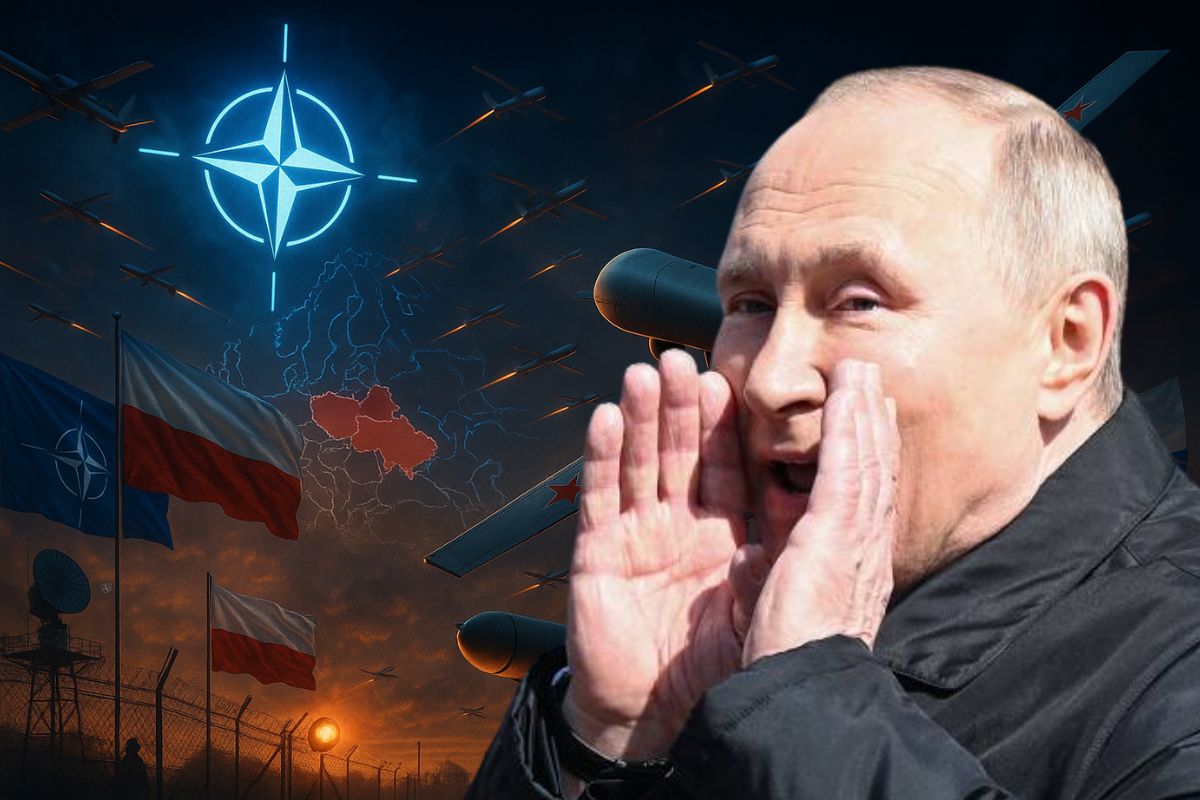


Russia Invades Polish Airspace In Early Hours Of September 10, And Unprecedented Action In Years Leads NATO To Activate Article 4, Final Alert Before Collective Military Response
In the early hours of September 10, 2025, Russia invaded Polish airspace with over 10 kamikaze drones, causing panic in regions near the border. The attack triggered emergency sirens, airport closures, and immediate mobilization of NATO fighters, according to an analysis by Prof. JeanGrafia, a geopolitical expert.
The episode had a historic impact: for the seventh time since 1949, NATO decided to invoke Article 4, one of the most rare and serious instruments of the military treaty. This provision is the last collective alert before the activation of Article 5, which provides for a joint armed response against the aggressor.
Who Was Affected And Why The Response Was Immediate
According to Prof. JeanGrafia, Poland reacted firmly because it has been a NATO member since 1999 and occupies a strategic position in Eastern Europe, sharing a border with Ukraine.
-
U.S. Dumped Tanks, Jeeps, and Coca-Cola into the Pacific in 1945 After British and French Lowball Offer, Creating “Million Dollar Point”

-
WHO Warns of Unnecessary Interventions in Natural Births Worldwide, Advocates for More Human-Centered Care, Reigniting Debate on Medicalization

-
World War II American Bombs Discovered in German City Prompt Evacuation of 20,500 Residents

-
World’s Largest Ice Cave Extends 42 km Beneath Austrian Alps, Revealing a Vast Frozen Realm Preserved by Natural Air Currents


Any violation of its airspace is interpreted as a direct threat to the security of the alliance, especially after Russia’s invasion of Ukraine in 2022.
The entry of Russian drones in the early morning led Warsaw to request emergency consultations among allies.
Article 4 has been used in conflicts in the Middle East and in the Syrian civil war, but it is extremely rare on a European scale.
This shows how the situation represents a real risk of conflict expansion across the continent.
What The Military Escalation Represents
Experts cited by Prof. JeanGrafia explain that the use of more than 10 drones simultaneously is not an isolated accident, but a political gesture of direct pressure on NATO.
Still, there are technical hypotheses of failures in navigation systems, such as GPS, that could have diverted the equipment.
If confirmed, this version opens a debate on how technological errors can ignite high-risk diplomatic crises.
Nonetheless, the fact that Russia invaded Polish airspace already places the military alliance on high alert, with the possibility of new developments in the coming days.
Where NATO Enters And Why It Matters

Founded in 1949, NATO currently consists of 32 member countries, including the USA, Canada, and most of the European Union.
Each invocation of Article 4 requires immediate consultations to assess joint responses.
If the escalation continues, the bloc may even consider defense measures based on Article 5, which means a formal war against Russia.
According to Prof. JeanGrafia, this activation is a political message to Moscow and a sign of unity for allies, reinforcing that any violation of a member’s territory will be treated as a collective threat.
The crisis has repercussions beyond Europe.
Brazil may be directly affected by rising energy and food prices, as Russia is a major exporter of oil, gas, and fertilizers, and Poland is an essential logistical corridor for the movement of Ukrainian grains.
Any blockage or interruption of these routes affects Brazilian consumers in the price of gasoline, bread, and meat.
Prof. JeanGrafia warns that the episode marks one of the most critical moments since the Cold War.
The invocation of Article 4 shows that the possibility of a formal war in Europe is no longer distant and is already reflected in the global economy and in Brazil’s diplomatic relations.
And you, do you believe that Russia crossed the line by invading Polish airspace? Do you think NATO should respond more harshly or seek a diplomatic solution? Leave your opinion in the comments — we want to hear from those closely following this scenario.