






 Portuguese
  Spanish


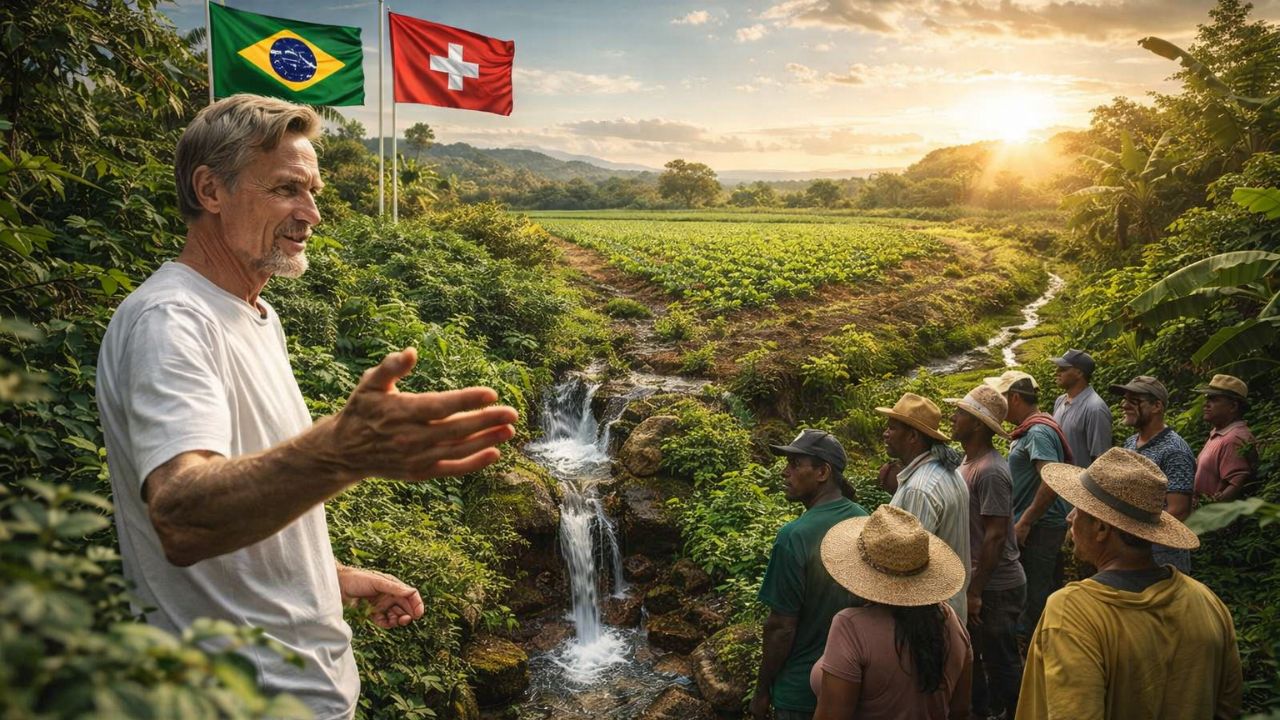


With the Water Planting Method, He Reforests a Previously Deforested Property, Brings Streams Back, Strengthens Springs, and Becomes a Reference in Sustainable Agriculture for Farmers, Companies, and Governments.
Intense droughts continue to devastate crops in various regions, but a Swiss man named Ernesto demonstrates, in practice, that it is possible to plant water by recovering springs and reviving the vegetation around streams.
The story begins when he arrives in Bahia in the 1980s and finds a large farm, most of which is deforested, with depleted soil and streams practically disappeared after years of conventional farming and livestock. In a short time, the scene changes completely.
How the Idea of Planting Water in Bahia Was Born
Ernesto says he was looking for land to advance research that began in Switzerland and made a point of choosing a degraded area considered unsuitable for cacao cultivation.
-
Cashew Becomes Billion-Dollar ‘Superfood’ in Ivory Coast: 1.6 Million Hectares of Monoculture Encroach on Forests as Families Trade Food for Nuts

-
In Rural Brazil, José Sirval Operates a Water-Powered Mill Grinding 125 Kilograms of Corn Daily Using His Great-Grandfather’s Century-Old Monjolo
-
From Market Stall to Agribusiness: Patagonian Fruit Grower Owns 550 Hectares and Processes 18 Million Kilos of Pears and Apples Annually, Exporting Directly to Brazil
-
At 93, Brazilian Farmer Restores 56 Hectares of Forest and Revives Spring in the Amazon, Installs First Climate Tower in the Region


The goal was to prove that it was possible to reverse a degraded environment with a different agriculture logic.
The starting point was simple and decisive: before thinking about production, it was necessary to bring water back.
From this vision, he begins to repeat a phrase that becomes the trademark of his work: water is planted. And that is how the concept of planting water takes shape in the farm’s routine.
Reforestation, Roots in the Soil, and Springs Coming Back to Life
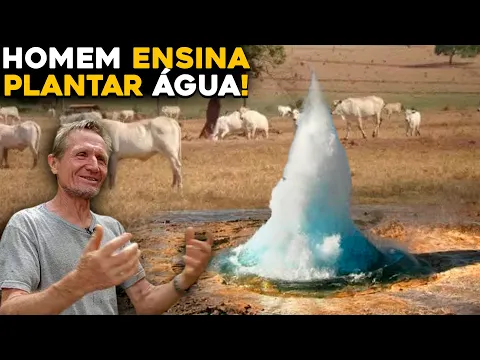

One of the first challenges, according to reports, was recovering the streams. He does this by reforesting the surroundings and opening spaces for the vegetation to regrow. The roots protect the soil from erosion and allow rainwater to infiltrate and nourish the waterways.
It is in this process that the planting water method reveals itself: it is not about “creating” water out of nothing, but about restoring the natural cycle so that rain, soil, and forest work together.
The Farm Transforms and Becomes a Reserve, with Production in a Small Area
On the property, the transformation draws attention because most of it becomes a private environmental reserve, and only a small area, cited as 5 hectares, generates revenue.
It is in this space that he cultivates among a wide variety of fruits, vegetables, and tall trees, including cacao exported to Portugal.
With such a supply of food, the family hardly needs to go to the supermarket. And the farm’s buildings are made from wood sourced there. The water planting method, here, appears as the foundation for autonomy.
“Increased Rainfall” and the Role of Trees in the Local Climate
Ernesto claims that with the maturing of the forest, the amount of rainfall on the farm increases by 70%.
The explanation provided is the transpiration of trees, which releases water into the atmosphere, intensifies cloud formation, and enhances moisture circulation.
He also mentions that reforestation influences areas up to 8 km west of the farm. For him, the more plants in the area, the more water is “pumped” into the atmosphere, reinforcing the principle of planting water as a regeneration strategy.
Productive Agroforestry: Imitating Nature to Produce More and Better
His conclusion is straightforward: agricultural systems should mimic original ecosystems. In practice, this means respecting the natural conditions of each plant, such as light, shade, and coexistence among species.
He notes that coffee and cacao plants originate from tropical forests and, in agroforestry systems, are shaded by taller trees, which helps to improve yield.
Instead of monoculture, agroforestry organizes production in “layers,” with canopies and overlapping plants, optimizing space and relationships between species. The goal is not to fight against the environment, but to work with it.
From Courses in Brazil to a Reference Sought by Governments and Companies
The transformation on the farm attracts the attention of governments, farmers, and companies, who begin to hire Ernesto for consulting.
He starts traveling around Brazil giving courses and, according to reports, has been teaching since 1989, at the invitation of the then Minister of Agrarian Reform during José Sarney’s government.
Later, he works with other institutions, NGOs, and cooperatives, and also teaches in countries such as Spain, Portugal, and Germany.
In Bolivia, he shares techniques with an organization cited as a promoter of agroforestry systems worldwide.
He estimates that more than 10,000 people have attended his classes, reinforcing the strength of the planting water concept beyond the farm.
What He Says About the Future and Legacy of Planting Water
Today, Ernesto states that he is focused on passing on what he considers significant for future generations. On the farm, he builds accommodations to receive students, called interns, many of whom come from large cities with little agricultural experience.
He also mentions plans to help implement agroforestry without the need for irrigation and reports conversations with the government of Saudi Arabia to reforest desert areas, although the discussions progress slowly.
Do you believe that planting water can become a common practice in agriculture, or will it still be seen as something “too difficult” for most farmers?







Fantástica a ideia de trabalhar em conjunto com a natureza e pode- se dizer até mais lucrativa.
Gostaria de fazer este curso
Em qual cidade da Bahia está sendo aplicado este curso
Temos os ensinamentos da natureza, somente seguir e ajudar na manutenção dessa área desmatada, fazendo seguir o curso da própria natureza. DEUS é muito bommmmmm.