






 Portuguese
  Spanish



The New Superconductor Material Is Composed of Lutetium, Hydrogen, and Nitrogen
Superconducting materials could be very useful for the evolution of technologies that already exist today. It is expected that some of these new materials will be able to conduct electric currents without wasting energy that is transformed into heat. Recently, a group of scientists announced a major advancement in the field.
The surprising discovery was made by physicists at the University of Rochester in New York, led by researcher Ranga Dias. Published in the journal Nature, the superconductor is composed of lutetium, hydrogen, and nitrogen, and can conduct electricity without resistance at 21 degrees Celsius.
More Powerful Nuclear Fusion Reactors Could Be Built Using the Superconductor
The greatest utility of superconducting materials is their ability to conduct electric energy without friction. However, achieving this efficiency under practical temperature and pressure conditions remains a barrier to the development of these conductors, which have been a subject of research for physicists for a long time.
-
ChatGPT Alerts FBI to Prevent Planned Murder of 8-Year-Old in Brazil’s Espírito Santo

-
Scientists Discover 125-Million-Year-Old “Pregnant Fossil” with Preserved Embryos and Microscopic Larvae Inside Mollusk in England

-
17-Year-Old Justin Bernstein Develops Bacteria to Produce Glass on Arctic Ice to Reflect Sunlight, Wins $50,000 U.S. Scholarship

-
The 19-Meter Rocket-Helicopter: A Private Industry Prototype That Challenged Space Race Logic




If the so-called “reddmatter” is confirmed as a real energy superconductor by other researchers, it could be used to improve various technologies. For example, it could be cited in the construction of more efficient computers, faster trains, and even more powerful nuclear fusion reactors.
The Energy Superconductor Seems Perfect, but It Has Some Downsides
The new material can conduct electric energy without resistance at 21 degrees Celsius and about 10 thousand atmospheres of pressure, which is relatively low compared to other superconductors that reach millions.
The name ‘reddmatter’ was given to the new material due to the color change that occurs from blue to pink while it is becoming a superconductor, and then to red when it stops conducting energy without resistance. The conductor is produced from a gas with 99% hydrogen and 1% nitrogen placed in a pressure chamber at 200° Celsius for several days along with lutetium.
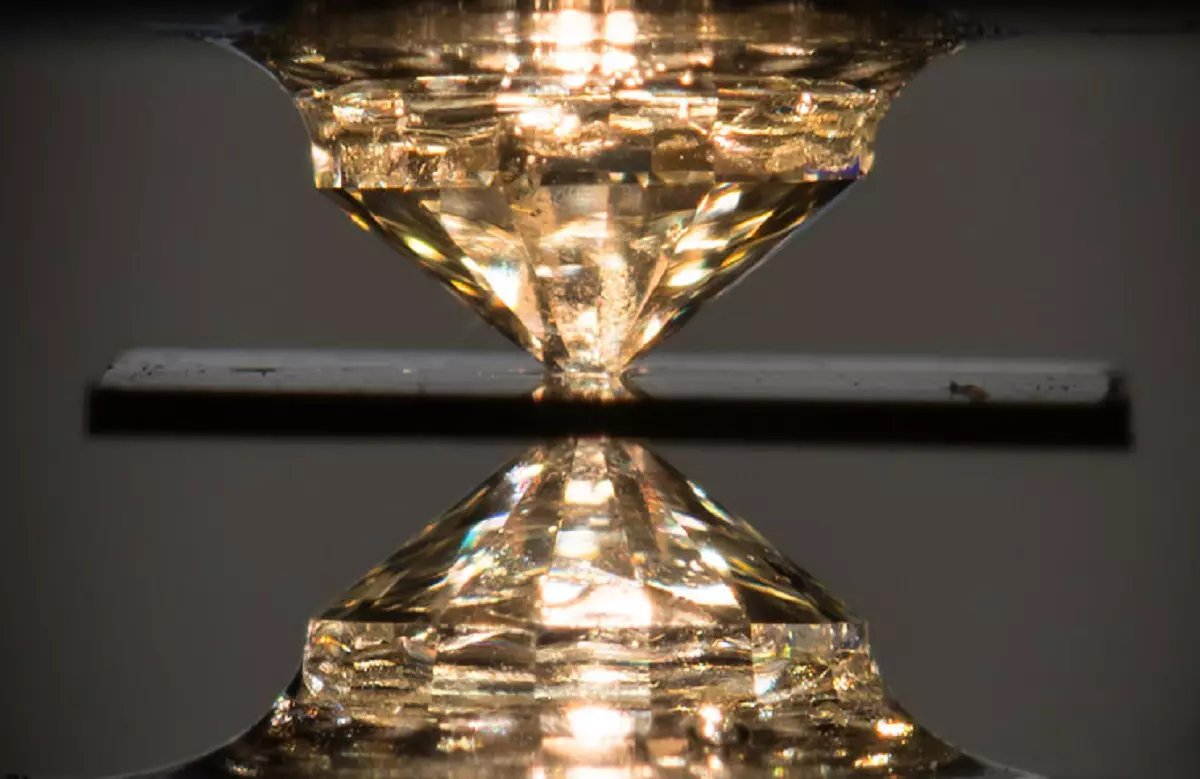
However, even being the closest to an effective superconductor, reddmatter presents some obstacles for its use, as it requires atypical pressure conditions to function. The material needs to be placed under extreme pressure using a diamond anvil to achieve its effectiveness. Additionally, researchers do not exactly know how the material works.


