





 Portuguese
  English
  Spanish
  5 min of reading
  0 comments


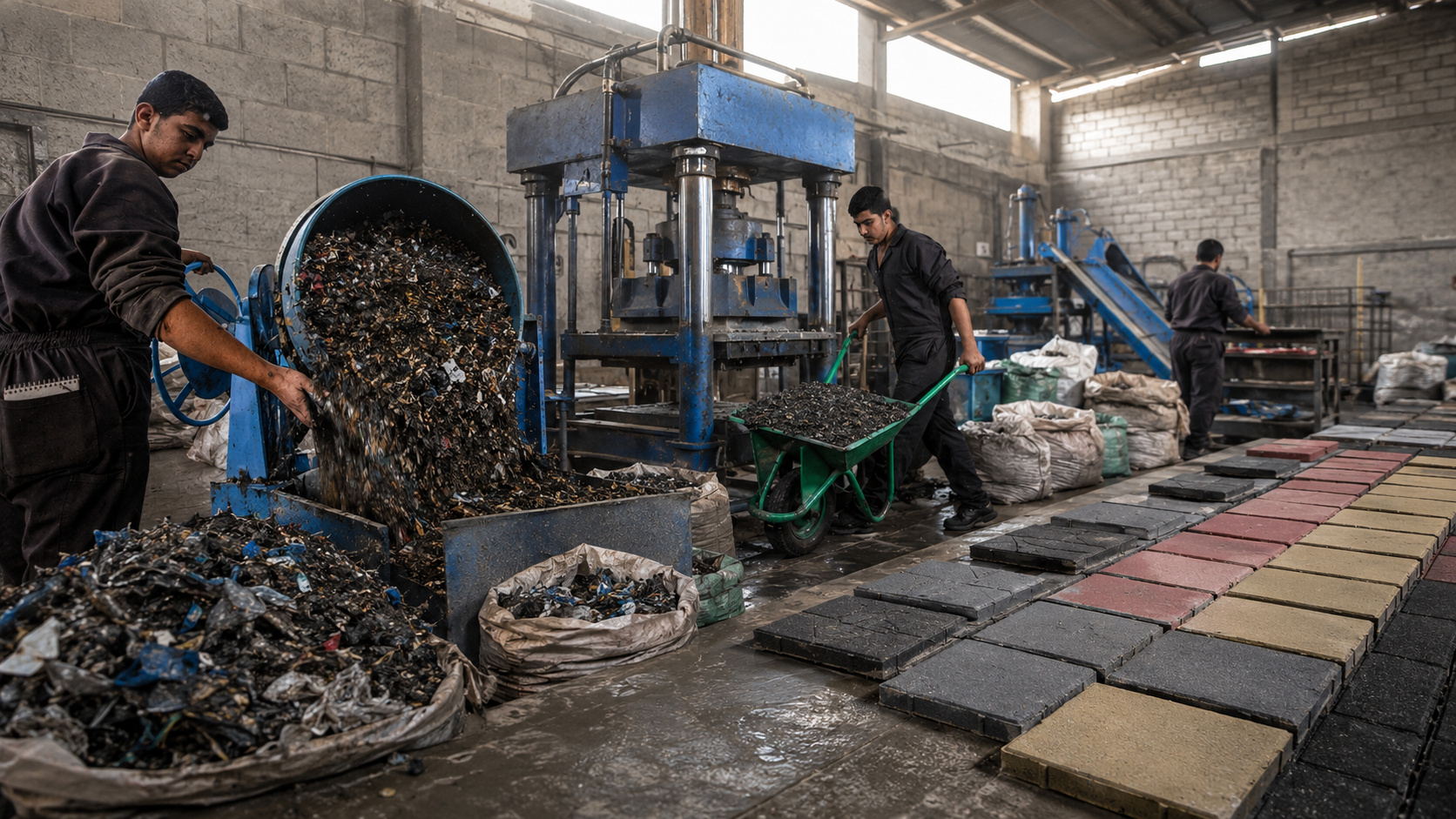
Egyptian startup transforms discarded plastic into durable paving for sidewalks and garages using patented technology.
While tons of plastic continue to be discarded into rivers, streets, and landfills around the world, a startup from Egypt decided to see this problem as raw material. TileGreen developed a technology capable of transforming plastic bags and hard-to-recycle waste into interlocking tiles used for sidewalks, garages, and outdoor areas. The company emerged in Egypt, one of the countries most affected by plastic pollution in the Mediterranean. According to data cited by Reuters based on a report from the International Union for Conservation of Nature, about 74,000 tons of plastic waste enter the Mediterranean every year from the African country.
It was in this scenario that founders Amr Shalan and Khaled Raafat decided to create an industrial system to transform plastic waste into durable construction material. The proposal quickly gained attention because the final product was not a simple decorative item but a tile designed to withstand heavy use in urban areas.
TileGreen transforms plastic bags into tiles for outdoor areas
The process begins with the collection and separation of discarded plastic waste. According to interviews given by the founders, the material goes through shredding, heating, and compression machines until it becomes interlocking tiles used for sidewalks, parking lots, and outdoor areas.
-
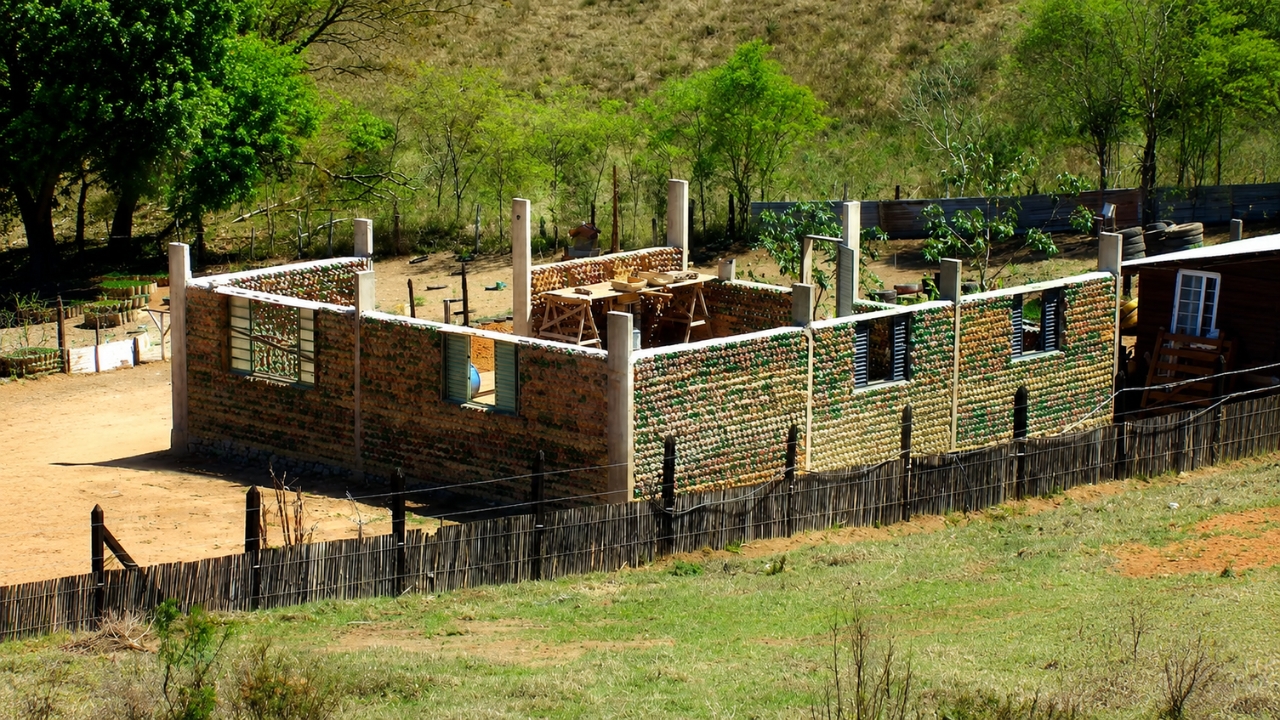
Man builds a 100 m² house with 11,000 PET bottles in Minas Gerais and moves people by revealing that his father collected almost all the material around the city before it became common trash.

-
50-meter tunnel below the seabed could retire old ferries in the Shetland Islands: £400 million project promises to connect communities, reduce isolation, and transform the future of transportation in Scotland
-
Brazil delivers a giant dam worth R$ 365.7 million in Rio Grande do Sul, capable of forming an artificial lake with 138 million m³ of water, equivalent to 55,300 Olympic swimming pools and an area larger than 2,500 football fields.

-
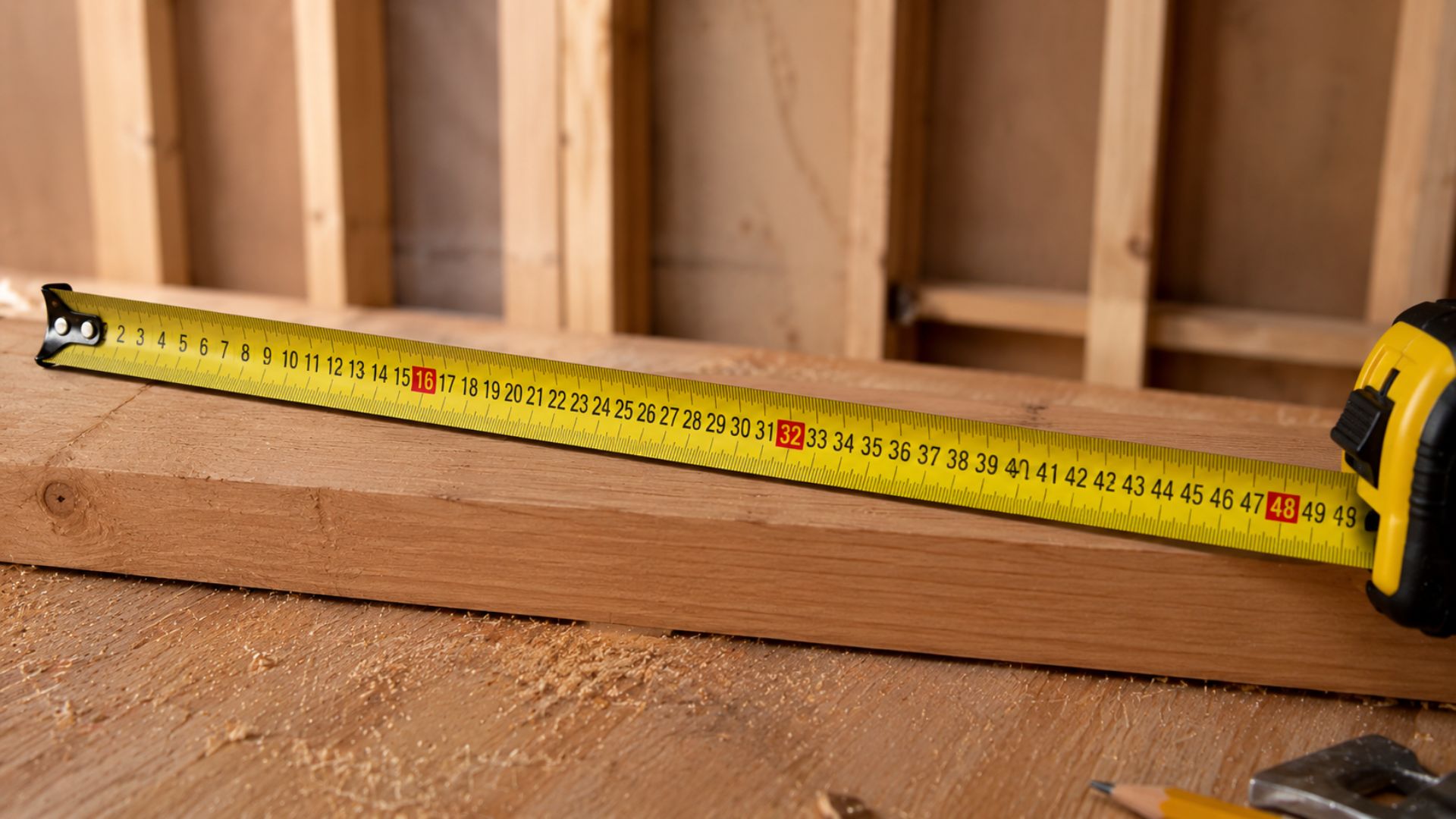
Most people use a tape measure their whole lives without ever understanding why some numbers are painted red; the explanation lies in a 16-inch spacing that is invaluable for those who work with walls and wood.



The company claims that the system was specifically designed to work with plastics of low commercial value and difficult recycling, including disposable bags and single-use packaging.


In practice, the startup tries to tackle two problems at the same time: the excess of plastic waste and the high carbon emissions of traditional construction.
The product uses plastic mixed with minerals to increase resistance
The tiles are not made of pure plastic alone. According to Khaled Raafat, the products use approximately 20% plastic waste and 80% mineral additives, a combination created to improve density, thermal resistance, and structural durability.
The company claims that the final product withstands strong impacts and heavy traffic without easily deforming.
Reports on the project also mention that the tiles have been described as more durable than conventional cement in certain outdoor applications. This detail helped the startup attract the attention of construction companies and real estate firms.
The technology was patented and attracted attention from other countries, and now TileGreen transforms plastic bags into tiles
One of the most important aspects of TileGreen is that the company does not operate just as a traditional recycler.
According to the company, the technology used in the process was patented in the United States and includes machines developed internally by the startup itself.

The company claims to have received interest from countries such as United Arab Emirates, Chile, Philippines, Morocco, and other markets interested in licensing the technology.
This has turned TileGreen into an example of an environmental startup that tries to export not just a product, but a complete industrial model of recycling applied to construction.
The company’s goal is to recycle billions of plastic bags and create tiles more durable than cement
The scale of the project also draws attention. According to interviews published by Reuters and international outlets, TileGreen has already recycled millions of plastic bags and set an extremely aggressive goal: to recycle more than 5 billion bags in the coming years.
The startup states that it intends to expand operations to other countries in the Middle East and North Africa, regions that still have relatively low recycling rates.
The growth of the construction industry in Arab countries has also increased interest in alternative materials and solutions with lower environmental impact.
The project aims to reduce dependence on cement and asphalt with tiles made from bags
Another important goal of TileGreen is to reduce the use of extremely polluting traditional materials. The production of cement, for example, is considered one of the largest industrial sources of carbon dioxide emissions on the planet.
By replacing part of the concrete and asphalt in outdoor floors, the startup argues that it can reduce environmental impact while reusing waste that would normally be discarded.

This model is gaining traction because governments and construction companies have started looking for solutions related to the so-called circular economy, where waste returns to production chains instead of accumulating in landfills or rivers.
Egypt has become one of the emerging centers of environmental innovation in the region
The case of TileGreen also shows an important change within Egypt itself. In recent years, the country has expanded debates on sustainability, waste management, and reduction of disposable plastics, especially after hosting the COP27.
Some Egyptian regions have started to restrict single-use plastics, while local startups have begun to receive more attention for projects related to recycling and sustainable construction.
In this scenario, companies like TileGreen have gained ground precisely by turning a visible urban problem into a usable industrial product.
The startup shows how urban waste can become construction material
The case of TileGreen is noteworthy because it transforms one of the planet’s most problematic wastes into something durable and functional.
Disposable bags typically have low economic value in traditional recycling and end up abandoned in streets, rivers, or landfills. The Egyptian startup attempts to reverse this logic by using industrial engineering to turn this material into a long-lasting product.
Perhaps this is exactly what makes the project so intriguing: the company took one of the most visible symbols of modern pollution and turned it into flooring designed to last for years in busy urban areas.




-

1 person reacted to this.