Portuguese
  Spanish


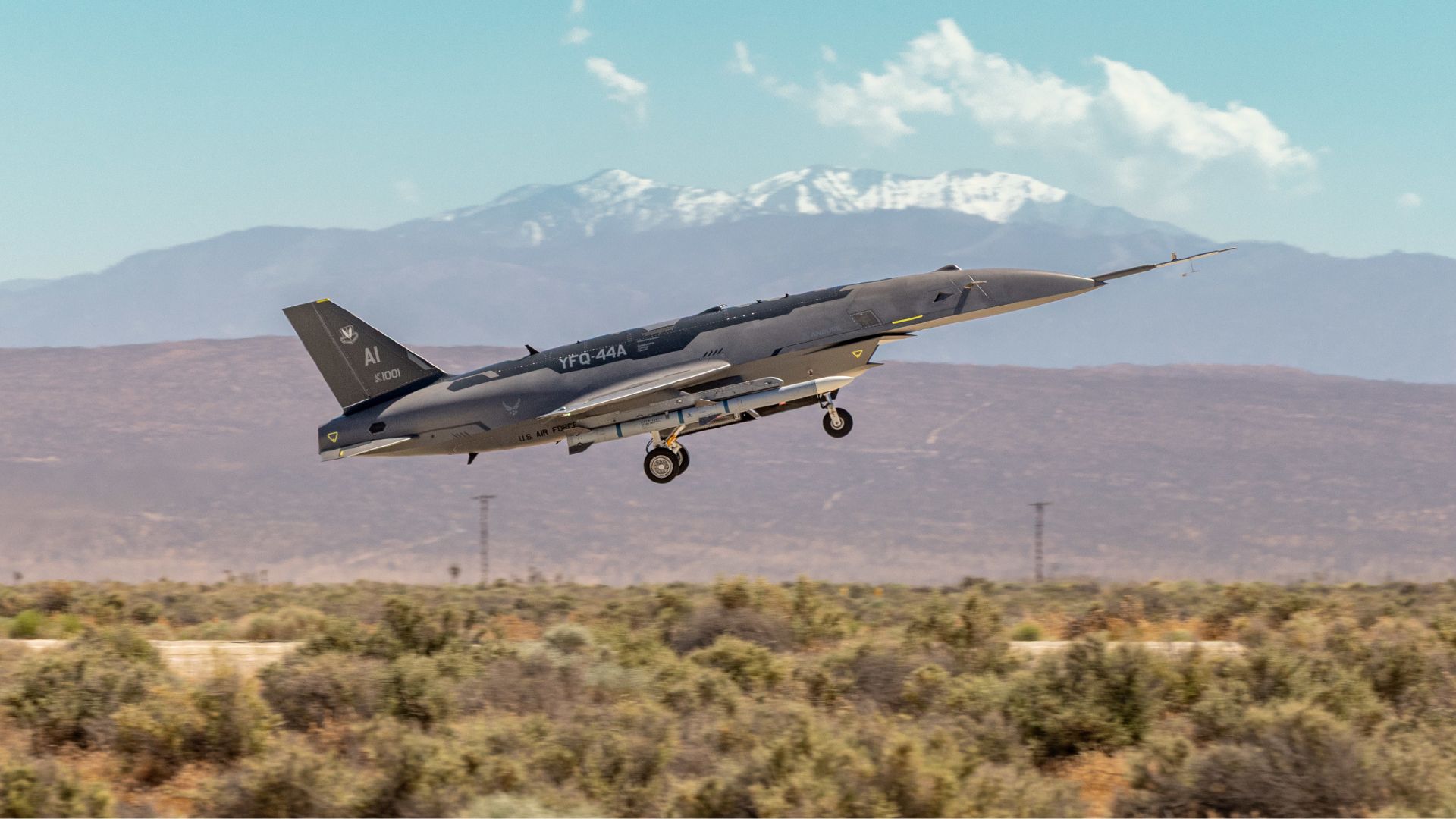

USAF tests validate semi-autonomous flight of the Anduril combat drone, operating without direct manual control and elevating defense technology.
The United States Air Force successfully conducted flight tests with the Anduril combat drone, a semi-autonomous aircraft designed to operate without direct control from a human pilot.
The experiment marks a significant advancement in the integration of artificial intelligence into air defense systems, allowing the aircraft to perform complex maneuvers independently. The focus of the technology is to enhance operational capability in high-threat combat environments.
Autonomy and control in the Anduril combat drone
The test flight demonstrated that the Anduril combat drone can follow predefined mission guidelines while making tactical decisions in real-time. Unlike conventional remotely operated drones, this platform uses advanced algorithms to navigate and identify targets without the need for constant manual commands.
-
U.S. Military Intervention Risk in Brazil Raises Alarm, Highlights National Sovereignty Amid Tensions Over Washington’s Terrorist Designation of PCC and Comando Vermelho

-
Brazilian Air Force’s Sole KC-30 Aircraft Completes Strategic Mission to Spain for 105mm Anti-Tank Ammunition for Leopard 1A5 Tanks

-
Brazilian Air Force Seeks to Acquire More Gripen Fighter Jets
-
U.S. Air Force Launches Air-to-Air Missile Project with Range of Up to 1,850 km for Indo-Pacific Operations




The semi-autonomous system ensures that the vehicle maintains stability and effectiveness even in situations where communication with the base may suffer interference.
The architecture of the Anduril combat drone was developed to act as an extension of manned fighter capabilities, forming mixed squadrons. During evaluations, the onboard artificial intelligence processed sensor data in milliseconds, adjusting the flight trajectory to optimize stealth and energy efficiency. This autonomy reduces the cognitive load on human pilots, who begin to act as mission supervisors rather than direct operators.
Defense technology and operational integration
The U.S. Air Force seeks, with the Anduril combat drone, a low-cost and high-durability solution to face modern air defenses.
The design of the aircraft prioritizes agility and the ability to be produced at scale, allowing for a more robust air presence in contested territories. The semi-autonomous technology enables multiple drones to operate in a coordinated manner, performing swarm maneuvers that complicate enemy systems’ responses.
The sensors integrated into the Anduril combat drone provide detailed situational awareness, sending critical information to the central command network. The ability to operate without direct control does not eliminate human oversight but alters the dynamics of how air power is projected on the battlefield.
The success of recent tests validates the effectiveness of the flight control software in high-complexity scenarios.
Perspectives for semi-autonomous military aviation
The advancement of the Anduril combat drone represents a structural change in contemporary military strategy, focused on reducing risks to human lives.
With the ability to perform autonomous takeoffs and landings, the system minimizes operational errors common in long-duration missions. The USAF plans to continue testing cycles to refine the interaction between humans and machines under extreme combat stress conditions.
In addition to flight autonomy, the Anduril combat drone is being prepared to integrate precision weapon systems in future development phases.
The modularity of the platform allows it to be adapted for different functions, from advanced reconnaissance to direct attacks. The strengthening of this semi-autonomous technology redefines the limits of modern warfare, combining computational processing speed with aerial strategy.
With information from Interesting Engineering