Portuguese
  Spanish


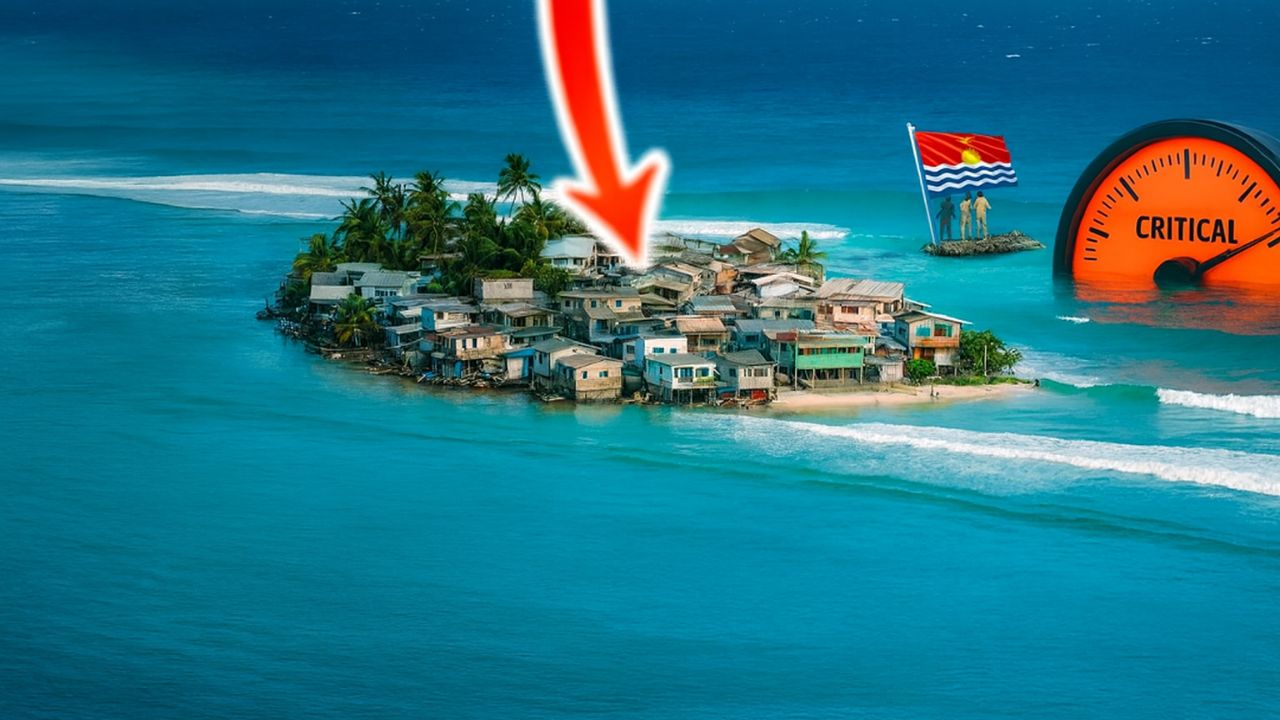

The Rise In Sea Level Threatens Kiribati, An Isolated Island In The Pacific Ocean Famous For Its Position On The International Date Line.
Traveling to the middle of nowhere requires patience and a high financial investment, especially when the destination is an isolated island lost in the vastness of the Pacific Ocean. To reach Kiribati, travelers need to fly to Fiji and then embark on an expensive journey, with tickets costing up to two thousand dollars, to finally land on a territory made up of coral atolls. The location is so remote that crossing the International Date Line is part of the journey, which can mean skipping an entire day on the calendar or arriving at the destination before even leaving, depending on the direction of travel.
Despite the access difficulties, the scenery rewards with a visually stunning beauty, where lagoons of vibrant blue surround the narrow land. However, this same paradisiacal geography hides an existential threat. Kiribati is an isolated island whose maximum altitude does not exceed three meters above sea level, making the country extremely vulnerable to climate change. While visitors are captivated by the simplicity of local life, residents face the daily reality that their nation may soon completely disappear from the map.
The Country Where The Sun Rises First
One of the most fascinating characteristics of Kiribati is its peculiar relationship with time. Due to its geographical position, the country has a time zone of +14, which makes it the first inhabited place on the planet to receive the sunrise and celebrate the New Year. In the past, the International Date Line cut the country in half, creating a logistical confusion where it was Monday in one part of the territory and Sunday in the other. To resolve this, in 1995 the government decided to move the line, creating a zigzag on the map to unify the weekdays across all the islands.
-
Brazilian Construction Worker Moves to France, Earns Up to €2,500 Monthly with Home Renovations, Gains Social Media Attention

-
US Navy Sinks USS Oriskany with 230 kg of C-4, Creating World’s Largest Artificial Reef in 37 Minutes

-
U.S. Dumped Tanks, Jeeps, and Coca-Cola into the Pacific in 1945 After British and French Lowball Offer, Creating “Million Dollar Point”
-
WHO Warns of Unnecessary Interventions in Natural Births Worldwide, Advocates for More Human-Centered Care, Reigniting Debate on Medicalization




This manipulation of time reflects the desire of a nation that seeks to connect, even while being physically separated from the rest of the world. The feeling of being in the future, however, contrasts with the local infrastructure. The capital, Tarawa, can be traversed from end to end in just one hour by car, following a single main road of 35 kilometers. Life takes place along this route, where the airport, the only shopping center in the country, and the homes of a population that literally lives by the water’s edge can be found.
Daily Life In A Flat Land
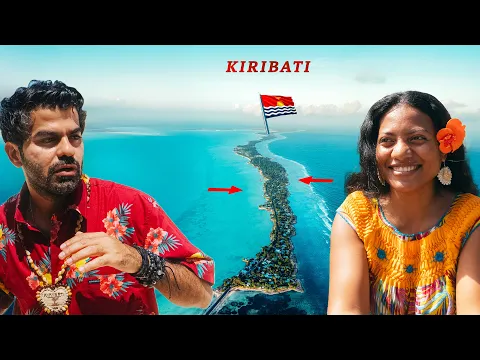

The geography of Kiribati is so flat that any elevation is a cause for curiosity. The highest point in the country, at a mere three meters, is ironically called a mountain by the locals, many of whom have never seen true relief in their lives. This lack of altitude exposes the isolated island to the moods of the ocean. At certain times of the year, the tide rises enough to flood inhabited areas, forcing the construction of breakwaters and the planting of mangrove trees, whose roots help stabilize the soil and combat coastal erosion.
Despite the risks, the people of Kiribati maintain a warm and cheerful spirit. The diet is almost exclusively based on what the sea offers, with fresh fish and octopus sold directly on the street, as well as coconuts, which are abundant. The dependence on imports is high for other products, which raises the cost of living and limits the variety of cuisine. The external influence is visible, from rusty Japanese weapons from World War II left on the beaches to new Chinese investments, such as the only upscale restaurant in the capital.
The Ghost Of Climate Refugees
The conversation about the future of Kiribati is inevitable and carries a tone of urgency. The term climate refugee takes on a literal meaning for the 110,000 inhabitants who see the sea advancing year after year. Many citizens are already purchasing land in countries like New Zealand and Australia, preparing for the worst-case scenario. The idea of losing their homeland is painful, as the connection to the land and the ocean is profound. For them, the sea is not only a threat but also the source of their wealth and identity, covering almost the entirety of the national territory.
Even with the real possibility of the country sinking, there is a resistance to abandoning home. The sense of belonging is strong, and life goes on with a tranquility that defies environmental statistics. Visiting this isolated island is to witness a culture struggling to survive in a paradise that may have an expiration date, reminding the world that climate change has direct and irreversible human consequences.
Would you have the courage to invest time and money to visit a country at risk of ceasing to exist in the coming years?