Portuguese
  Spanish


A Technical And Functional Solution That Connects State Borders And Can Accelerate The Flow Of Billions In Commodities
Imagine hundreds of trucks loaded with soybeans waiting up to 12 hours for a ferry crossing. Multiply this delay by days, weeks, and years — and you will understand why the Luís Alves Bridge, between Goiás and Mato Grosso, is much more than a public work. It represents a historic turning point for agricultural Brazil, eliminating one of the main logistical bottlenecks in the country’s most productive region.
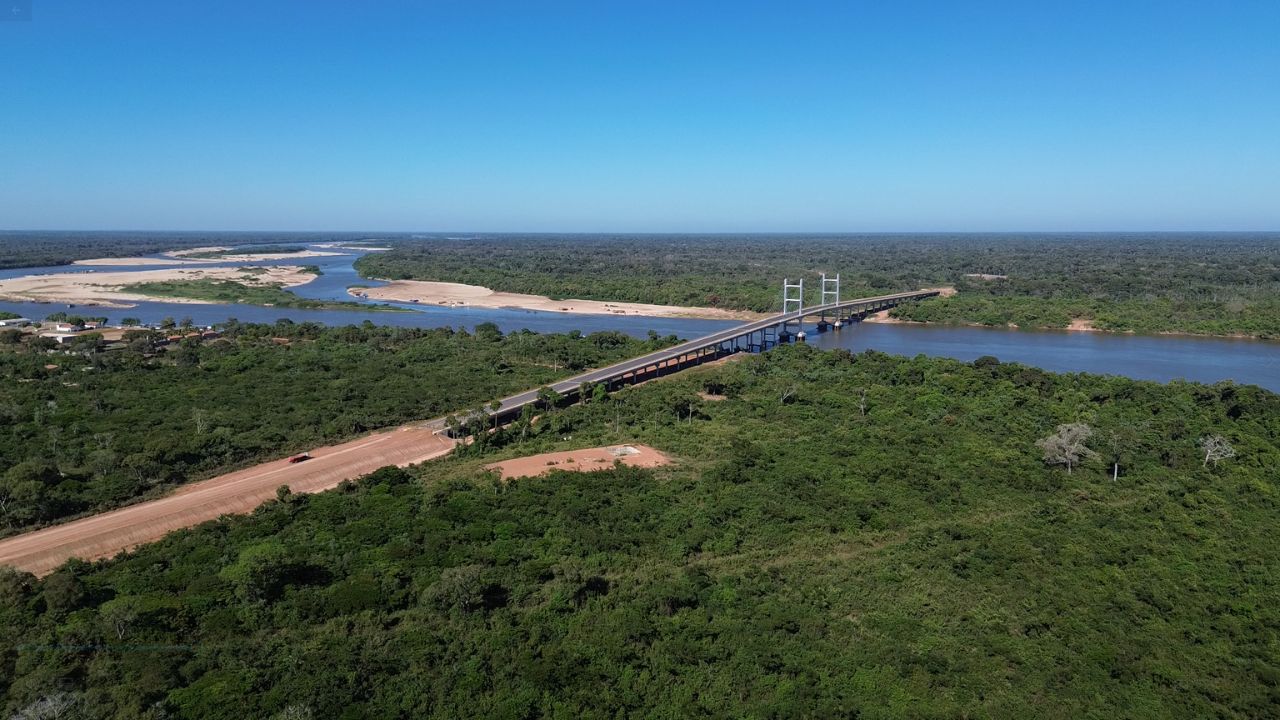
Built over the Araguaia River, the new bridge will connect the strategic axes of BR-158 to BR-080, and eventually to the Centro-Oeste Integration Railway (FICO), creating a multimodal corridor capable of accelerating the flow of grains, meat, and agro-industrial products to the ports of the Northern Arc like never before. An old promise, now under construction, that is set to redefine the present of national infrastructure.
Luís Alves: A Settlement That Enters The Logistics Map
Luís Alves is a riverside district of São Miguel do Araguaia in Goiás, known for its river port and tourist inns. Despite its strategic location, the only way to cross the river was by ferries, which were halted by floods or prolonged droughts. For decades, the crossing was marked by long lines, delays, and losses — a cruel irony in the midst of the modern logistics era.
-
Brazilian Researchers Develop Plant Fiber Cement Absorbing 100 kg of CO2 per Cubic Meter, Aiming for Low-Carbon Construction

-
Brazil’s Largest Sewage Plant Boosts Capacity with New High-Performance Pumps, Treating Over 1 Billion Liters Daily
-
Brazilian Mother and Homemaker Becomes Bioconstructor, Builds 24-Ton Earth Dome and Teaches Technique Across Argentina
-
Manchester Builds 40 Furnished Homes for the Homeless Under Railway Arches, Complete with Community Hall, Laundry, Garden, and Sports Court


Now, with the bridge under construction, this isolation is coming to an end. The structure will be over 1,030 meters long and is expected to be completed by the end of 2026. It is a project that, besides uniting states, also connects historical debts to the urgent need for modernization.
Precision Engineering In The Heart Of The Cerrado
The construction of the bridge required a complex technical effort. The alluvial land of the Araguaia required deep surveys, flow analyses, and constant monitoring. By July 2025, 72 metal piles had been driven into the riverbed, representing 92% of the foundation completed. The project is executed under the supervision of DNIT, with reports sent to CGU and stringent oversight.
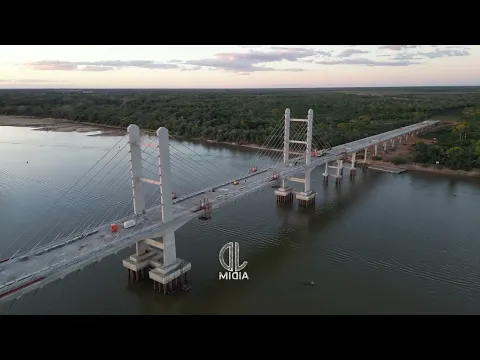
The mixed structure combines metal beams and prestressed concrete, with a deck 14 meters wide, two traffic lanes, shoulders, and side barriers. The asphalt will be of the CBUQ type, with high thermal resistance and intelligent drainage to prevent water accumulation. The project also includes auxiliary bridges, environmental sensors, and a training plan for local workers.
A Modest Investment With A Gigantic Impact
Although the Luís Alves Bridge does not have the grandeur of projects like the Rio-Niterói Bridge or the Friendship Bridge, its logistical impact rivals both. While the Rio de Janeiro bridge cost R$ 2.5 billion for 13 km, the Luís Alves bridge is being built for about R$ 165 million — with a cost per kilometer eight times lower. A testament that it is possible to combine efficiency, low cost, and national technology for productivity.
The construction site features metal warehouses, pre-molding areas, workshops, and GPS-tracked routes. Even during the rainy season, work continues at a planned pace, focusing on the assembly of metal pieces and concreting. Each phase is designed to avoid interrupting the schedule, ensuring predictability and quality.

The New Backbone Of The Midwest
The bridge is just the beginning. The project expands with the paving of 200 km of BR-080, which will connect directly to BR-158 and consolidate the so-called Centro-Norte Corridor. This network will allow direct access to the ports of Itaituba and Santarém in Pará, shortening distances and reducing logistical costs.
With the future integration to the Centro-Oeste Integration Railway, it will be possible to transfer loads between highways and railways quickly and efficiently. This broadens the reach of Brazilian exports and attracts new investments to the region. Luís Alves, once just a dot on the map, is now becoming a vital link in the national production chain. A bridge that was not built to impress aesthetically, but to fulfill a historical role: connecting Brazil that produces to the world that consumes.