Portuguese
  Spanish


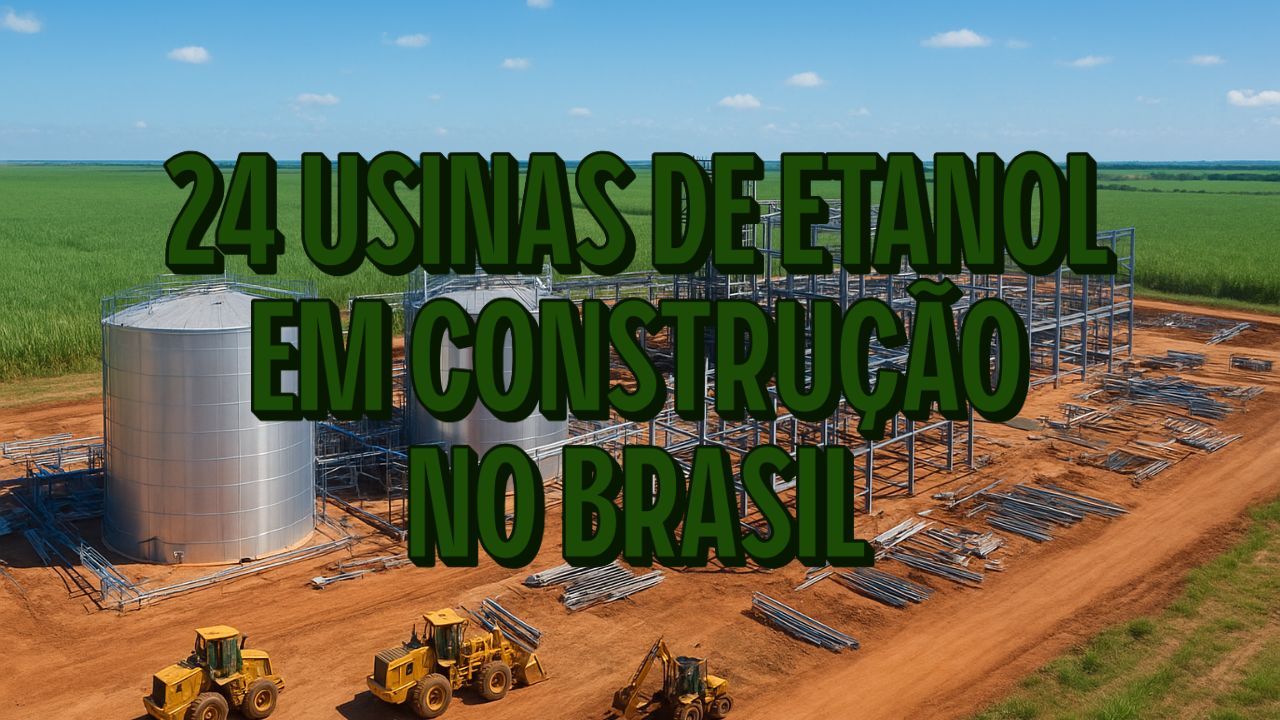

Brazil Could Gain More Than 26 Million Liters Daily of Ethanol in 2025 with Plants Under Construction, According to ANP Data.
Daily Biofuel Production Could Increase More Than 26 Million Liters with New Ventures
The Brazilian sugar-energy sector is experiencing a strong expansion. According to data from the National Agency of Petroleum, Natural Gas and Biofuels (ANP), at least 24 plants under construction are currently underway in the country.
Of these, 11 are expected to start operations as early as 2025, which could add 26 million liters per day of ethanol to the national capacity.
This movement comes amid increasing demand for biofuel, driven by the adoption of the E30 blend (30% anhydrous ethanol mixed with gasoline).
-
British Factory Transitions from Mechanical Parts to Producing 420,000 Electric Power Units Annually, Supplying 70% of Ford’s Electric Cars Sold in Europe

-
France Launches Network to Recycle 20 Million Cookware Pieces by 2027, Accepting All Brands for Aluminum and Coating Separation
-
Ancient Mines in Spain Reveal Tools and Metals That May Explain Bronze Age Trade with Scandinavia
-
Facing a housing shortage, Hong Kong uses prefabricated concrete modules to construct a 12-story public building with the help of massive cranes and trucks.


Ethanol Growth Amid New Demand
The beginning of 2025 signals structural changes in the market. The expectation is for greater demand for ethanol, especially after the implementation of E30.
The measure, while strengthening the role of biofuel in the energy matrix, pressures companies to accelerate their ethanol plant construction projects to meet consumption needs.
According to the ANP, the new plants under construction account for 25.16 million liters of daily capacity, comprising 11.17 million liters of anhydrous and 13.99 million liters of hydrated.
If all come into full operation, Brazil could reach 452 million liters of ethanol per day.
Where The New Plants Under Construction Are Located
The information gathered by the ANP shows that the projects are distributed across different states, reinforcing Brazil’s position as a global leader in biofuel production.
The survey, updated in September, details the stage of each construction, indicating different timelines for completion.
Of the 24 listed plants:
6 are expected to start operations in 2025;
5 are projected for 2026;
2 are scheduled for 2027;
1 is currently on hold.
Additionally, some companies are in the final approval stages with the ANP, awaiting authorization to begin production.
Ethanol as a Strategic Alternative
The scenario of expanding ethanol plants is not just a response to immediate demand, but also part of a larger strategy for energy transition.
Biofuel plays a crucial role in reducing greenhouse gas emissions, becoming increasingly relevant to national energy policy.
For experts, the progress of constructions reinforces the confidence of the sugar-energy sector.
“The adoption of E30 has brought a perspective of increased demand and firmer prices,” the survey highlights.
This justifies the volume of investments in new plants and expansions.
Challenges and Expectations for the Sector
Despite the optimism, the pace of construction of ethanol plants depends on variables such as financing, environmental licensing, and regulatory stability.
According to the survey, four companies have yet to update their schedules, and at least one construction is on hold. On the other hand, the overall outlook is positive.
The expansion movement indicates that, even amid economic uncertainties, ethanol remains a key player in the national energy matrix, providing Brazil with a prominent position in the international biofuels scenario.
What to Expect in the Coming Years
The consolidation of new plants under construction by 2027 is likely to enhance Brazil’s competitiveness in ethanol production.
The increase in supply should balance prices, meet domestic demand, and open up new export opportunities.
With this, the country strengthens its role as a global reference in clean and renewable energy, reaffirming that the future of the sector lies in the construction of modern and efficient ethanol plants.