Portuguese
  Spanish



Vestas Launches Low-Emission Steel for Wind Turbines, Contributing to Wind Power and Renewable Energy. Reducing the Environmental Footprint.
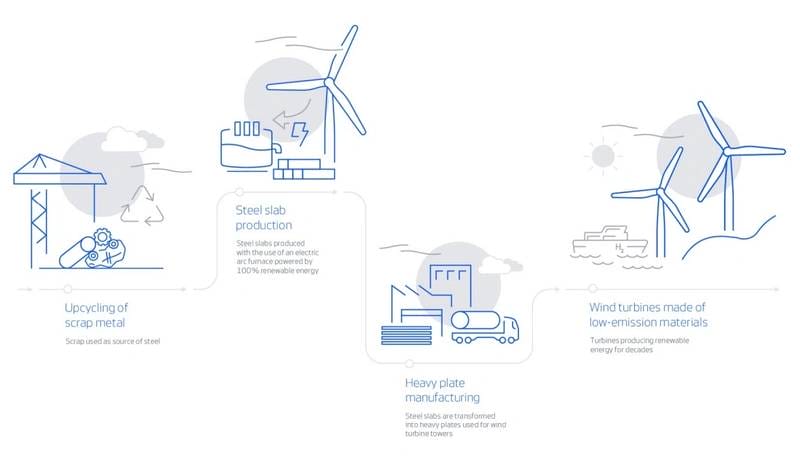
Vestas has partnered with ArcelorMittal to introduce low-emission steel to the market, resulting in a significant reduction in CO2 emissions throughout the lifespan of the wind turbine towers.
The use of low-emission steel in wind turbines represents a reduction of up to 25% in emissions, compared to conventionally produced steel. Furthermore, low-emission steel is produced using 100% scrap steel, melted in an electric arc furnace powered 100% by wind energy, at the ArcelorMittal Steelworks, Industeel Charleroi, in Belgium.
Partnership with ArcelorMittal for the Development of Low-Emission Steel
With the collaboration of ArcelorMittal, Vestas has the capacity to achieve a 66% reduction in emission intensity per kilogram of steel, compared to steel produced through the conventional steel production route. Low-emission steel represents a significant advancement in the industry, highlighting Vestas’s commitment to manufacturing sustainable products with low levels of carbon emissions.
-
OPEC+ Boosts Oil Supply by 188,000 Barrels per Day in July 2026, Leading to Price Drop from $112 to $89 per Barrel in Under Two Months

-
TotalEnergies Signs 20-Year Deal to Purchase 2 Million Tons of LNG from Alaska, Boosting Project Viability
-
Turkey Deploys Çağrı Bey Drilling Ship to Explore New Oil Frontier Off Somalia’s Coast
-
Golden Pass LNG Ships First Liquefied Gas Cargo from the U.S., Completing $10 Billion QatarEnergy and ExxonMobil Investment



Baltic Power Offshore Wind Project: Use of Low-Emission Steel
Although low-emission steel is not yet part of the standards offered by Vestas, the Baltic Power Offshore Wind Project, located on the coast of Poland, will be the first to utilize this innovative type of steel. Vestas plans to begin construction on the offshore wind farm in 2025, with the expectation of generating up to 1.2 GW of electricity through the use of renewable energy from wind turbines. By employing low-carbon emission steel in 52 of the 76 towers, Vestas demonstrates a significant commitment to sustainability and reducing CO2 emissions.
Positive Environmental Impact of Low-Emission Steel
Low-emission heavy plate steel has a Product Environmental Declaration (EPD) certified by an independent party, detailing the product’s complete environmental footprint. This type of information is crucial to facilitate easier comparisons between available products, providing consumers and stakeholders with important information about the environmental impact of low-emission steel.
Commitment to Renewable Energy Infrastructure in Europe
Laurent Plasman, CMO Industry, ArcelorMittal Europe – Flat Products, acknowledges the importance of the partnership between ArcelorMittal, Vestas, and Baltic Power in utilizing low-carbon emission steel in building renewable energy infrastructures. The integration of supportive public policies for using low-carbon emission steel is essential to drive projects like the Baltic Power Offshore Wind Project, which could provide clean wind energy for homes and industries across Europe.
Final Considerations
Low-emission steel represents a significant step toward more sustainable metal fabrication, utilizing wind energy and producing steel with low levels of carbon emissions. The partnership between Vestas, ArcelorMittal, and Baltic Power in developing the Baltic Power Offshore Wind Project demonstrates a joint commitment to environmental preservation and the reduction of CO2 emissions, setting a precedent for future wind generation projects in Europe.
References
Technology; Offshore Wind; Greenhouse Gas Emissions