






 Portuguese
  Spanish


Volkswagen Announced Plans To Launch Affordable Electric Cars Soon, Aiming To Compete Directly With Chinese Brands Like BYD. Electric Vehicles Are Expected To Hit The Market With An Estimated Price Of R$ 111,927.
The transition to sustainable electric vehicles has been a priority in the European market, and now the promise of cheap electric cars is gaining momentum. Volkswagen, the automotive leader in Europe, revealed plans to launch compact electric cars by 2027, with prices around 20,000 euros (approximately R$ 111,927). This initiative aims to make electric mobility more accessible, meeting the growing demand for eco-friendly and economical vehicles while solidifying Volkswagen’s position at the forefront of the sustainable automotive revolution.
Understand Volkswagen’s Affordable Electric Vehicle Strategy
This move could significantly alter the dynamics of the electric vehicle market. Currently, electric cars tend to be more expensive than their combustion counterparts, especially in the West.
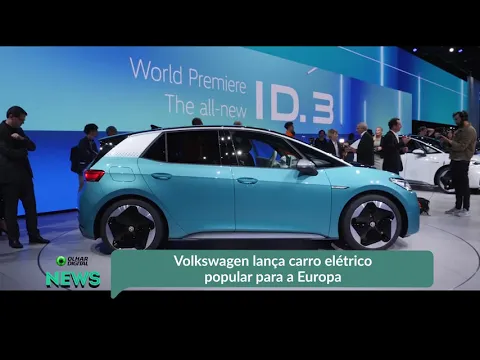

However, this lower pricing strategy from Volkswagen is not only meant to attract new buyers, but also to compete directly with the growing offerings from Chinese manufacturers, which already offer affordable electric cars.
-
Banco do Brasil and Uber Launch Cashback Program Offering Up to 3.5 Loan Installments Back, Drivers Gain Access to New Cars Worth Up to $30,000 Through Move Brasil Initiative

-
Looking for a Car for Dirt Roads? Fiat Uno, Strada, and Volkswagen Gol Offer Durability and Affordability

-
MG Motor to Produce Two Electric Cars in Brazil with $75 Million Investment, Creating 600 Jobs
-
Nissan Kicks S Direct 2018: Affordable Used SUV with Over 13 km/l Fuel Efficiency, 432-Liter Trunk, and CVT Automatic Transmission


This new strategy from Volkswagen may be a turning point for consumers in Europe, who still hesitate due to the high cost of electric vehicles. Volkswagen CEO Thomas Schäfer emphasized that for electric vehicles to spread, it is essential that attractive and affordable new prices are presented in the entry-level market.
Focusing on cost-effectiveness and a wide range of choices, Volkswagen plans to set new standards in the entry-level segment with vehicles that do not compromise on design, quality, or technology.
By 2025, the company already has plans to launch two new compact models and some small SUVs from brands like VW and Skoda, with estimated prices around 25,000 euros, approximately R$ 139,909.
Volkswagen Announces Plans To Begin Production Of Affordable Electric Cars
Competing electric vehicles against Volkswagen include the Renault Kwid E-Tech, sold in Europe as Dacia Spring, with prices starting at 18,900 euros (R$ 105,771), and BYD Dolphin, available from 29,990 euros (R$ 167,865).
Currently, the most basic vehicle from the German brand, the hatchback ID.3, costs around 40,000 euros, equivalent to R$ 223,855. Thus, achieving a level below 30,000 euros for affordable electric cars becomes essential to remain competitive.
VW has already released teaser images of a new small hatchback, signaling what these new affordable models could look like. Despite the few details, the company’s strategy to leverage visual and technological appeal, elements already strengthened in higher-priced electric vehicles, is evident.
In summary, the journey toward affordable electric cars seems increasingly democratic. With Volkswagen leading these changes in Europe, it is expected to create a wave of new possibilities in other markets, including Brazil. The coming years will be decisive in the strategic positioning of major global manufacturers in a demanding and constantly evolving market.
Volkswagen’s Plans For The Brazilian Electric Vehicle Market
While Europe is rapidly moving toward a fleet of affordable electric cars, the Brazilian market seems to be a bit behind.
Volkswagen has not yet confirmed the arrival of these new economical cars in Brazil, where it currently offers the ID.4 and the ID.Buzz only through subscription. However, other brands like BYD and Renault have been advancing in providing cheaper operations.
The brand announced an investment of R$ 9 billion in Brazil, but it is not planned to produce a domestic EV until 2028. Nonetheless, the idea of manufacturing a zero-emission model is not off the table. Ciro Possobom, CEO of VW in Brazil, highlighted that the main obstacle to localizing an electric car is the sales volume.


Se nos carros a combustão de 150 mil da VW o acabamento é puro plastico duro, imagina a qualidade do acabamento interno doa carros elétricos que virão nesse valor, se puder deixar sem acabamento, só na lata ela certamente irá deixar.